When a seller calls me before they list, the question is almost always some version of the same one: “What should we fix before it goes on the market?” Usually there is a number attached. A contractor has quoted them for a new kitchen or a bathroom, and they are hoping I will tell them it is worth it because they will get it all back at sale.
I have to be honest with them, and I will be honest with you: most renovations do not pay for themselves. The Appraisal Institute of Canada, the people who actually value homes for a living, are clear that renovations are rarely a dollar-for-dollar return. A kitchen redo recovers something like 75 per cent of its cost at resale on a good day, a bathroom maybe 85 per cent, and plenty of projects return far less than that. So if your goal is to spend $40,000 and add $40,000 to your sale price, that project mostly does not exist.
But that is the wrong way to think about pre-sale spending anyway. Before you sell, you are not investing for a return. You are removing reasons for a buyer to either walk away or mark you down. A buyer standing in your kitchen is not running an ROI calculation. They are deciding whether this feels like a home they want or a list of jobs they will have to do. Your money is best spent making that first reaction a yes, not chasing a renovation that pencils out on a spreadsheet. Here is how I split it.
The quick wins that genuinely pay back
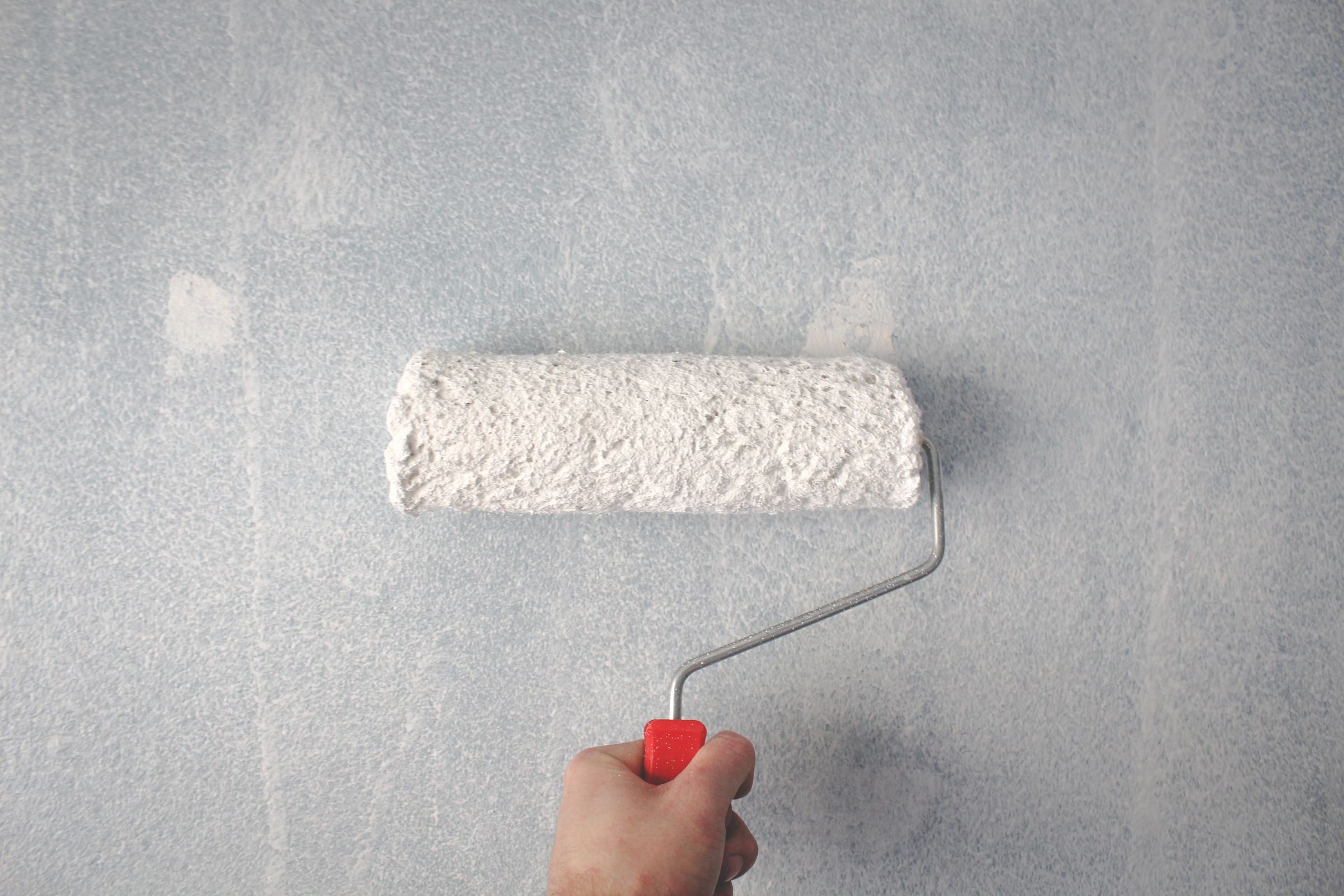
The single best return in real estate is also the most boring: paint. The Appraisal Institute puts interior and exterior repainting in its top tier for return on investment, right alongside kitchens and bathrooms, and it costs a tiny fraction of either. Fresh, neutral paint makes a home feel cared for and ready to live in, and it is the rare improvement where you can plausibly recover most or all of what you spend because the spend is so low to begin with.
The rest of the high-return list is the same kind of thing. Not transformation. Presentation.
- Paint in current, neutral tones. The biggest visual change for the least money.
- Deep clean and declutter. A professional clean, half your stuff in storage, and clear countertops will do more for showings than a $5,000 feature ever will.
- Fix the obvious small stuff. The dripping tap, the cracked switch plate, the door that sticks, the burnt-out bulbs. Individually trivial. Together they tell a buyer the house has not been maintained, and that is the impression that gets you lowball offers.
- Curb appeal. Mowed lawn, trimmed shrubs, a tidy front entry, a clean front door. The buyer’s opinion starts forming from the car before they are through the door.
- Flooring that photographs and shows badly. Worn carpet or scuffed, dated flooring in a main room is one of the few bigger-ticket items often worth addressing, because it reads as “old house” in photos and in person.
None of this is glamorous and all of it works. This is where I want most sellers spending their pre-list budget, because every dollar is doing double duty: it lifts the showing experience and it closes off the little objections a buyer’s agent uses to justify coming in under ask.
Kitchens and bathrooms: when they are actually worth it
Kitchens and bathrooms sell homes, which is exactly why sellers reach for them first. The Appraisal Institute ranks them as the top two renovations for return, but “top two for return” still does not mean you get your money back, and the details matter.
The figures the Appraisal Institute and lenders like National Bank work with look roughly like this:
| Project | Typical recovery at resale | The rule of thumb |
|---|---|---|
| Interior / exterior repainting | Up to 100% (because it is cheap) | The best return in the house |
| Bathroom renovation | About 85% | Keep total spend under ~5% of the home’s value |
| Kitchen renovation | About 75% | Keep total spend under ~15% of the home’s value |
| New roof | Up to 75% | A maintenance item, not a value-add |
Two things jump out of that table. First, even the best major renovation gives back a fraction, not the whole. Second, there is a ceiling on what you should spend relative to the home. Pouring a $90,000 kitchen into a $550,000 house is how you lose money, because no buyer at that price point will pay you back for it.
So the question is not “new kitchen, yes or no.” It is “refresh or replace.” A tired but sound kitchen often does not need gutting. New paint, updated hardware, a modern light fixture, and refinished or repainted cabinets can change how it reads for a few thousand dollars. A full tear-out, new cabinets, new counters, new appliances, is a different universe of cost, and before you commit to it for resale you want a clear-eyed conversation about whether buyers in your price band actually expect it or will simply enjoy it on your dime.
The Calgary secondary-suite question
This is the one that has gotten genuinely complicated in Calgary, and it is worth slowing down on because the rules moved recently.
A legal, registered secondary suite is a real value-add here. It adds a stream of income for an owner and it widens your buyer pool to investors and to families who want a mortgage helper, which matters a lot in a higher-cost-of-living market. Building one to code in Calgary typically runs somewhere between $60,000 and $120,000 depending on the scope, and a finished suite rents in the rough range of $1,200 to $1,800 a month depending on the neighbourhood and quality. So unlike a cosmetic renovation, a suite can actually carry its own weight over time through rent, and a legal one can lift your resale value and demand in a way a new backsplash never will.
The catch is the regulatory backdrop, which is in flux right now. In April 2026, City Council repealed the citywide “blanket” rezoning that had been in place since 2024, and reinstated the older low-density zones. As part of that, Council has directed staff to bring back secondary suites and backyard suites as permitted uses across low-density residential areas, but that change is still heading to a public hearing on July 21, 2026, for final approval. A few rules also tightened: a property can no longer have both a secondary suite and a backyard suite, only one of the two, and backyard suites face a parking requirement again.
For you as a seller, the practical takeaways are simpler than all that sounds:
- A legal, registered suite is the one that adds value and reassures a buyer. An illegal or unregistered “suite” can actually scare buyers off and create disclosure problems. The legality is the whole point.
- The rules and your specific property’s zoning are genuinely in motion this year, so do not assume what was true for a neighbour in 2024 is true for you in 2026.
- Building a suite from scratch purely to sell is a big, slow project, not a quick pre-list fix. If you already have a legal suite, make sure its paperwork and registration are clean before you list. If you are thinking of adding one, that is a longer-horizon decision worth real advice, not a weekend before the sign goes up.
The mistake that costs Calgary sellers the most: over-improving
Here is the error I watch sellers make more than any other, and it is the expensive one. They renovate past their neighbourhood.
A home in Aspen Woods and the same square footage in Martindale are not in the same market, and they do not support the same finishes. If you put a $100,000 kitchen and spa bathrooms into a home on a street where buyers are paying $600,000, you do not get a $700,000 sale. You get a beautiful home that sells at the top of its street’s range, and you eat the difference. The ceiling on your sale price is set by your location and your comparable sales, not by how much you spent inside.
This is why I will not give a seller a renovation recommendation without looking at the last 60 to 90 days of real comparables in their actual pocket of the city first. The right amount to spend, and on what, is entirely a function of what buyers in your specific area and price band expect and will pay for. Match your home to the top of what your street supports and stop there. Spending past that point is not an investment. It is a donation to the next owner.
It also depends on which market you are in
One more layer, because Calgary in 2026 is not one market. Detached homes are sitting in balanced territory while condos and, to a lesser degree, townhomes have shifted to the buyer, with more supply and softer prices. I broke that split down in detail in Calgary’s two-speed market, but it changes your pre-list strategy directly.
If you are selling a detached home into a balanced market, presentation and accurate pricing are doing the heavy lifting, and the quick-win list above is usually all you need. If you are selling a condo into a buyer’s market, you are competing against a wall of brand-new units and a stack of other resale listings, so showing flawlessly matters even more, but spending big on renovations you will not recover makes even less sense when the segment is soft. In a buyer’s market, sharp pricing and a clean, well-presented home beat an expensive renovation almost every time.
How to actually decide
Strip it all down and the order of operations is the same for nearly every seller:
- Do the quick wins. Paint, clean, declutter, fix the small defects, sort the curb appeal. This is non-negotiable and it is where the real return lives.
- Address anything genuinely broken or badly dated that a buyer would flag in the first ten minutes, scaled to your price band and capped well under the Appraisal Institute’s spend ceilings.
- Leave the big, taste-driven renovations alone unless you are living there for years, in which case do them for your own enjoyment, not for the imaginary return.
- Check your renovation against your comparables before you spend, so you never over-improve past what your neighbourhood will pay back.
Not sure what is worth doing before you list?
Before you spend a dollar on renovations, get a real read on what your specific home in your specific neighbourhood is worth right now and what buyers in your price band actually expect. I will tell you straight, with the comparables to back it up.
Common questions
What renovation gives the best return before selling a home in Calgary?
Paint, hands down, when you account for cost. The Appraisal Institute of Canada ranks interior and exterior repainting in its top tier for return on investment, and because it is inexpensive relative to a kitchen or bathroom, it is the rare improvement where you can recover most or all of what you spend. Kitchens and bathrooms rank highly too, but they recover only about 75 and 85 per cent of their cost respectively, so they rarely pay for themselves outright. For most sellers, the best money is paint, a deep clean, decluttering, and fixing small visible defects, not a major renovation.
Should I renovate my kitchen before selling?
Usually a refresh beats a full renovation for resale. A tired but sound kitchen can be transformed with paint, new hardware, an updated light fixture, and refinished cabinets for a few thousand dollars. A full gut, recovering maybe 75 per cent of its cost, only makes sense if the kitchen is genuinely broken or badly dated for your price band, and you should keep total spend under roughly 15 per cent of the home’s value. If it is simply not your taste, a refresh plus accurate pricing almost always beats a tear-out on the math.
Does a legal secondary suite add value to a Calgary home?
Yes, a legal, registered suite adds real value because it offers rental income and widens your buyer pool to investors and families wanting a mortgage helper. Building one to code typically costs $60,000 to $120,000, and suites rent in the range of $1,200 to $1,800 a month depending on area and quality. The key word is legal: an unregistered suite can actually deter buyers and create disclosure problems. Note that Calgary’s suite rules are in flux in 2026 after the blanket rezoning was repealed, so verify your property’s current zoning before counting on it.
Did Calgary's rezoning change affect secondary suites?
In April 2026, City Council repealed the citywide blanket rezoning that had been in place since 2024 and reinstated the older low-density zones. Council directed staff to keep secondary suites and backyard suites as permitted uses across low-density areas, but that change was still heading to a public hearing on July 21, 2026, for final approval. Some rules also tightened, including that a property can have either a secondary suite or a backyard suite but not both. Because this is genuinely moving, confirm the current rules for your specific address rather than relying on what was true a year or two ago.
Can you over-renovate a house before selling?
Absolutely, and it is the most expensive mistake sellers make. Your sale price is capped by your location and your comparable sales, not by what you spent inside. Putting a $100,000 kitchen into a home on a street where buyers pay $600,000 does not produce a $700,000 sale; you simply do not recover the difference. The fix is to look at recent sales in your actual neighbourhood and price band before you renovate, match the top of what your street supports, and stop there.
The honest summary
Before you sell, spend on presentation, not transformation. Paint, a deep clean, decluttering, small repairs, and curb appeal are where the return actually lives, and they cost a fraction of a renovation. Save the kitchen or bathroom for cases where something is genuinely broken or badly dated, keep it scaled to your price band, and lean toward a refresh over a gut job. Treat a legal secondary suite as the longer-horizon, income-driven decision it is, not a quick pre-list fix, and watch the changing rules. Above all, do not renovate past your neighbourhood.
The truest thing I can tell you is that the right answer is specific to your home, your street, and the buyers in your price band right now. That is exactly the read I am happy to give you before you spend a dollar, so you put your money where it will actually move your sale.