If you own a home in Calgary right now, you probably have at least three different numbers sitting in front of you. Your City of Calgary assessment arrived in January. You searched your address on HonestDoor and got a second number. You checked HouseSigma and got a third. Maybe you clicked through a Royal LePage estimator tool and got a fourth. None of them agree, and the spread is wide enough to be genuinely confusing.
The disagreement is not a mistake. Each tool is measuring something slightly different, using different source data, built for a different purpose. The problem is that none of them explain that clearly, and homeowners end up treating whichever number is highest as the one they want to believe.
This article walks through what each tool is actually doing, where each one goes wrong on Calgary homes, and what an actual home valuation captures that none of them can. If you are thinking about selling in the next year or two, understanding this distinction will save you from pricing your home wrong in either direction.
Let me start with the number most Calgary homeowners have the most questions about: the City assessment.
What your City of Calgary assessment is actually telling you
The City of Calgary assessment is a notice the City mails to every property owner in January, estimating the market value of your home as of a specific date in the prior year. It is generated by the City’s Assessment department using a mass-appraisal model, which is a computer-based process designed to estimate values across roughly 500,000 residential properties simultaneously.
That last part matters: 500,000 properties simultaneously. The model has to produce a defensible, consistent number at scale, which means it works from standardised inputs. Square footage, lot size, year built, property type, and broad finish category. That is roughly the information the model sees for your home, and it produces a number based on how similar properties have transacted.
The valuation date. The notice you receive in January does not reflect what your home is worth today. Calgary assessments are pegged to a valuation date of July 1 of the prior year, so the notice you received in January 2026 reflects an estimated value as of July 1, 2025. Any market movement that happened in the back half of the year, whether prices rose or softened, is not captured in that number. In a fast-moving market, assessments and current market values can drift meaningfully within a single year.
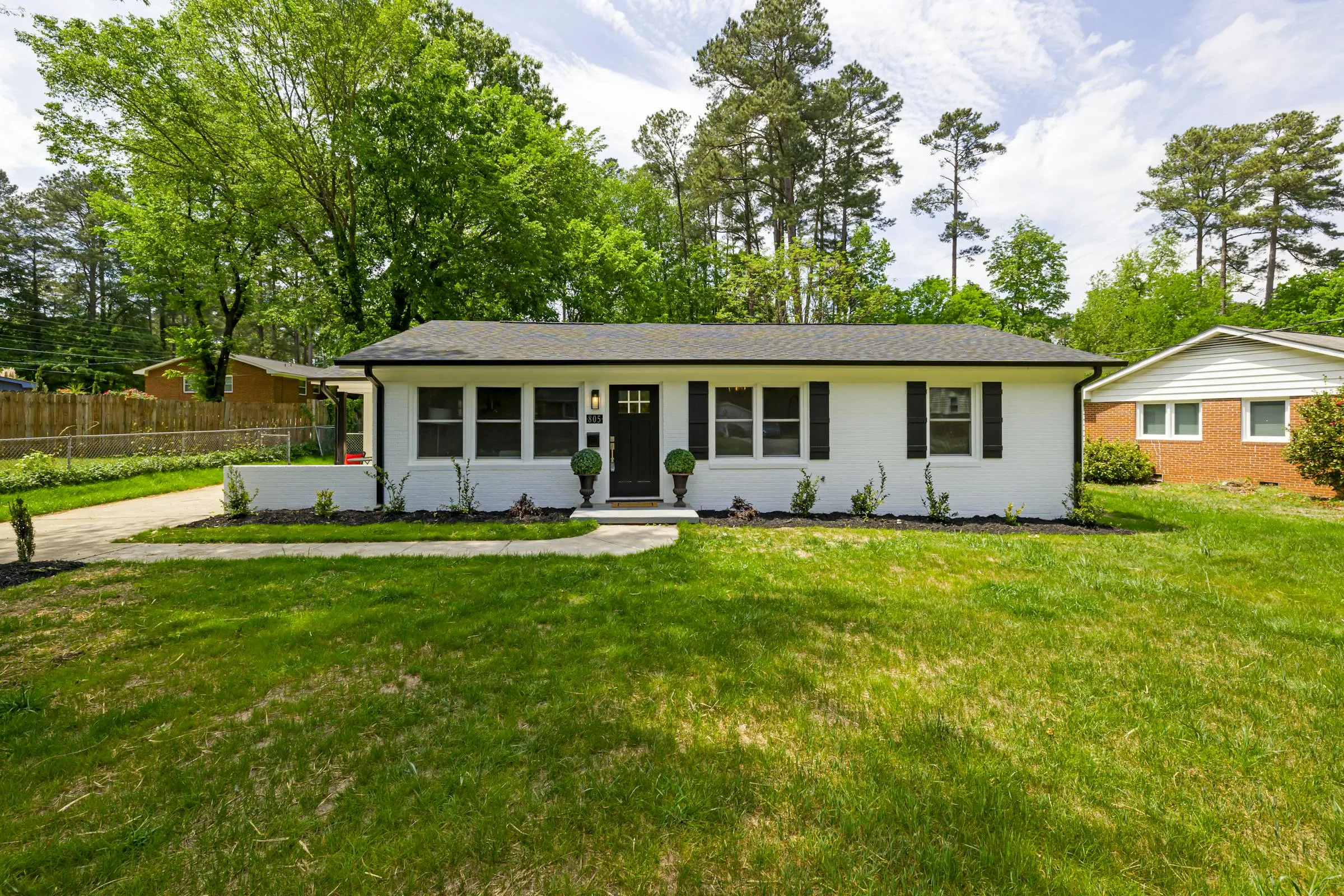
Why your neighbour’s identical-looking home assesses differently. Two 1950s bungalows on the same street in Killarney can have assessments within $20,000 of each other even when one has been completely renovated: new kitchen, new bathrooms, new windows, new mechanical, studs-out everything. The model does not see the renovation. It sees two bungalows of similar size built in the same era on comparable lots, and it prices them accordingly. The interior condition, the quality of finishes, the open-concept layout versus the original chopped-up floor plan: none of that makes it into the assessment data.
What the assessment is actually for. This is the part most homeowners miss. The City assessment exists to calculate your property taxes, not to tell you what your home will sell for. The City needs a number that is legally defensible, repeatable across half a million properties, and equitable in how it distributes the tax burden. That is a very different problem than figuring out what a buyer will pay for your specific home next spring. Both problems require an estimate of market value, but they are solved with very different tools and very different levels of precision. If you think the City has it wrong, there is a Customer Review Period from January to late March each year when you can dispute the assessment, but that is a separate process from pricing your home for sale.
The decoupling between assessment and sale price. In a stable market, assessments and sale prices tend to track each other reasonably well at the community level. Individual homes are a different story. A well-renovated home in an established community will consistently sell for more than its assessment implies. An older home with deferred maintenance and an awkward floor plan may sell for less. The assessment is not the ceiling and it is not the floor. It is a rough proxy that tells you something about where your home sits in the City’s model, not what a buyer will offer.
HonestDoor: what the Alberta-specific estimate misses
HonestDoor is an Edmonton-based home value site that has become widely used in Alberta. You have likely seen it at the top of the results when you search “what is my home worth Calgary.” It takes provincial assessment records and overlays an estimated market value for individual addresses, which makes it more granular-looking than the City assessment notice.
Under the hood it uses roughly the same source data: provincial assessment records plus sale prices where public records make them available, with some modelled adjustments for market conditions. The appeal is a single dollar figure for your specific address, which feels more relevant than a mass-appraisal number.
Where it goes wrong is exactly where the assessment data goes wrong: it cannot see what is inside your home. Character bungalows that have been renovated from the studs out, post-war homes with high-end finishes, view lots, layout quality, recent kitchens or bathrooms, the school boundary premium that makes certain Killarney addresses worth more than similar-looking addresses a block away. None of that is in the assessment data HonestDoor is working from.
To make it concrete: a renovated Killarney bungalow can show a HonestDoor estimate very close to its unrenovated neighbour’s estimate, even if one home has $200,000 worth of recent work in it and the other has not been touched in 30 years. The renovation is real value to a buyer, but it exists inside the home, not in the data feed.
How to use it well: treat HonestDoor as a directional check, not a pricing tool. If your HonestDoor number and your City assessment are close, the model is reading your home as roughly average for its category. If they diverge significantly, something is missing from one of them, and an actual valuation will tell you which direction reality sits.
HouseSigma and Zolo: national AVMs in a smaller market
HouseSigma and Zolo are Canadian portals with machine-learning automated valuation models built in. HouseSigma is more prominent for Calgary homeowners, partly because its sold data display is useful for researching recent sales. Zolo’s estimator turns up in searches regularly.
Both tools are trained on transaction volume, and this is where Calgary-specific limitations come in. The bulk of Canadian residential transaction data comes from the Greater Toronto Area and the Lower Mainland. Those markets generate far more sales per year than Calgary does, and the models are calibrated on those markets because that is where the training data is richest. Calgary’s dataset is smaller, and the model is working with less to go on.
For newer suburban communities in Calgary with consistent construction types and high sales volume, the estimates tend to be more reliable. A house in a newer outer-SW suburb with dozens of comparable recent sales nearby is a reasonable case for the AVM. The estimates start to drift in the communities where Calgary’s market is most distinctive: inner-SW infill streets where land-value appreciation is reshaping comps month over month; communities like Currie Barracks and Garrison Green where the comp set is small and varied; premium SW communities like Aspen Woods or Discovery Ridge where view-lot premiums and school-boundary premiums add real value that the model cannot observe.
How to use them well: if multiple AVM estimates cluster tightly, that convergence is a signal the model has a reasonable read on your range. If they spread by 15 to 20 percent, the model is uncertain, and the uncertainty is real. That spread is not a reason to pick the highest number. It is a reason to get a human valuation that can close the gap.
Brokerage and bank estimators
Royal LePage, RE/MAX, RBC, and similar brands all advertise personalised home value estimators on their sites. The implicit promise is that you enter your address and get back something tailored to your specific home.
The reality is more mixed. Most brokerage estimators are either licensed AVM data or a proprietary tool built on similar inputs to HonestDoor or HouseSigma. The output reads as personalised but is effectively a generic range for your property type and community. The primary purpose of the tool is lead capture. That is not a criticism; it is just what it is, and knowing that helps you read the number in the right context.
Some bank-side tools are more sophisticated and draw on appraisal data not available in public records. But even well-built bank tools are limited by what data they can ingest, and the specific factors that move a Calgary home (the renovation premium, the view, the school boundary, the layout) remain invisible to any automated system.
Use brokerage and bank estimators the same way you use HonestDoor: as a directional check, not a number to negotiate from.
What an actual home valuation does that an estimate cannot
Every tool I have described above shares one fundamental limitation: none of them has ever walked through your front door.
An actual home valuation starts with seeing the property in person. Walking each room to understand the layout flow. Noticing how light moves through the space at different times of day. Registering the condition of finishes: what has been updated, what has not, what is being held together with good staging, and what is genuinely deferred maintenance that a buyer’s inspector will flag. The difference between a generous floor plan and a chopped-up one that has never been opened up. These are the things that move buyer decisions, and they are all invisible to any data model.
The analytical tool I use is a Comparative Market Analysis: a paired-sale approach that starts with genuinely comparable recent sales, then adjusts for the real differences between each comp and your home. Lot size, square footage, basement development, garage, condition, view, finishes. The output is a range with the reasoning behind each adjustment, so you understand why it lands where it does. If you want to go deeper on the selling process, the selling guide covers how a CMA fits into a full listing strategy. When you are ready for a valuation on your specific home, the home valuation page is where to start.
Timing matters, and it is something AVMs handle poorly. The same home can sell for meaningfully different amounts in March versus October, and in infill communities, a handful of fast sales can shift the comp landscape faster than a rolling model can catch up. An actual valuation accounts for where the market sits right now, not where it was when the training data ended.
The renovation premium is where AVMs miss most consistently. A studs-out renovation in a post-war bungalow can add $150,000 to $250,000 in market value compared to an unrenovated comparable. Assessment data does not capture that, and neither does any model built on top of it. A person walking through your home will register it immediately.
Sometimes an in-person valuation comes in under the AVM estimate. That happens when there is deferred maintenance the model has not priced in, when the layout has problems photographs do not show, or when the local comp set has softened faster than the model has caught up. When that happens, the honest thing is to deliver that number clearly and explain why. A valuation that inflates your price expectations does not help you sell your home.
If you have looked up your address on every tool in this article and you still do not have a clear picture of what your home is actually worth, that is the expected outcome. These tools are designed to give you a starting point, and they do that reasonably well. What they cannot do is give you a number you can sell from.
If you want that number, the home valuation page is where to start. You can share your address and some basic details about the home, and I will follow up with a proper valuation that accounts for what the automated tools cannot see.
If you are curious about what your City assessment, HonestDoor estimate, or HouseSigma number is actually telling you before committing to a full valuation, I am happy to talk through it. You can book a call here.