Overview
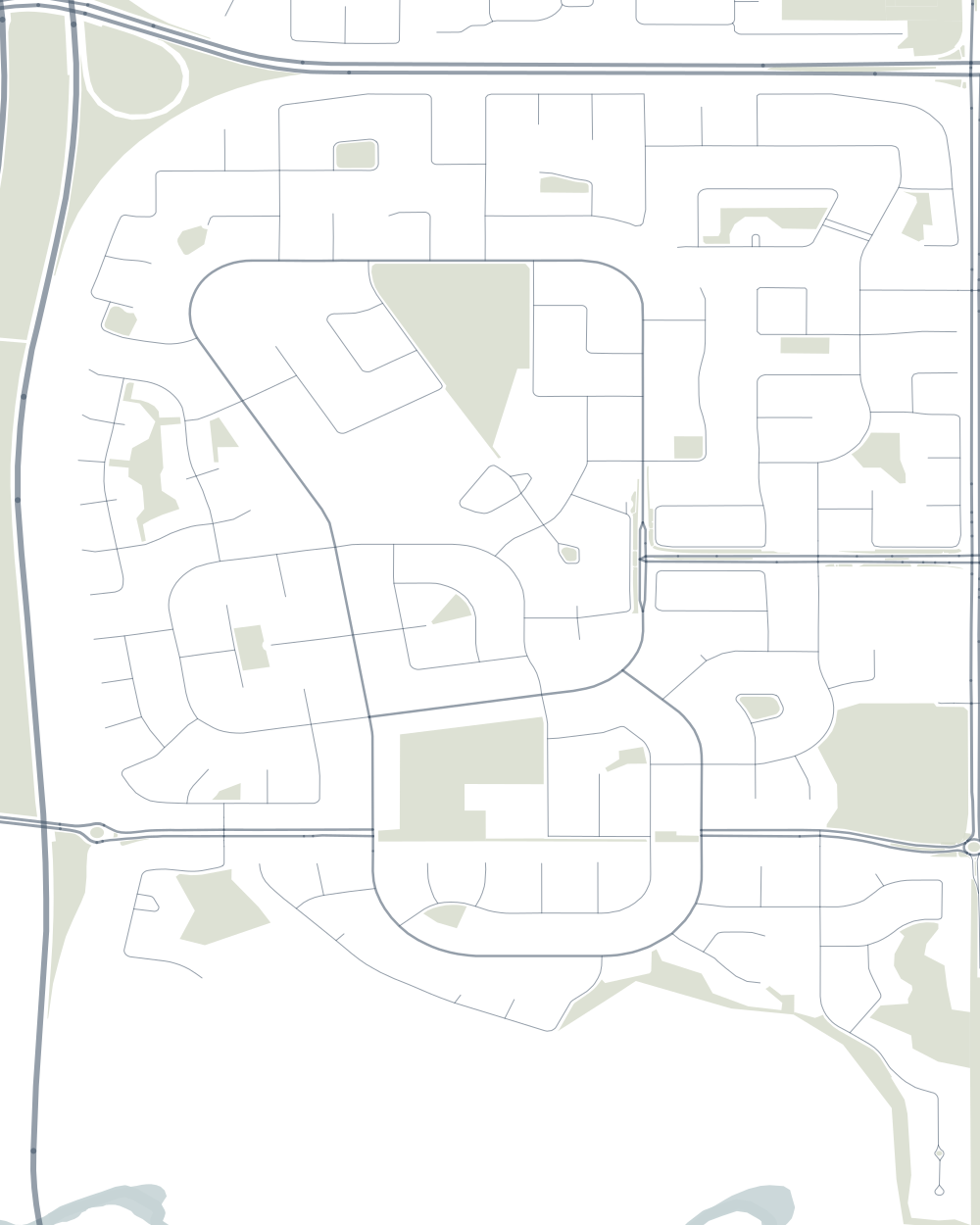
Woodbine occupies a self-contained pocket of SW Calgary bounded by Anderson Road to the north, Tsuut’ina Trail to the west, 24 Street SW to the east, and Fish Creek Provincial Park to the south. The postal code is T2W. The community was built almost entirely between 1979 and 1990, with the dominant product being 1980s detached bungalows, four-level splits, and two-storey family homes on roughly 50-foot lots. There are no through arterials cutting the interior; traffic enters at Anderson and resolves within the local street grid. The result is a community that looks and behaves like the suburban-boom era it was built for: walkable internally, oriented around an enclosed neighbourhood mall, and finished by 1990 with very little subsequent redevelopment.
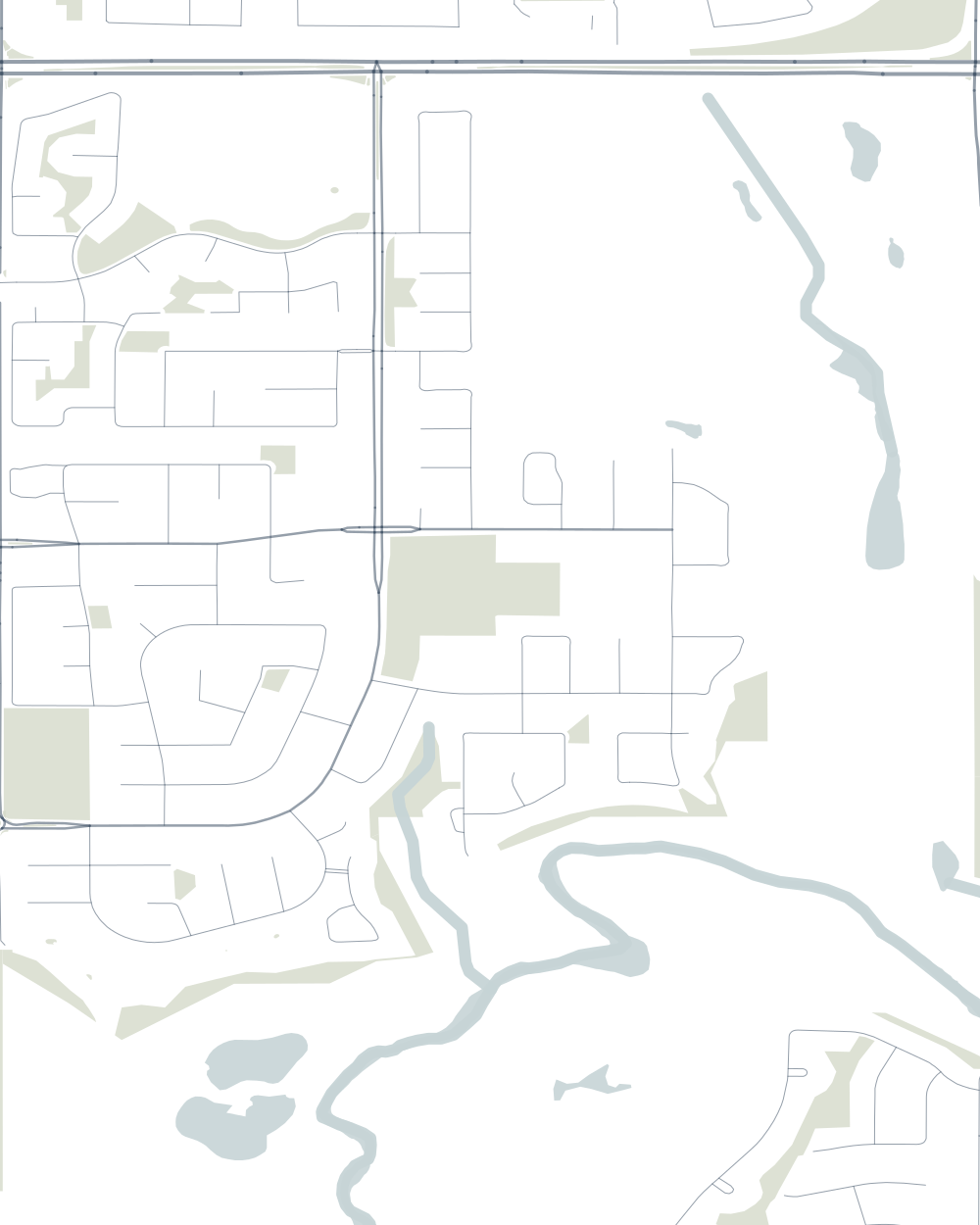
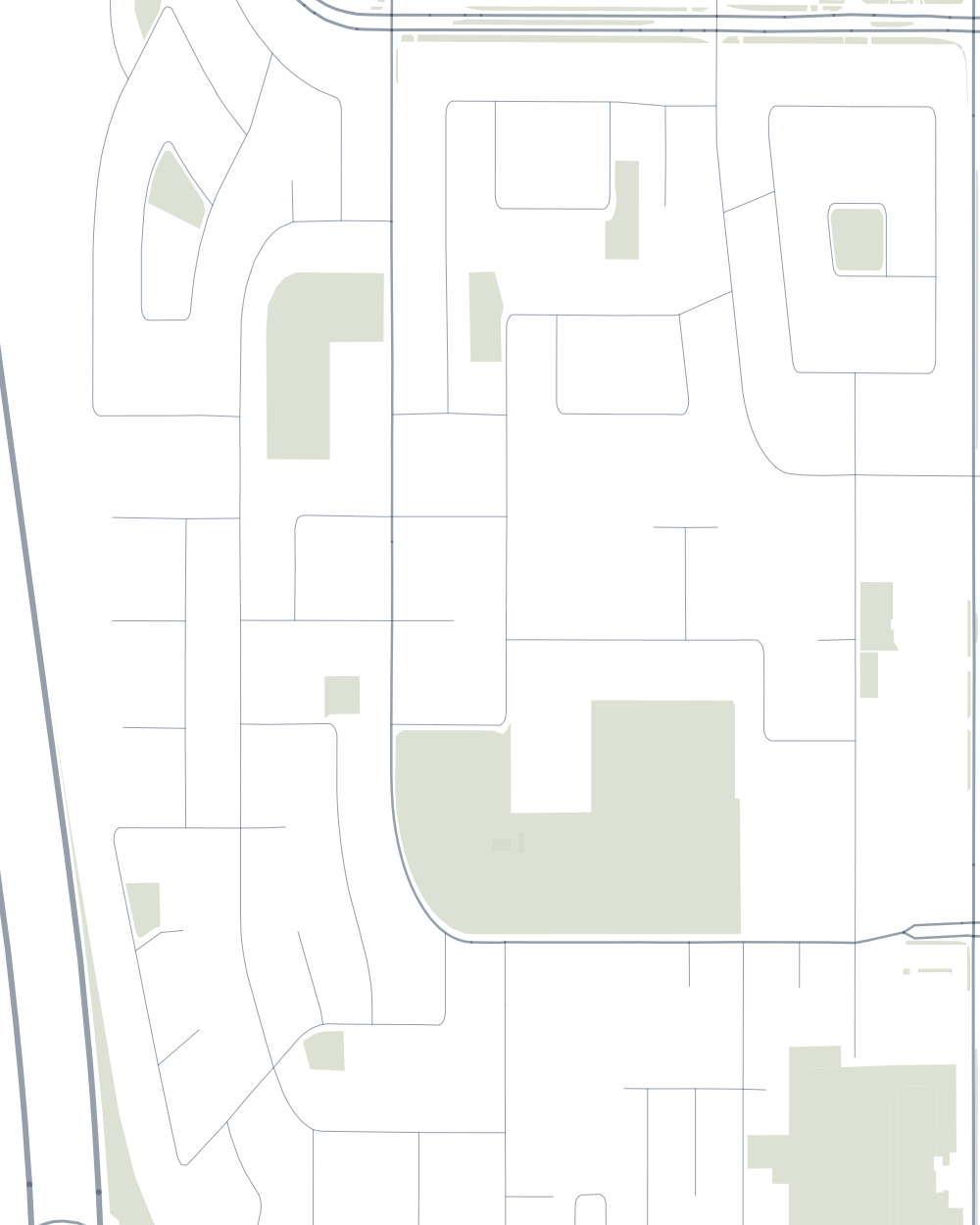
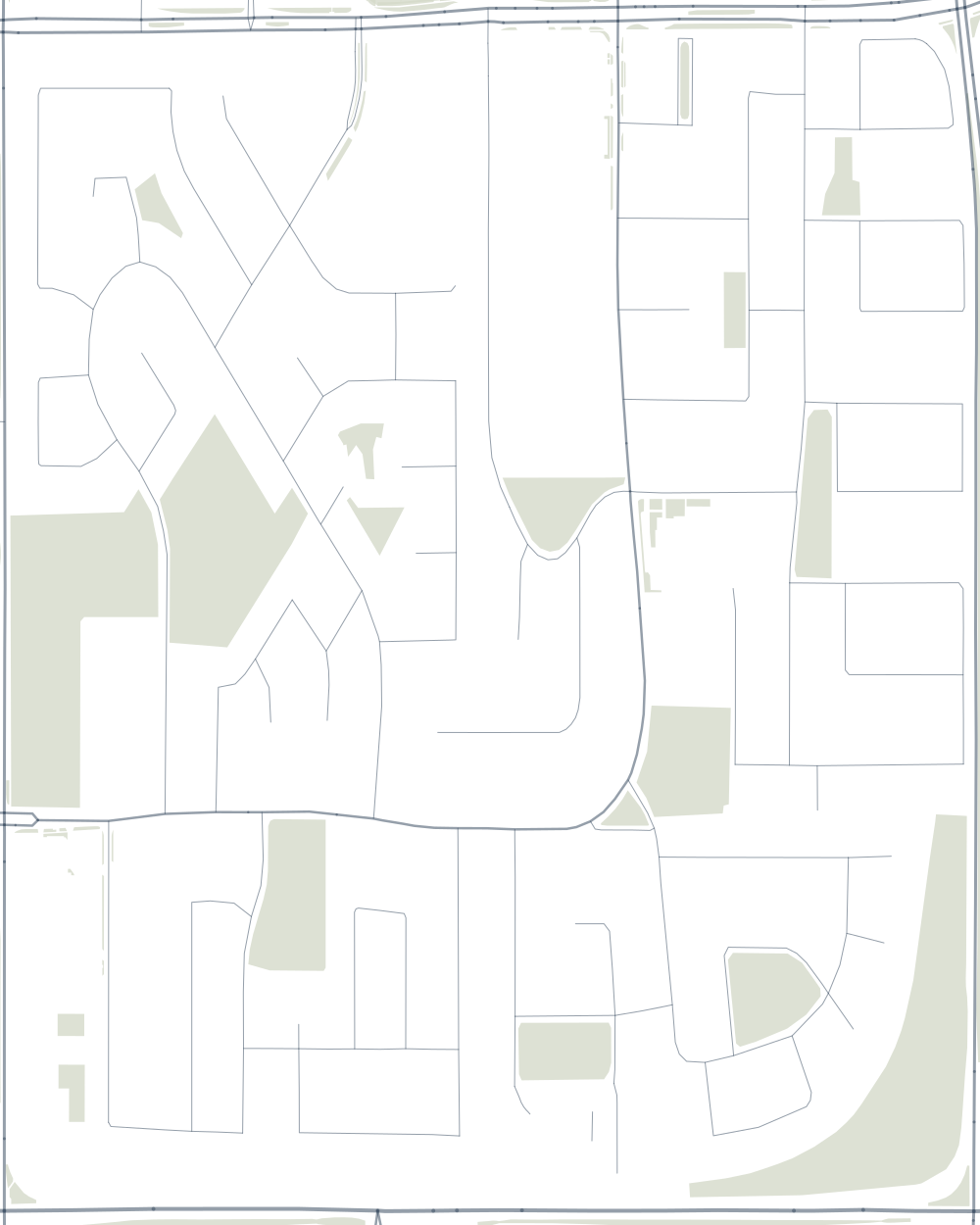
The geography matters more here than in most outer-SW communities. Two of the four boundaries are not other neighbourhoods. Fish Creek Provincial Park forms the entire southern edge, with homes on the south boundary streets backing directly onto provincial parkland. Tsuut’ina Nation forms the western boundary, with Tsuut’ina Trail providing the physical separation. That leaves only the eastern edge along 24 Street SW (against Woodlands) and the northern edge along Anderson Road (against Cedarbrae across the arterial) connecting Woodbine to the rest of Calgary. The community is physically contained in a way that few SW neighbourhoods are, and that containment shapes both the daily-life character and the long-term inventory dynamics.
Woodbine recorded 119 residential sales over the twelve months to August 2026, and detached houses carried most of them: 97 sales, 81.5% of the market, at a median of $700,000. The detached homes that sold had a median build year of 1981. Row and townhouse homes were the other property type with enough sales to price, 20 of them at a median of $399,000. Two semi-detached sales closed as well, which is why the detached and row and townhouse counts come to 117 rather than 119. Across all 119 sales, the blended median was $658,000.
David’s take
The vibe
Woodbine reads as the SW community that actually finished what 1980s Calgary suburban planning set out to build. The street pattern loops back on itself with no through arterials carving the interior. The houses are 1980s family-builder product on standard 50-foot lots: bungalows, four-level splits, two-storeys, with attached double garages and finished basements. The internal anchor is Woodbine Square, an enclosed 98,000-square-foot neighbourhood mall that holds the grocery store, a dental office, a pharmacy, restaurants, and the kind of daily-errand tenant mix that almost no other SW community of this size still has in a single roof. The mall is dated; the tenant base works.
The defining natural asset is Fish Creek Provincial Park. Woodbine’s southern boundary runs along the park, and homes on the south-edge streets back directly onto the trail system. The Sikome Lake catchment sits to the southeast, the off-leash areas behind Woodbine Boulevard run the length of the boundary, and the pathway network connects through the park to the broader Fish Creek trail system that ultimately reaches Bow Bottom Trail and the Bow River. For a resident on a south-boundary street, the park is the back yard. Compare this to a community like Discovery Ridge, where Griffith Woods Park access is one of the defining features of the community: Woodbine offers the same general idea on a much larger park. Measured the same way over the same window, the twelve months to August 2026, detached houses sold at a median of $700,000 in Woodbine and $1,217,500 in Discovery Ridge.
The demographic skews family. The 1980s product was built for two parents and two or three kids, and the homes still function that way. Older Woodbine residents who bought new in the early 1980s are now in their seventies and selling, which feeds a steady supply of family-ready detached inventory into the market each year. The buyers absorbing that supply are predominantly younger families upgrading out of starter condos or townhouses in the inner SW or NW and wanting four bedrooms, a two-car garage, a finished basement, and a walkable elementary on a single budget.
Housing stock
The detached segment is the core of Woodbine and shapes everything else. Detached houses were 97 of the 119 sales over the twelve months to August 2026, 81.5% of the market, at a typical $700,000 (average $733,239), ranging from $425,000 to $1,750,000. The detached homes that sold had a typical build year of 1981, and the middle one took 17 days to sell. The typical home is a 1980s build between 1,400 and 2,200 square feet above grade on a 50-foot lot, with an attached double garage and a finished basement. Configurations vary across bungalow, four-level split, two-storey, and the occasional bi-level. Builder finishes from this era are dated by current standards: original kitchens and bathrooms in unrenovated examples, popcorn ceilings on some, lower ceiling heights than current builder defaults, and exteriors in the brick-and-aluminum-siding combinations typical of late-1970s and 1980s Calgary builders. Condition is the first thing to check on any Woodbine detached you shortlist.
The row and townhouse segment is meaningful but smaller: 20 sales over the twelve months to August 2026 at a typical $399,000 (average $414,100), ranging from $315,000 to $500,000. The typical monthly fee across those 20 sales was $494.00, the typical build year was 1981, and the middle sale took 19 days. This is wood-frame townhouse product from the same buildout era as the detached, and it serves a specific buyer who wants the Woodbine address and the Fish Creek access at a lower entry point. Two semi-detached sales closed as well, so the detached and row and townhouse figures cover 117 of the 119 sales. There is no meaningful apartment inventory in the community.
The single-era buildout means there is no post-2010 product of consequence. If you want a Woodbine home, you are buying 1980s stock and choosing where to spend on updates. Condition assessment also matters in ways that buyers shopping post-2015 product can usually skip.
| Type | Median sale price | Sales |
|---|---|---|
| Detached | $715,000 | 77 |
| Row / townhouse | $450,000 | 15 |
| All home types | $675,000 | 93 |
Recent sales
Over the twelve months to August 2026, the middle Woodbine sale took 17 days to sell. Averaged across all 119 sales, the figure was 27 days, and that average is the one at the top of this page. Detached houses were the same, 17 days at the median and 27 on average. Row and townhouse homes took a little longer at the median, 19 days, but averaged less, at 25.
At the median, a Woodbine sale closed at 98.34% of its list price.
Price works the same way. The header’s $675,665 averages all 119 sales, while the blended median was $658,000, a gap of $17,665.
Half of the 119 sales closed between $525,000 and $770,000. The $315,000 community low is the cheapest row and townhouse sale, and the $1,750,000 high is the most expensive detached sale.
If you are weighing Woodbine against the communities around it, set the detached medians side by side. Measured the same way over the same window, the twelve months to August 2026, detached houses sold at a median of $700,000 in Woodbine, $700,000 in Evergreen, $618,000 in Cedarbrae and $585,250 in Bridlewood.
To put a figure on your own Woodbine house, request a home valuation. If you’re shopping here, the buyer’s guide is the place to begin.
Schools
Schools are an important consideration for Woodbine families, and the picture is meaningfully complete for both public and Catholic pathways. The CBE neighbourhood pathway runs Woodbine School (K-6) on Woodpark Blvd SW, John Ware School (7-9) in Pump Hill, and Henry Wise Wood High School (10-12) on 75 Ave SW. The K-6 school is inside the community boundary, which gives Woodbine families a walkable elementary in the way that most Calgary 1980s suburban communities still do. The junior high and senior high require transportation, but the designations are standard SW Area 6 catchments and well-established.
For Catholic families, St. Jude School (CSSD K-6) sits inside the community at 730 Woodbine Blvd SW and serves both Woodbine and Alpine Park. The Catholic secondary pathway runs through St. Stephen School in Southwood for the junior high years and into Our Lady of the Rockies High School at 111 Haddon Road SW for grades 10-12, though the CSSD manages its boundaries independently of the CBE and buyers should confirm current designation for their specific address via the CSSD Attendance Areas tool before relying on it for purchasing decisions. The combination of an in-community CBE elementary and an in-community CSSD elementary is genuinely useful, particularly for families who want the option to switch between systems without changing the daily school routine for younger children.
Woodbine School
Public, K-6
CBE K-6 neighbourhood school on Woodpark Blvd SW, inside Woodbine. Walkable for most of the community. Confirm current designation for your specific address with the CBE Find a School tool before purchasing.
John Ware School
Public, 7-9
CBE junior high at 10020 19 Street SW, Calgary, T2V 1R2, in Pump Hill, designated for Woodbine per CBE Area 6 family map. Confirm with the CBE Find a School tool at cbe.ab.ca/schools-and-areas/find-a-school before relying on it for purchasing decisions.
Henry Wise Wood High School
Public, 10-12
CBE senior high at 910 75 Ave SW. Standard SW Area 6 pathway for Woodbine families. Confirm current designation with the CBE Find a School tool.
St. Jude School
Catholic, K-6
CSSD K-6 school at 730 Woodbine Blvd SW, inside the community. Serves Woodbine and Alpine Park per the CSSD school page.
St. Stephen School
Catholic, K-9
CSSD school at 10910 Elbow Drive SW in Southwood. The school itself runs Kindergarten to Grade 9; Woodbine addresses designate to it for the junior high years, ahead of Our Lady of the Rockies High School for grades 10-12. Confirm the current Woodbine designation with the CSSD Attendance Areas tool at cssd.ab.ca/attendance-areas before relying on it for purchasing decisions.
Getting around
Woodbine’s commute story is shaped by Anderson Road and, more recently, by the MAX Yellow Bus Rapid Transit line. Anderson is the spine: a six-lane arterial that runs along the northern boundary, connects east to Macleod Trail and west to Tsuut’ina Trail, and ties into the Stoney Trail ring road via the southwest interchange. Downtown is approximately 20 minutes via 14 Street SW or Macleod Trail outside peak hours; the University of Calgary is approximately 22 minutes north via Crowchild; Foothills Hospital is in the same range. Calgary International Airport is approximately 35 minutes via Stoney Trail and Deerfoot. These commute times are honest for a community this far south in the quadrant; buyers comparing Woodbine to inner-SW communities like Palliser or Oakridge should expect to add five to ten minutes on most weekday trips.
The MAX Yellow BRT line added meaningful transit access for Woodbine commuters. The Woodview and Woodpark stations sit on or adjacent to the community boundary along 24 Street SW, and the line provides limited-stop service connecting Woodbine to the downtown core. For a downtown commuter willing to ride a BRT bus rather than drive, the line is a real alternative, and the predictability is meaningfully better than mixed-traffic bus service. The honest framing is that Woodbine remains a car-first community for most residents, with the BRT serving a specific subset of commuters.
Internal mobility within Woodbine is straightforward. Woodbine Boulevard SW is the main internal collector, with local streets branching off into the residential pockets. Woodbine Square sits in the middle of the community along Woodpark Blvd, walkable from most addresses. Fish Creek Park access points are distributed along the southern boundary, with pathway connections at multiple points. For a community of its era, Woodbine’s internal walkability is genuinely useful for daily errands and park access; for trips beyond the community boundary, residents are almost always in a car.
| Downtown | 20 min |
|---|---|
| University of Calgary | 22 min |
| Foothills Hospital | 20 min |
| Airport (YYC) | 35 min |
Frequently asked questions
How does Woodbine compare to Evergreen at similar price points?
Woodbine and Evergreen attract overlapping buyer profiles. Measured the same way over the same window, the twelve months to August 2026, detached houses sold at a median of $700,000 in both. The trade-off is real. Woodbine offers a 1979-1990 build cohort, direct Fish Creek Provincial Park access from the southern boundary, an enclosed neighbourhood mall at Woodbine Square, and a self-contained street grid with no through arterials. Evergreen offers newer construction (1990s through 2000s primarily), more contemporary floor plans with open-concept main floors, attached double garages on smaller lots, and a more car-dependent layout. The detached houses that sold over those twelve months had a median build year of 1981 in Woodbine and 2005 in Evergreen. Woodbine wins on park access, internal walkability, and lot size. Evergreen wins on architectural age, kitchen and bathroom finishes, and a detached median build year that falls after the years Poly-B was in use. Buyers comparing the two are usually choosing between an older home in a more contained community and a newer home with a longer commute and a different daily-life pattern.
What is the Poly-B plumbing situation in Woodbine?
Honest answer: most Woodbine detached homes were built in the years Poly-B was in use. Poly-B (polybutylene) plumbing was used in Canadian homes from about 1978, most widely from 1985 to 1997. The majority of Woodbine builds date from 1979 to 1990, after it came into use. Poly-B is a polybutylene plumbing supply line that can degrade over time and is associated with elevated failure risk; insurers and inspectors flag it consistently. Full-house replacement typically runs $6,000 to $12,000 depending on accessibility and finishing repair scope. A Woodbine detached buyer should expect the home inspection to identify Poly-B presence on most properties in the community and should budget for replacement, either at purchase or within the early years of ownership. The risk is manageable and the work is routine for Calgary plumbing trades, but offering on a Woodbine detached without accounting for it is a real-money oversight.
Is Woodbine Square mall a useful asset or a future redevelopment site?
Both, probably. The mall is a 98,000-square-foot enclosed neighbourhood plaza that functions today: grocery, pharmacy, restaurants, dental, services. A resident can do most weekly errands without crossing Anderson Road, which is genuinely uncommon for a community of this size in the outer SW. The format is dated, the architecture is 1980s plaza vernacular, and the long-term redevelopment question is legitimate. Comparable enclosed neighbourhood malls across Calgary have been redeveloped into mixed-use multi-family sites over the last decade. For a 2026 buyer, the practical answer is that the mall works now and adds daily-life convenience that competing communities lack; the long-term framing is that any future redevelopment would likely be a net positive for adjacent property values, though the timeline is uncertain.
Does the MAX Yellow BRT make Woodbine a practical transit community?
Partly. The MAX Yellow line added Woodview and Woodpark stations along the eastern boundary on 24 Street SW, providing limited-stop bus service to downtown. The predictability is meaningfully better than mixed-traffic bus service. The line is most useful for commuters who prefer not to drive. For most residents, Woodbine remains a car-first community. The BRT is a real option for a specific subset of buyers rather than a transformative transit asset; buyers prioritising LRT access should look at communities further east along the Red Line corridor.
How does the Tsuut'ina and Fish Creek containment affect long-term resale?
The community will not grow. Two of Woodbine’s four boundaries are not other neighbourhoods: Tsuut’ina Nation to the west and Fish Creek Provincial Park to the south. There is no room for new construction inside the boundary, no adjacent annexation pressure, and no future densification of the kind that affects communities along Macleod Trail or 14 Street SW. The practical effect for resale is that new supply only comes from existing-home turnover. That dynamic supports price stability in the medium term and limits the kind of supply shock that can affect markets in actively developing fringe communities. The honest counterweight is that the community also will not benefit from new amenity development on undeveloped adjacent land; what you see on the map today is what Woodbine will look like in ten years.
How confident should I be in the school catchment information?
The CBE and CSSD elementary designations are well-established and inside the community, but the secondary catchments shift more often than buyers expect. The Woodbine School (CBE K-6) and St. Jude School (CSSD K-6) designations are stable and serve the community directly. The CBE junior high designation is John Ware School in Pump Hill, but boundaries can be updated between planning cycles. The CSSD secondary pathway through St. Stephen School in Southwood and Our Lady of the Rockies High School for grades 10-12 is the designated Catholic route, but again, verify for your specific address. Buyers making a purchase on the basis of a specific school designation should confirm with the CBE Find a School tool and the CSSD Attendance Areas tool before relying on the information.
Is Woodbine a good family community?
Yes, with a caveat. Woodbine was built for families in the 1980s and continues to function as one in 2026. The internal street grid is low-traffic, the elementary schools (Woodbine School and St. Jude School) sit inside the community, Fish Creek Park provides genuinely usable outdoor space on the southern boundary, and Woodbine Square supports daily errands without leaving the community. The caveat is that the 1980s detached product, particularly the four-level split layouts, can feel dated compared to current open-concept builder defaults. Families who specifically want open-plan main floors and contemporary finishes either renovate or look at newer communities further south. Families who prioritise park access, walkability, school proximity, and a containment that produces a quiet daily-life pattern find Woodbine works well.
What are the honest downsides of buying in Woodbine?
Three to underwrite. First, Poly-B plumbing in most detached stock, with replacement budgets in the $6K to $12K range. Second, Anderson Road traffic noise on the north-edge streets, particularly the Woodborough, Woodview, and Woodside frontages; Anderson is a six-lane arterial at 80 km/h and the noise reaches the first row of homes meaningfully. Verify by walking the specific block at peak hour before offering. Third, the 1980s split-level and bi-level floor plans age poorly for resale to younger families wanting open-concept main floors; original-condition splits can be hard to update without significant structural cost. None of these are deal-breakers, but all three are worth pricing into the offer.
Sales data current as of 2026-08-31. Includes 119 residential sales in Woodbine over the twelve months to August 2026. Source: Pillar 9 MLS® System. Copyright 2026 Pillar 9. All Rights Reserved.