Overview
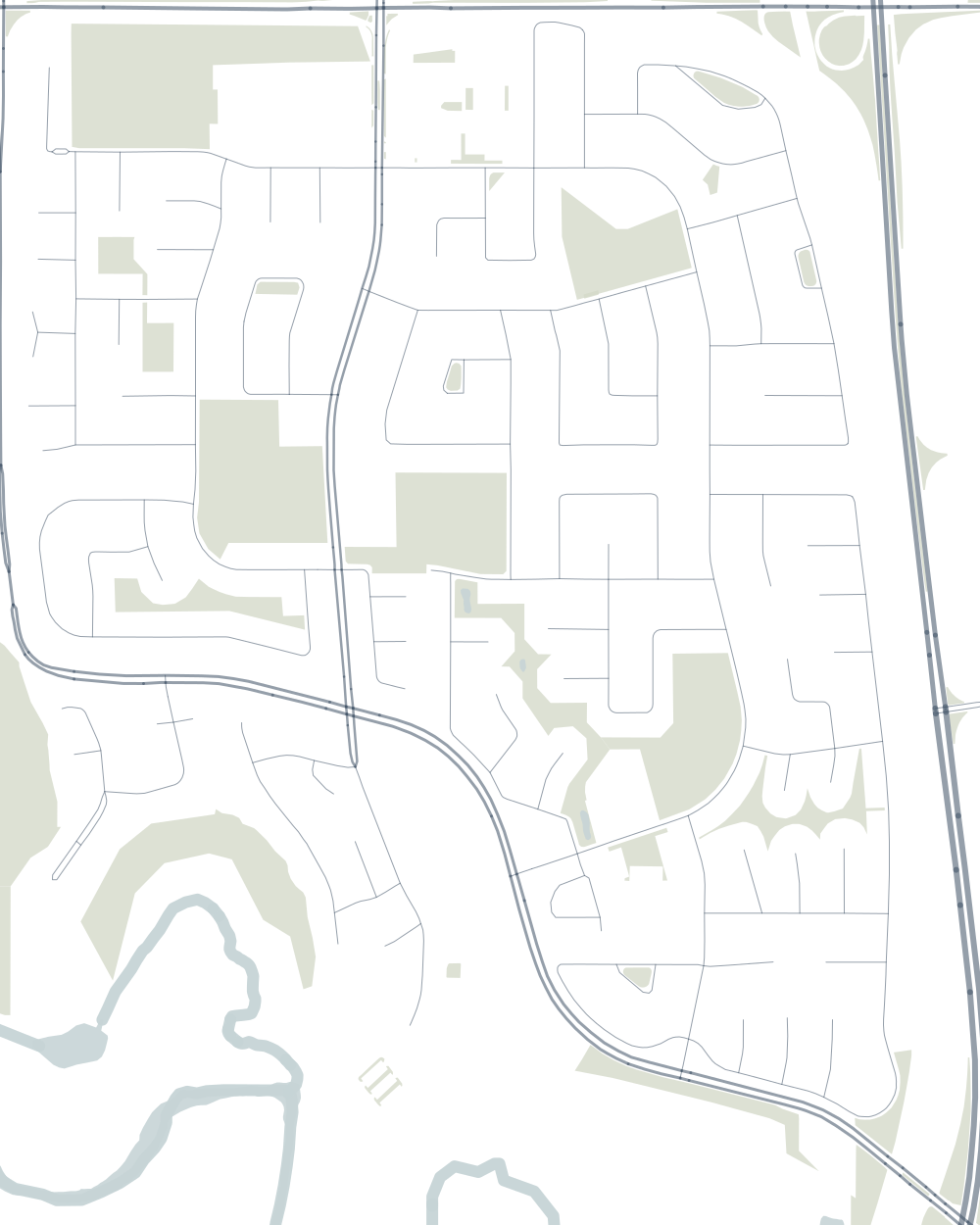
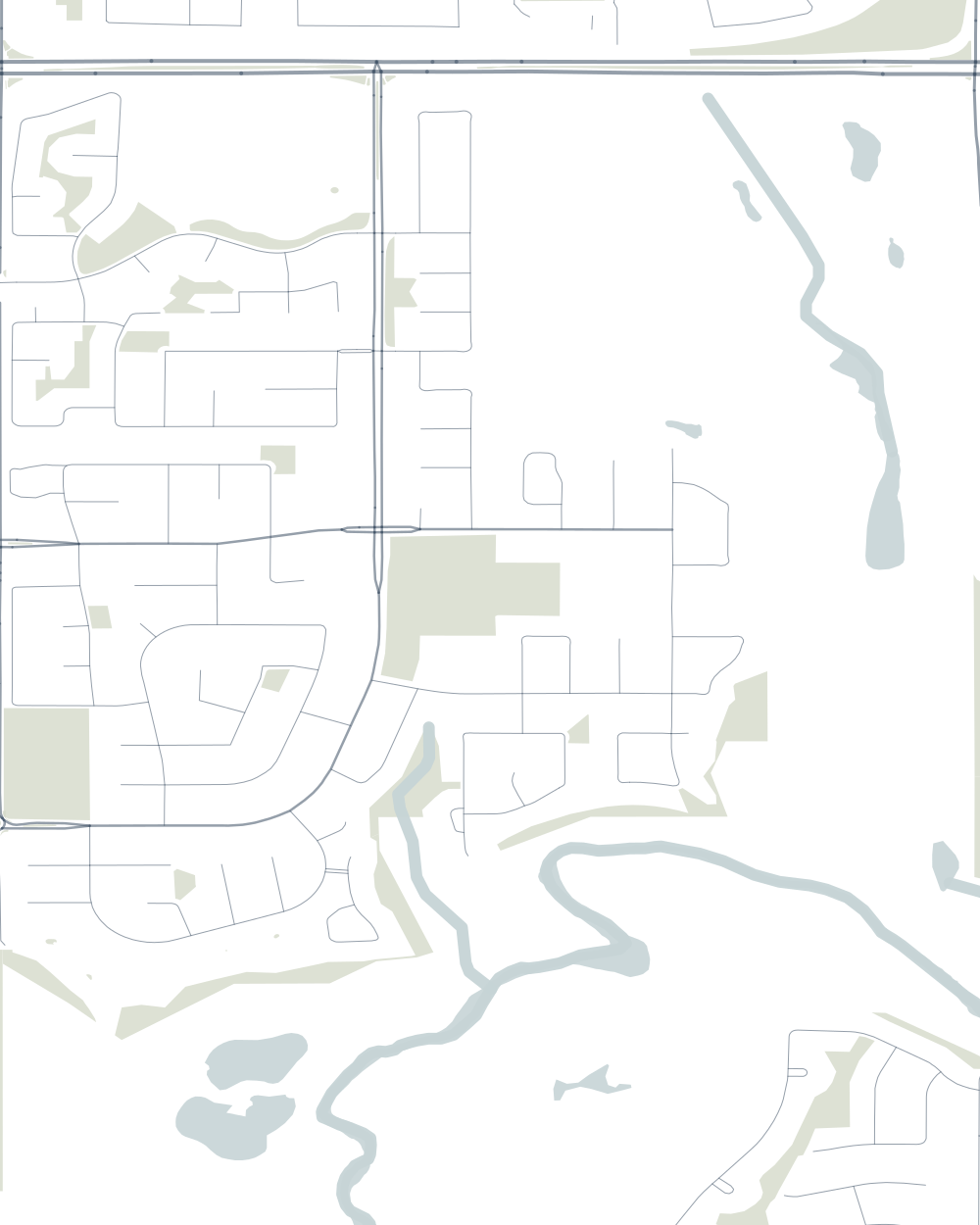
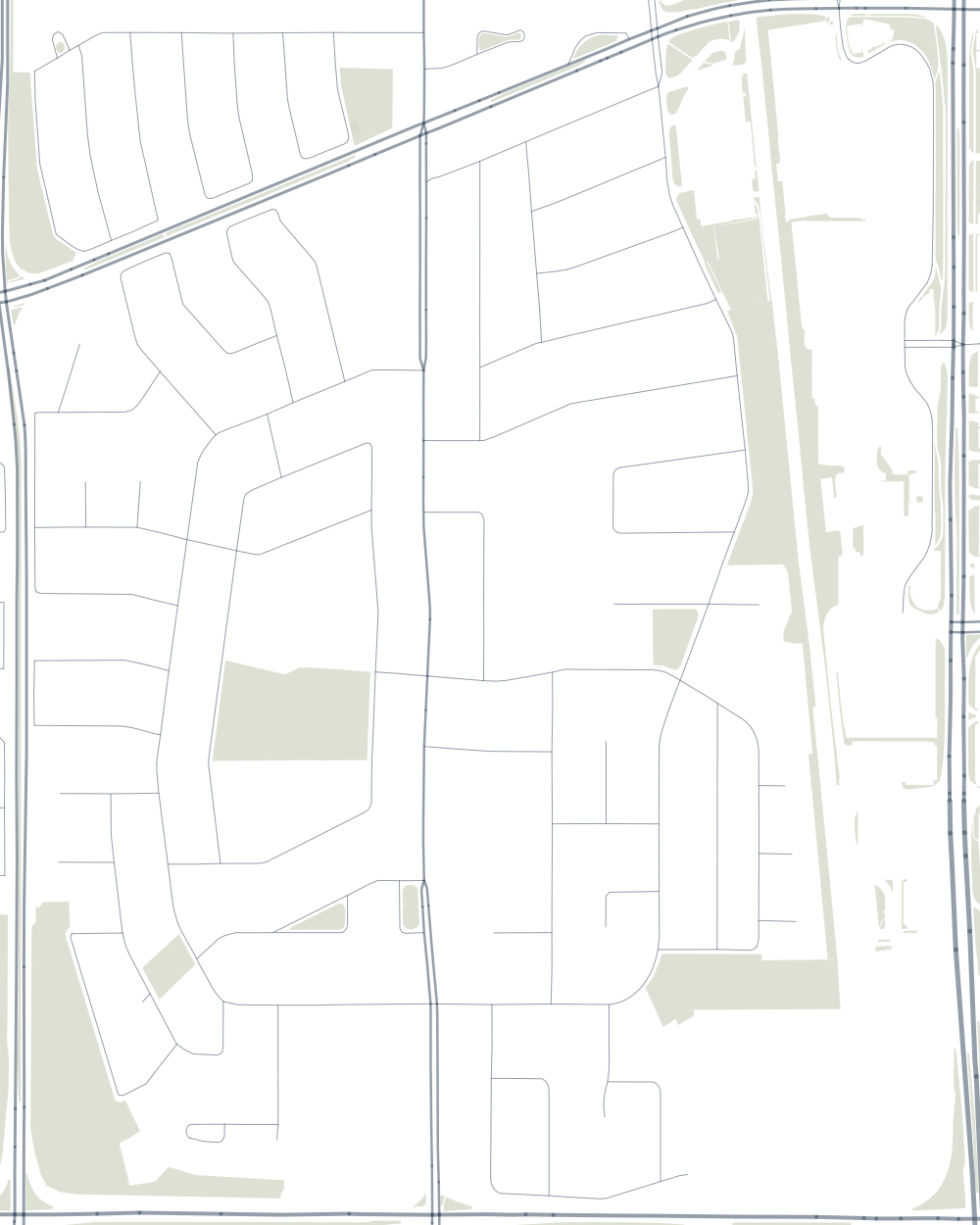
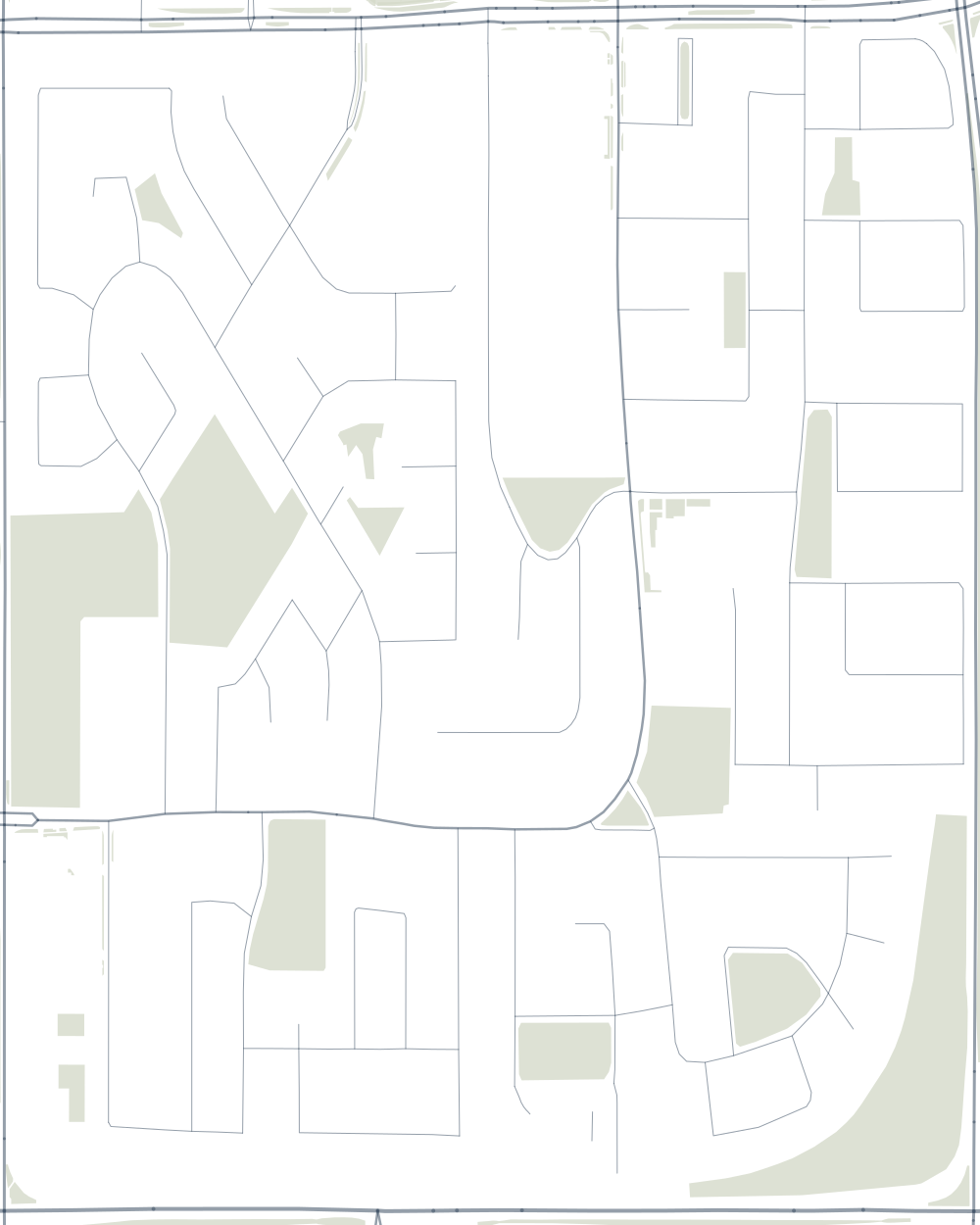
Canyon Meadows occupies an established pocket of SW Calgary bounded by Anderson Road to the north, Macleod Trail to the east, Fish Creek Provincial Park to the south, and 14 Street SW to the west. The postal code is T2W. The community was built primarily between 1965 and 1980, with meaningful late-cohort and infill activity continuing through the 1990s in the Cannington and Canyon Hills pockets. The Canyon Meadows LRT station on the Red Line sits inside the eastern boundary at Macleod Trail, and the private Canyon Meadows Golf and Country Club lies along part of the western edge, across the boundary in Woodlands.
Within Canyon Meadows is a sub-area locally known as Canyon Meadows Estates, a cul-de-sac pocket of larger 1970s and 1980s executive detached homes. The same community holds a stock of wood-frame walk-up apartment buildings along Canterbury Drive and Canyon Meadows Drive. Over the twelve months to August 2026, sales here ran from $160,000, an apartment sale, to $2,000,000, a detached sale.
The defining transportation feature is the Red Line LRT. Canyon Meadows Station puts a single-seat 25-minute downtown train at the eastern boundary. Woodbine to the west has the MAX Yellow BRT, which is meaningful but is still a bus. For a downtown-commuting professional, a Mount Royal student, or a teenager going to high school further north on the line, the LRT is a structural advantage.
Canyon Meadows recorded 143 residential sales over the twelve months to August 2026 at a blended median of $612,000, and half of them closed between $363,000 and $745,000. Detached houses were the largest property type, 81 sales and 56.6% of the market, at a median of $740,000. Row and townhouse homes closed 37 sales at a median of $364,000, and apartments closed 19 at $187,500. Semi-detached homes closed six, so the three larger property types account for 137 of the 143 sales.
David’s take
The vibe
Canyon Meadows reads as a mature, settled community with the streetscape texture of 55-plus-year-old tree canopy and a daily rhythm shaped by three coexisting populations. There are the original-owner families and downsizers who bought in the 1970s and 1980s and have stayed, the dual-income LRT commuter households who arrived in the last decade and chose Canyon Meadows specifically for the train, and the apartment-tier residents along Canterbury Drive who are typically first-time buyers, renters, or investors taking advantage of an affordable way into a community with its own LRT station. These groups don’t necessarily socialise across boundaries, but they share the same school catchment, the same grocery and service ecosystem along Macleod Trail and Canyon Meadows Drive, and the same LRT platform.
The Canyon Meadows Golf and Country Club sits along part of the community’s western edge, across the boundary in Woodlands. The course is private and members-only, so unless you join, you don’t play it.
Fish Creek Provincial Park forms the southern boundary, accessible via Canyon Meadows Drive south to the Bow Valley Ranch and Sikome Lake catchments. The Canyon Meadows portion of the park is less directly walkable than the Woodbine portion, but it is part of the community’s identity and pulls many residents into the regional pathway system for cycling, dog walking, and weekend recreation. The community association operates a hall and a rink, and the long-tenured demographic means there is a baseline of community programming and informal social cohesion that newer SW communities have not yet developed.
Housing stock
The detached segment is the largest and most varied. Over the twelve months to August 2026, detached houses were 81 of the 143 sales, 56.6% of the market, at a typical price of $740,000, between $450,000 and $2,000,000. The detached homes that sold have a typical build year of 1973 and took a typical 22 days to sell. The dominant product is the 1968-1980 bungalow, four-level split, and two-storey on roughly 50-foot lots in the established core, with a meaningful tier of 1985-1997 late-cohort and infill builds in the Cannington and Canyon Hills pockets at the eastern edge. The Canyon Meadows Estates sub-pocket adds a cul-de-sac inventory of larger 1970s and 1980s executive homes on bigger pie-lots and ravine-adjacent positions. Condition across the core runs from original to comprehensively renovated, so the inspection deserves as much of your attention as the list price.
Row and townhouse homes were 37 sales at a typical price of $364,000, between $232,000 and $660,000, with a typical build year of 1975 and a typical monthly fee of $396. They took a typical 21 days to sell, the quickest of the three biggest property types. These are the original wood-frame townhouse developments built alongside the community’s first phase, with self-managed or smaller-board condo corporations and varying reserve fund health. At 37 sales, the segment is deep enough for buyers to find genuine options rather than wait on thin inventory.
The apartment segment is the most distinctive part of the Canyon Meadows housing stock. Apartments were 19 sales at a typical price of $187,500, between $160,000 and $505,000, the low end of it the community’s lowest sale. The apartments that sold have a typical build year of 1982 and a typical monthly fee of $627, and they took a typical 53 days to sell, the slowest of the three biggest property types. Most of this stock is wood-frame walk-up apartment buildings along Canterbury Drive and Canyon Meadows Drive. Older wood-frame buildings carry real condition risk, so read the reserve fund study and the record of recent special assessments.
Semi-detached homes closed six sales over the same twelve months. The detached, row and townhouse, and apartment figures account for 137 of the 143 sales, and the six semi-detached sales are the difference.
| Type | Median sale price | Sales |
|---|---|---|
| Detached | $742,000 | 63 |
| Semi-detached | $471,000 | 3 |
| Row / townhouse | $373,200 | 28 |
| Apartment | $189,950 | 16 |
| All home types | $625,750 | 110 |
Recent sales
Canyon Meadows’ 143 residential sales over the twelve months to August 2026 took a typical 26 days on market. The 35 days in the header is the average of those same sales. Row and townhouse homes and detached houses sold at close to the same pace, typically 21 and 22 days, and both property types averaged 31 days. Apartments took much longer, typically and on average 53 days each.
The typical sale closed at 98.19% of its list price. Measured the same way over the same twelve months, Woodbine’s typical sale-to-list was 98.34% and its detached houses sold in a typical 17 days, so detached homes in Canyon Meadows took longer to sell and the community as a whole closed slightly further under list.
The header’s average sale, $614,416, sits $2,416 above the typical price of $612,000.
Half of the 143 sales closed between $363,000 and $745,000. Sales for the year ran from $160,000 to $2,000,000: the low is the bottom of the apartment range and the high is the top of the detached range.
For a figure on one specific Canyon Meadows address, request a home valuation. On the buying side, the buyer’s guide covers writing an offer in Alberta, inspection conditions and closing costs.
Schools
Canyon Meadows has three CBE schools inside its boundaries, which makes it easy to assume the community holds a complete public pathway in-house. It does not, and the distinction matters enough to set out first. Two of those three schools are citywide choice programmes rather than catchment schools. The CBE-designated elementary for Canyon Meadows addresses is Ethel M. Johnson School at 255 Sackville Drive SW, and the designated junior high is Harold Panabaker School at 23 Sackville Drive SW. Both are in Southwood, north of the community. The designated senior high, Dr. E. P. Scarlett High School at 220 Canterbury Drive SW, is the one that does sit inside Canyon Meadows.
What the community holds for the earlier grades is the Spanish Bilingual programme, and that is a genuine draw rather than a consolation. Canyon Meadows School runs Spanish Bilingual for K-5 and Robert Warren School continues it through grade nine, which makes this one of the few intact K-9 Spanish pathways in Calgary’s public system, an option less common in Alberta than French immersion. Both schools take students from across the city by application. Living in Canyon Meadows puts them within walking distance of many blocks; it does not reserve a seat in either one. Confirm current intake reality and any lottery or wait-list process with CBE program services before relying on the programme for a purchasing decision.
For Catholic families, St. Catherine School is the designated CSSD elementary, St. Stephen School at 10910 Elbow Drive SW in Southwood is the designated junior high, and Our Lady of the Rockies High School at 111 Haddon Road SW in Haysboro is the designated senior high. CBE and CSSD designations are set by address and can change between planning cycles, so confirm the current assignments for your specific address with the CBE Find a School tool and the CSSD Attendance Areas tool at cssd.ab.ca before relying on a designation for a purchasing decision.
Ethel M. Johnson School
Public, K-6
CBE-designated public elementary at 255 Sackville Drive SW in Southwood, outside Canyon Meadows. Confirm the designation for your specific address with the CBE Find a School tool.
Harold Panabaker School
Public, 7-9
CBE-designated junior high at 23 Sackville Drive SW in Southwood, outside Canyon Meadows. Confirm the designation for your specific address with the CBE Find a School tool.
Dr. E. P. Scarlett High School
Public, 10-12
CBE-designated senior high at 220 Canterbury Drive SW, inside the community.
Canyon Meadows School
Public, K-5
CBE Spanish Bilingual school inside the community and the start of the K-9 Spanish Bilingual pathway. A citywide, application-based choice programme rather than a catchment school, so a Canyon Meadows address does not designate a child to it.
Robert Warren School
Public, 6-9
CBE Spanish Bilingual school inside the community, continuing the pathway from Canyon Meadows School. Also a citywide, application-based choice programme rather than a catchment designation.
St. Catherine School
Catholic, K-6
CSSD-designated Catholic elementary for Canyon Meadows. Confirm current Canyon Meadows designation with the CSSD Attendance Areas tool.
St. Stephen School
Catholic, K-9
CSSD-designated Catholic junior high for Canyon Meadows, at 10910 Elbow Drive SW in Southwood. The school itself runs Kindergarten to Grade 9; Canyon Meadows addresses designate to it for the junior high years.
Our Lady of the Rockies High School
Catholic, 10-12
CSSD-designated Catholic senior high at 111 Haddon Road SW in Haysboro. Confirm current Canyon Meadows designation with the CSSD Attendance Areas tool.
Getting around
Canyon Meadows has a transit story anchored by the Canyon Meadows LRT station on the Red Line at the eastern boundary. The station puts a 25-minute single-seat ride to downtown within walking or short-bus distance of every address in the community; for residents in the eastern third of Canyon Meadows it is genuinely walkable. The LRT also connects north to Chinook, Heritage, the University of Calgary via interchange, and ultimately to the northern Red Line termini, and south to Fish Creek-Lacombe, Shawnessy, and Somerset-Bridlewood. For a downtown-commuting household, the LRT is often the deciding amenity that places Canyon Meadows above Woodbine or Braeside on the comparison shortlist.
By car, downtown is approximately 22 minutes via Macleod Trail or via the Anderson Road interchange to Deerfoot Trail. The University of Calgary is approximately 28 minutes north via Crowchild or via the LRT to the University station with a short walk. Foothills Hospital is approximately 22 minutes via 14 Street SW and Crowchild. Calgary International Airport is approximately 32 minutes via Deerfoot Trail. The Anderson Road interchange to Stoney Trail is a meaningful additional asset for residents travelling west to the Tsuut’ina Trail corridor, Aspen Woods, or the mountains.
Anderson Road forms the northern boundary and carries the noise and traffic load typical of a six-lane Calgary arterial. Boundary-adjacent properties on the northern edge streets are exposed to Anderson noise in a way that interior Canyon Meadows lots are not. Macleod Trail on the eastern edge carries similar exposure for properties along Canterbury Drive and the eastern Cannington pockets. Buyers shopping the boundary edges should walk the specific address at different times of day to assess actual exposure rather than relying on the listing photos.
| Downtown | 25 min by LRT, 22 min by car |
|---|---|
| University of Calgary | 28 min |
| Foothills Hospital | 22 min |
| Airport (YYC) | 32 min |
Frequently asked questions
How much does LRT access matter when buying in Canyon Meadows?
For a downtown-commuting professional, often a great deal. The Canyon Meadows LRT station puts a 25-minute single-seat ride to downtown within reach of every address in the community, and walking distance for eastern-edge addresses. That eliminates a second vehicle for many households, which is a real ongoing cost, and gives teenagers genuine independence for travel to school, work, and downtown destinations. For households that will actually use the train regularly, the station belongs near the top of the list. For households who will drive everywhere anyway, it matters much less, and the house and the street should carry the decision. Either way, time the walk from the specific address to the platform before relying on it.
Is Canyon Meadows Estates a different market from the rest of Canyon Meadows?
In practice, yes. Canyon Meadows Estates is a cul-de-sac pocket of larger 1970s and 1980s executive detached homes on bigger pie-lots, often ravine-adjacent. The broader Canyon Meadows detached market is the original-cohort bungalows, four-level splits, and two-storeys. A buyer comparing a Canyon Meadows Estates listing to a Canterbury bungalow is comparing two different products under one neighbourhood name. The data shows them as one detached segment because the MLS field treats Canyon Meadows as one community: 81 detached sales over the twelve months to August 2026, at a typical $740,000, between $450,000 and $2,000,000. The buyer profiles, the lot sizes, and the resale dynamics are still distinct enough that they should be reasoned about separately.
How does the Spanish Bilingual program actually work?
The CBE Spanish Bilingual program runs K-9 across two schools in Canyon Meadows: Canyon Meadows School for K-5, then Robert Warren School for 6-9. Students receive a portion of their core instruction in Spanish, with the proportion shifting across grade levels. It is a citywide choice program, which means enrolment is by application from anywhere in Calgary rather than by catchment, and intake can be subject to capacity limits in any given year. Living in Canyon Meadows puts both schools close to home, but it does not designate a child to either one. The address-based designations are Ethel M. Johnson School (K-6) and Harold Panabaker School (7-9), both in Southwood, north of the community. Families considering Canyon Meadows specifically for the Spanish Bilingual pathway should contact CBE program services directly to confirm current intake reality and any lottery or wait-list dynamics before relying on the program for a purchasing decision. An intact K-9 Spanish pathway is uncommon enough in Calgary to be a meaningful differentiator for the right family.
What should I know about the wood-frame apartments along Canterbury Drive?
The Canterbury Drive and Canyon Meadows Drive apartment stock is dominated by wood-frame walk-up buildings. The 19 apartments that sold in Canyon Meadows over the twelve months to August 2026 carry a median build year of 1982 and closed at a median of $187,500, the lowest median of the three property types this page prices. Older wood-frame buildings carry real condition risk. Original mechanical systems, original envelopes, and older condo boards mean reserve fund health, recent special assessments, and major capital project history vary sharply by building, and the median monthly fee on those 19 sales was $626.76. A first-time buyer or investor should be reading the condo documents carefully: the reserve fund study, the most recent annual financial statements, the AGM minutes for the last two years, the rental restriction bylaws, and the major projects log. The right building can be a sound entry point to ownership; the wrong building at the same price can be a deferred-maintenance trap. Unit selection matters less here than building selection.
Is Poly-B plumbing a concern in Canyon Meadows homes?
For the original homes built before 1978, no. Poly-B (polybutylene) plumbing was used in Canadian homes from about 1978, most widely from 1985 to 1997. Homes built from 1978 on are the ones to check, including the late-cohort 1985-1997 infill and redevelopment builds, primarily in the Cannington and Canyon Hills pockets at the eastern edge of the community. For homes in that build window, a buyer should budget for the possibility of a full Poly-B repipe (typically $6,000 to $12,000 for a single-family home) and have a qualified plumber confirm the system type during the inspection contingency. For everything else in Canyon Meadows, the legacy concern is different: original galvanized supply lines, original electrical panels, and older mechanical systems typical of pre-1978 builds. Different era, different inspection checklist.
How noisy is Macleod Trail for homes on the eastern edge?
Properties on Canterbury Drive and the eastern Cannington pockets sit close to Macleod Trail, which is a six-lane arterial carrying heavy commuter traffic at most hours. The noise exposure is real and varies by specific address, lot orientation, and any sound-attenuation fencing or tree screening between the home and the road. Some east-facing apartment buildings sit directly adjacent to Macleod with limited buffer; some detached blocks have a row of homes screening the next street back. The honest recommendation is to walk the specific address at morning rush hour (around 7:30 to 8:30) and again on a weeknight evening to assess actual exposure before relying on a listing photo. The same eastern-edge addresses sit closest to the Canyon Meadows LRT station, so for those homes the short walk to the train and the Macleod noise come together.
How does Canyon Meadows compare to Oakridge, Palliser, or Lake Bonavista?
Oakridge is the closest direct comparison: similar 1965-1975 era and similar bungalow-heavy stock. Measured the same way over the same twelve months to August 2026, Oakridge’s typical detached price was $860,000, against $740,000 in Canyon Meadows. The key Canyon Meadows differentiator against Oakridge is the LRT station, which Oakridge does not have. Palliser sits north of Canyon Meadows; it is the natural moving-from community for Canyon Meadows Estates downsizers, with a different lot-size character, and over the same twelve months its 10 detached sales closed at a typical $765,000. Lake Bonavista sits directly east of Canyon Meadows across Macleod Trail; it is the natural comparison for buyers weighing east-of-Macleod amenities (the lake, the more contained street grid) against west-of-Macleod LRT access. For a downtown-commuting household, the LRT often tilts the comparison toward Canyon Meadows.
Sales data current as of 2026-08-31. Includes 143 residential sales in Canyon Meadows over the twelve months to August 2026. Source: Pillar 9 MLS® System. Copyright 2026 Pillar 9. All Rights Reserved.