Of all the documents that come up in an Alberta residential transaction, the Real Property Report is the one most likely to catch a seller off guard. Most homeowners have not thought about theirs since the day they bought. Then an offer comes in, the contract asks for an RPR with evidence of municipal compliance, and the question becomes: do you have one, is it current, and what happens if it is not?
This guide is a complete reference for both sides of the transaction. Sellers will find a clear picture of what to order, what to expect from the process, and how to handle common compliance problems. Buyers will find an explanation of what the document actually protects and why waiving it deserves careful thought. The article closes with a practical FAQ covering the questions that come up most often at the offer table.
What an RPR actually is
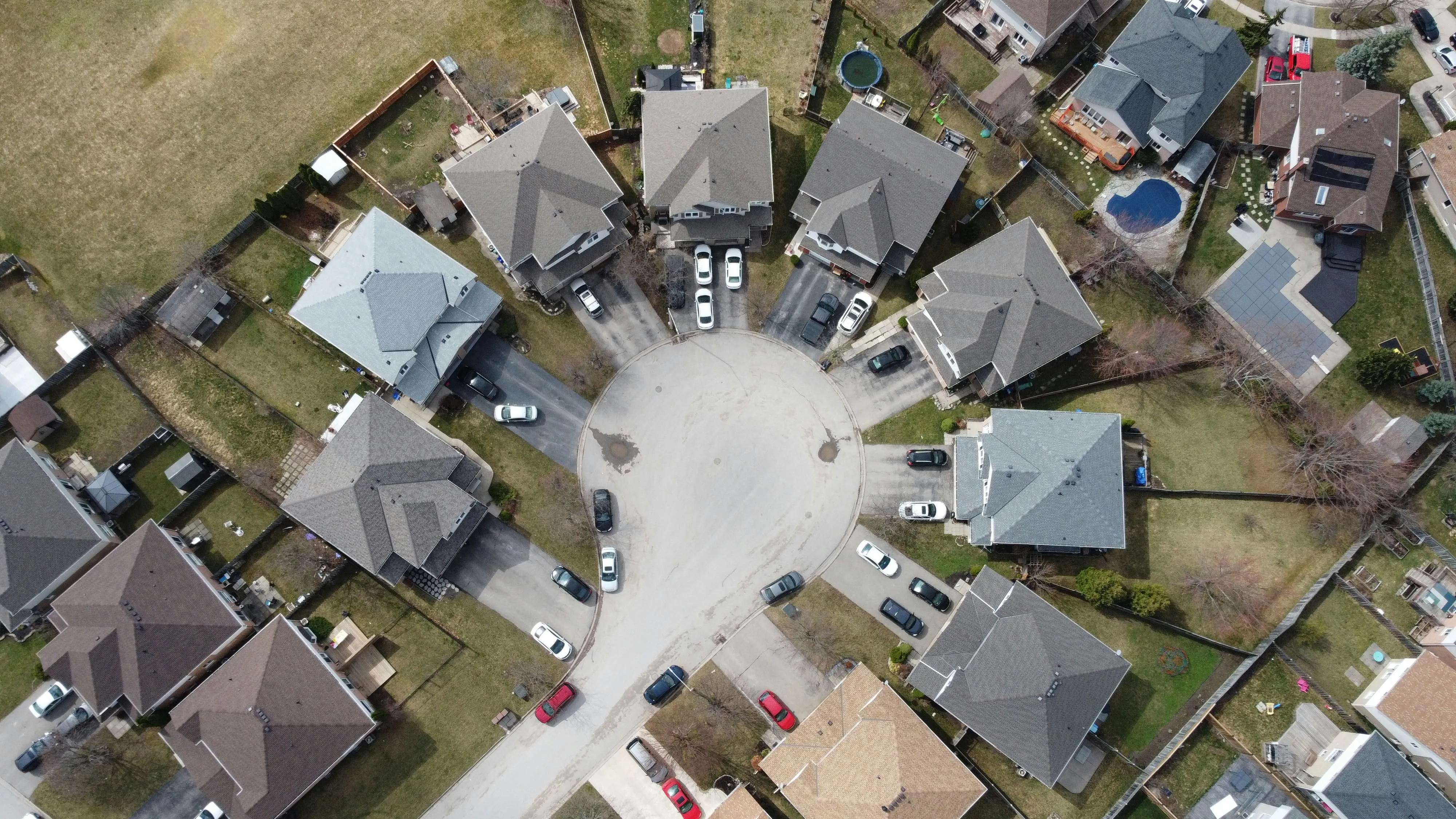
A Real Property Report is a legal drawing prepared by an Alberta Land Surveyor. It shows the physical boundaries of a property as they exist on the ground, along with the location of every improvement on the lot: the house, attached or detached garages, fences, decks, sheds, outbuildings, and any other structures the surveyor observes. The drawing also shows easements, rights-of-way, and any encroachments, meaning situations where a structure sits partly or entirely outside the property line, or where a neighbour’s improvement crosses onto the property being surveyed.
The RPR is not a title certificate. A title certificate is a legal record of ownership issued by the Land Titles Office. It tells you who owns the land and what encumbrances are registered against it. An RPR tells you something different: what is physically sitting on the land, and whether those improvements comply with the applicable municipal bylaws and setback requirements.
The RPR is also not title insurance. Title insurance is an insurance policy that protects against certain risks related to title defects and survey issues. It can sometimes stand in for a current RPR, and that substitution is discussed below, but the two are entirely different instruments. Title insurance does not survey the land. It covers financial loss if a problem is discovered later.
An RPR should not be confused with a property tax assessment either. The City’s annual assessment is a valuation document used to calculate property taxes. It has no bearing on the physical survey of improvements or their compliance with setback bylaws.
Alberta sets this default through the AREA Residential Purchase Contract; other provinces, Ontario for example, routinely use title insurance instead.
Why Alberta requires one
The AREA Residential Purchase Contract sets the default rule for almost every residential sale in this province: the seller must provide a current RPR with evidence of municipal compliance before the transaction closes. That obligation sits with the seller unless the parties specifically agree in writing to modify or remove it. If you are preparing to list and want to understand the full timeline of what a seller needs to handle before and during a sale, the complete seller’s guide covers the listing process from pricing through possession.
The word “current” is where most sellers run into trouble. An RPR becomes stale the moment any physical change is made to the property after the survey date. A new fence, a deck addition, a backyard shed, a hot tub, a garage extension, an addition to the house: any one of these changes means the existing RPR no longer accurately shows what is on the lot. The surveyor drew what was there on a specific date. If the property looks different today, the RPR does not reflect reality and cannot support a compliance stamp.
Municipal compliance is a separate step from the survey itself. Once a licensed Alberta Land Surveyor completes the RPR, the seller submits it to the city for review. A city planner checks whether each structure shown on the drawing meets current zoning setbacks and permit requirements. If everything is in order, the city issues a compliance stamp showing the date of review. That stamp is what the buyer’s lawyer and lender need to confirm the structures are permitted to exist where they exist.
The compliance stamp does not expire on a fixed schedule. It remains valid as long as the property does not change. What makes it stale is a physical change to the lot, not the passage of time.
For sellers: what you need to provide
The contractual starting point is straightforward: a current RPR, stamped by the city for municipal compliance. Both parts are required. An RPR without a compliance stamp does not satisfy the default contract term, and a compliance stamp on a stale RPR is worthless because the drawing it certifies no longer matches the property.
The cost of ordering a new RPR in Calgary typically falls between $500 and $900 for a standard city lot. Larger lots, acreage properties, and sites with complex improvements or easement geometry will cost more. The surveying firm provides a quote after reviewing the legal description.
Timeline is the variable most sellers underestimate. In normal market conditions, an RPR takes two to four weeks from order to delivery. During the spring selling season, when every seller is listing at once and surveying firms are backlogged, the same job can take six weeks or longer. An RPR ordered after an offer comes in will almost certainly create a delay.
Many sellers assume the RPR from their own purchase still works. In practice, it rarely does. Most homeowners add something to their property during their years of ownership without realising that addition invalidates the old survey. A fence put up three years ago. A deck built the summer after move-in. A storage shed at the back of the lot. Each one changed the physical reality the RPR is supposed to show.
A common misconception is that compliance stamps expire after five years. There is no such rule. The compliance stamp does not have a calendar expiry. What invalidates it is a change to the property. A thirty-year-old RPR with a thirty-year-old compliance stamp is technically valid if nothing on the lot has changed since the survey date, though proving that is its own challenge.
The practical advice: order the RPR as soon as you decide to list. Do not wait for an offer. The two to four weeks the surveyor needs do not align with most offer timelines, and scrambling to produce an RPR during a live transaction creates unnecessary pressure on the closing date.
For sellers: what to do if your RPR is missing, old, or non-compliant
When an offer comes in and the RPR situation is not clean, sellers have three realistic options.
Order a new RPR with compliance. This is the cleanest path. A licensed Alberta Land Surveyor surveys the lot, produces the drawing, and the seller submits it for the city compliance stamp. The buyer gets the document the contract calls for, and there are no hidden risks left on the table. The drawback is time and cost: two to four weeks and $500 to $900 or more. For deals with tight closing dates, that window may not exist. When the timeline works, this is always the preferred route.
Title insurance in lieu. This is the most common workaround when a new RPR is not feasible. The contract is amended to reflect that the seller will not provide an RPR, and title insurance is substituted instead. The buyer’s lender will typically accept a title insurance policy in place of a current RPR. The premium is usually in the range of $200 to $400 for a typical residential property, paid by the seller or allocated by negotiation.
The honest framing: title insurance protects the lender against financial loss if a title defect is later discovered. It does not survey the property. It does not confirm structures are within the property lines. If the neighbour’s fence turns out to be three feet over the boundary, or the seller’s garage sits partly on an easement, the buyer is not protected against that outcome by the title insurance policy. The buyer is accepting unknown risk in exchange for closing speed. That tradeoff is sometimes reasonable and sometimes not, and it deserves a clear conversation with the buyer’s REALTOR® and lawyer before the amendment is signed.
Contract amendment to remove the RPR clause entirely. This option is rare and should not be offered or accepted casually. It requires a buyer who understands property law, a negotiated price that reflects the uncertainty, and sign-off from both parties’ lawyers. In most residential deals in Calgary, this is not a realistic option. Mentioning it as an alternative without the surrounding caveats would be misleading.
For buyers: how to read an RPR
The document shows the legal lot boundary with bearings and distances along each edge, the home footprint with setback measurements to each property line, and every other structure on the lot drawn to scale: fences, decks, sheds, hot tubs, AC pads. Easements and rights-of-way appear as shaded strips or dashed lines labeled with their purpose, whether a utility corridor, drainage easement, or shared access strip. The municipal compliance stamp, if present, sits on the face of the drawing with the date of city review.
Four things to check once the drawing is in hand. First, do the structures visible today match what is shown? Any addition made after the survey date will not appear, and the compliance stamp will not cover it. Second, do the fence lines match the legal boundary? Fences drift over decades, and a fence sitting two feet inside or outside the actual line is an encroachment in either direction. Third, do any easements cross the home’s footprint or driveway? A backyard utility strip is manageable; one crossing the foundation or driveway limits what the owner can do in that zone. Fourth, are setback violations noted, and if so, does the compliance stamp cover them?
The compliance stamp confirms that the structures shown met zoning and permit requirements as of the review date. That is all it does. It does not certify the survey reflects the property today, and it does not certify structures are still in the same locations. Any structure added, moved, or rebuilt after the stamp date falls outside what the stamp covers.
Common red flags at the offer or condition stage
Most RPR problems at the offer table fall into a short list.
Fence over the property line. A fence sitting on or past the legal boundary is an encroachment, whether it belongs to the seller or a neighbour. Resolution depends on direction and duration: some buyers and sellers document a longstanding encroachment by mutual agreement; others require a quitclaim. A lawyer should be in that conversation.
Deck added without permit. A deck that appears on the RPR but is not covered by the compliance stamp is a known deficiency. The buyer’s options are to condition on a retroactive permit, condition on title insurance covering the unpermitted structure, or walk away. Retroactive permits are possible for many standard configurations, but the timeline is unpredictable.
Shed too close to the setback. Older Calgary properties frequently have sheds installed without confirming setback rules. Some are grandfathered; others are not. The face of the RPR will not tell you which. A lawyer can pull the relevant bylaw history and advise.
Neighbour’s encroachment. When a neighbour’s fence corner, garage corner, or shed sits on the property being purchased, the buyer is not buying a resolved situation. The encroachment does not disappear at closing. It becomes the buyer’s problem to raise with the neighbour, and it may surface a dispute the seller has quietly avoided.
Easement on top of the foundation. Rare, but it requires legal advice before condition removal. A registered easement on the strip of land where the foundation sits means a utility or the city holds a legal right to access that area. The buyer must understand exactly what that registered right permits before proceeding. For a full walkthrough of what buyers are evaluating at each stage of an offer, the complete buyer’s guide covers conditions, due diligence, and the path from offer to possession.
RPR vs title insurance: the honest comparison
Title insurance is a legitimate tool, but deciding whether it is an acceptable substitute for an RPR requires an honest look at the specific property and the buyer’s situation.
When title insurance is fine:
- The seller cannot reasonably obtain a new RPR before closing
- The risk profile is low: newer home, a recent compliance stamp already on file, no visible recently-added structures
- The buyer has confirmed with their lawyer that the policy covers the specific risks relevant to this property
When buyers should require an RPR:
- Older property with multiple visible additions made over the years
- Visible fence or shed disputes with neighbours, or fences that obviously do not follow the legal boundary
- Subdivision geometry or unusual easements that make encroachment risk harder to assess without a survey
- The buyer plans to add or modify structures soon (a stale RPR will force a new survey regardless, so the cost is unavoidable)
The key distinction is who the lender’s title insurance policy actually protects. A lender accepts title insurance to secure their loan against financial loss, not to protect the buyer’s equity from a dispute with a neighbour or a bylaw problem that surfaces after closing. If a survey problem is discovered two years later, the buyer owns the problem and the cost of resolving it. That is the tradeoff a buyer accepts when agreeing to title insurance in lieu of a current RPR, and it deserves a direct conversation with both the buyer’s REALTOR® and their lawyer before the contract amendment is signed.
Condos and new builds
Two categories of residential property sit outside the standard RPR framework, and the rules that apply to detached homes do not translate to either one.
Frequently asked questions
How much does an RPR cost in Calgary?
For a standard city lot, expect to pay between $500 and $900 for a new RPR including the municipal compliance submission. Larger lots, acreage properties, and parcels with complex improvements or unusual easement geometry will cost more. Prices have crept up in recent spring markets as surveying firms run into backlog during peak listing season. Getting a quote from a licensed Alberta Land Surveyor before you commit to a timeline is always worth doing early.
Who pays for the RPR, the buyer or the seller?
The seller, by default, under the AREA Residential Purchase Contract. The contract places the obligation to provide a current RPR with evidence of municipal compliance on the seller’s side. That cost can be negotiated as part of the offer terms, but any shift in responsibility requires a written amendment that both parties sign. Without that amendment, the seller is responsible.
How long is an RPR valid?
There is no calendar expiry. An RPR remains valid as long as nothing on the property has changed since the survey date. Adding a deck, fence, shed, or any other structure after the stamp date means the existing RPR no longer reflects the lot accurately. The “five-year rule” some homeowners reference is not a real rule, and there is nothing in Alberta legislation or the AREA contract that creates one.
Do I need a new RPR if I added a deck?
Yes, if the deck is a permanent structure. The existing RPR no longer shows what is on the lot, and the compliance stamp does not cover any structure that was not present when the city reviewed the drawing. A new RPR with an updated compliance submission is the clean resolution. Title insurance is the workaround if timing is the constraint, but it comes with the tradeoffs discussed above.
What if my neighbour disputes the property line shown on the RPR?
The RPR is prepared by a licensed Alberta Land Surveyor and reflects the legal lot boundaries from the registered plan at Land Titles. Disputes are resolved by referring back to those registered records, sometimes with a physical survey marker walk where both parties attend. If a structure turns out to be over the boundary line, resolution depends on which direction the encroachment runs, how long it has been there, and what both parties are willing to agree to.
Can I use my old RPR from when I bought the house?
Only if nothing on the property has changed since it was prepared. For most homeowners that is not true: fences, decks, sheds, and additions accumulate over the years of ownership, often without the owner connecting those changes to the survey. If the original RPR is still accurate, a licensed surveyor may be able to issue a renewed compliance stamp rather than a full new drawing. If the property has changed, a new RPR is required.
Where to go from here
The RPR is one of the few documents in an Alberta real estate transaction that genuinely benefits from being handled early. Sellers who order theirs before listing avoid the compressed timelines and forced workarounds that come with producing it during a live deal. Buyers who understand what the document shows and what it does not are better positioned to ask the right questions at the condition stage. The RPR cost is also one line in the larger picture of what a Calgary sale actually costs; the cost-of-selling breakdown walks through every seller cost on a $750K example so none of it comes as a surprise at closing.
If you are preparing to list, start with a home valuation to understand where your property sits before the paperwork conversation begins. If you are a buyer in the middle of a deal and want a second opinion on what your RPR is showing, reach out directly.