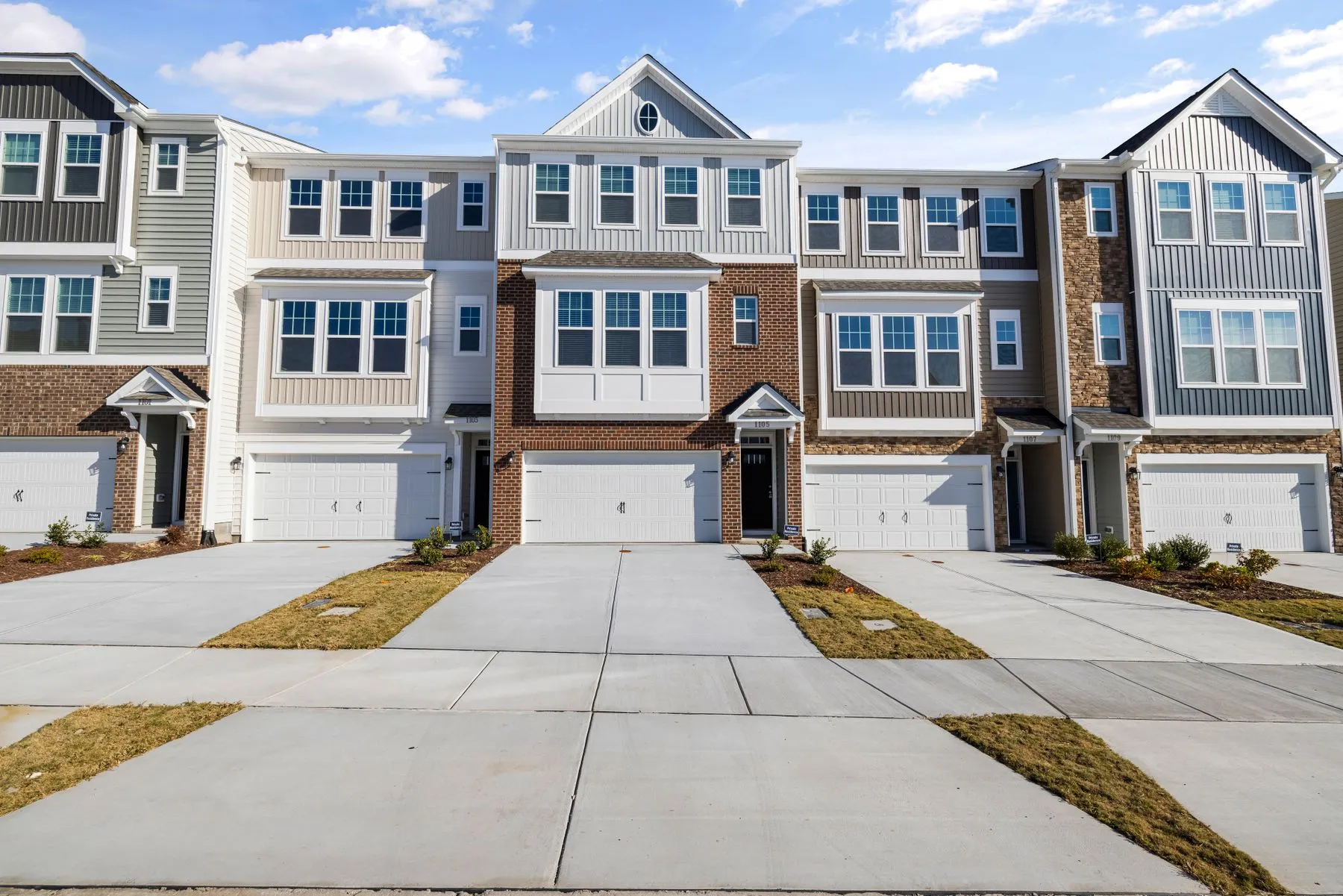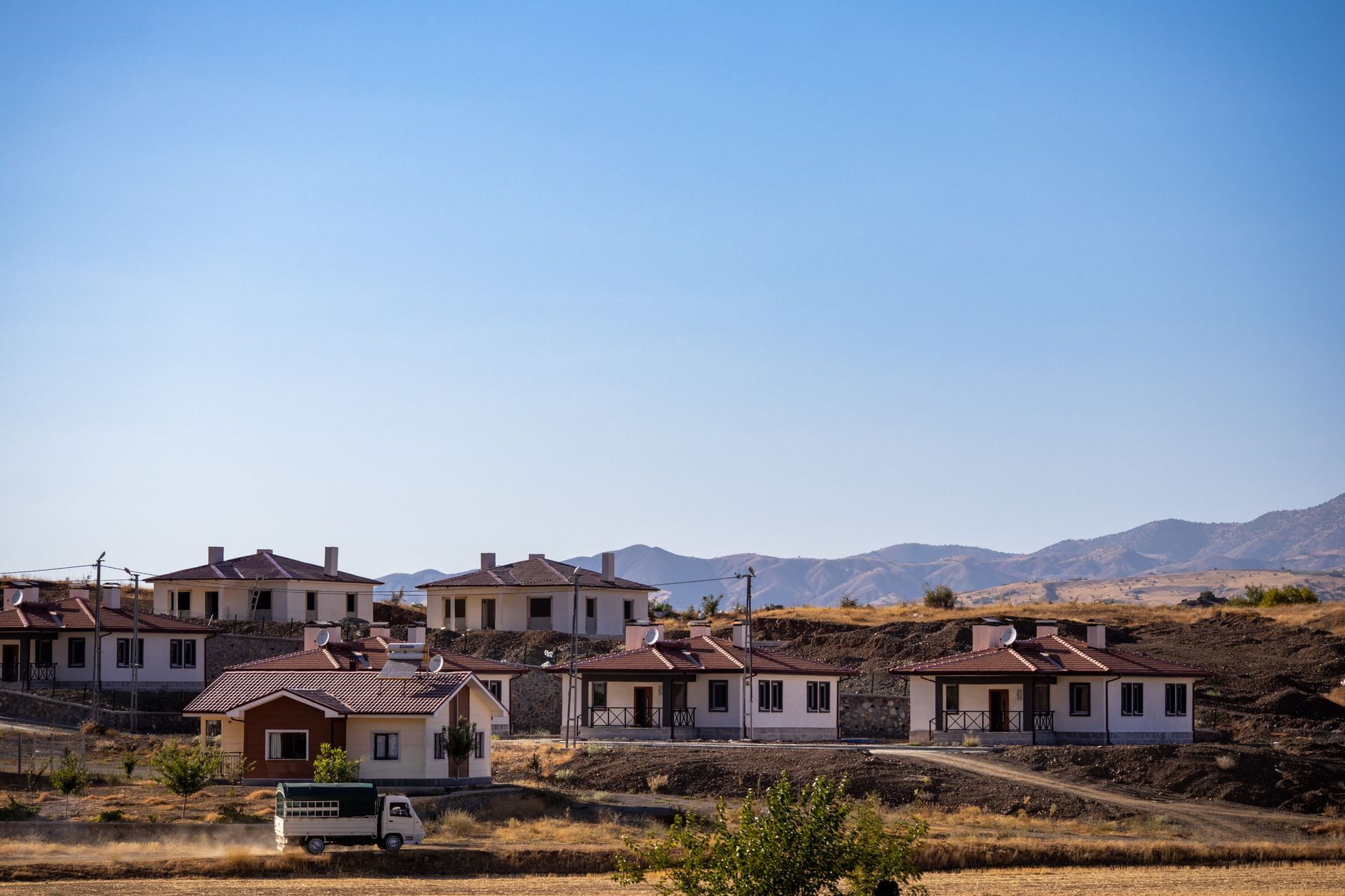
You are standing in a show home in Belmont or Wolf Willow, and it is a good house. The layout works, the finishes are current, nothing needs doing, and the sales representative is competent and pleasant and has an answer for everything you ask.
There is one question they cannot answer, and it is not their job to. What happens when you go to sell this house?
That question is worth asking now, because almost everything written about new construction is written by someone who sells it. I went looking for what the Calgary numbers actually say, and pulled every residential sale on the Calgary MLS for the twelve months to August 17, 2026. That is 21,043 sales.
What “still building” actually means for the home you are buying
The relevant thing about a brand new community is not the age of the houses. It is the sales centre.
While a builder is still delivering homes in your community, every buyer who comes to look at yours has an alternative you cannot match. They can drive four blocks, pick the same floor plan, choose their own finishes, and take whatever incentive the builder is running that month. You are the used option in that comparison, and you are competing with a professional sales operation that has a marketing budget and no emotional attachment to the price.
When the builder sells the last lot and closes the trailer, that alternative disappears. Your home stops competing with new product and starts competing only with other resales.
So the question is whether that shows up in the data. It does, but not in the way I expected.
What the sold data shows
To test it fairly you have to compare like with like. Comparing a new suburb against an established inner-city community would just measure the difference between the suburbs and the inner city.
So both sides here are greenfield master-planned communities, the kind built on raw land with a sales centre. On one side, communities where builders were still delivering new homes over the past year: Legacy, Belmont, Pine Creek, Wolf Willow, Yorkville, Seton, Cornerstone, Livingston, Carrington, Mahogany and others. On the other, the same kind of community after build-out: Auburn Bay, Evanston, Nolan Hill, Kincora, Crestmont, New Brighton and Sherwood.
In both groups I looked only at resales of homes built between 2016 and 2022. Old enough that a sale today is a genuine second-hand transaction, new enough to still be competing with whatever the builder is putting up. That is 2,728 sales.
| Home type | Builder still selling | Community finished | Difference |
|---|---|---|---|
| Detached | 36 days | 21 days | 15 days slower |
| Apartment | 43 days | 33 days | 10 days slower |
| Row and townhouse | 35 days | 36 days | no difference |
A detached resale took roughly 70 per cent longer to sell where the builder was still active. That is the finding, and it is larger than I expected.
Here is the part that matters. The cost showed up as time, not as price.
| Home type | Builder still selling | Community finished |
|---|---|---|
| Detached | 97.9% of asking | 98.3% of asking |
| Apartment | 97.1% of asking | 97.5% of asking |
| Row and townhouse | 97.8% of asking | 98.1% of asking |
Every one of those gaps is under half a percentage point. Sellers competing with a live sales centre were not accepting materially worse offers. They were waiting materially longer to get them. On a $700,000 home, half a point is about $3,500, which is real but is not the story. Six extra weeks of carrying a house you have already moved out of is the story.
Row and townhouse showed no effect at all, and I am leaving that in because it is the most useful line in the table. Builders in these communities are mostly delivering detached product, so an attached resale is not competing with the show home in the same way. If you are buying a townhouse in a new community, most of this post does not apply to you.
What else could explain the gap
This is an association, not a proven mechanism, and there are things this data cannot separate.
Still-building communities are on the edge of the city almost by definition, and distance from the centre affects how long a home takes to sell regardless of what the builder is doing. The two groups are not identical in location, and I cannot cleanly divide “the builder is competing with you” from “this community is a long way out.”
The comparison group is also smaller than I would like. There were 95 detached sales in the finished group against 520 in the still-building group, which is enough to report but not enough to be confident about small differences.
One thing does run in favour of the finding rather than against it. The homes in the still-building group were actually newer: a median build year of 2020, against 2017 in the finished group. Newer homes normally sell faster, not slower. These sold slower anyway, which suggests 15 days is a conservative reading rather than an inflated one.
I would also expect this effect to be strongest where the builder is most active, and the data is not fine-grained enough to show that. Several individual communities have too few resales in a year to say anything reliable about them on their own, which is why nothing here is broken out community by community. In the very newest communities, hardly anything from this cohort has come up for resale at all yet.
What changes when the builder finishes
This pressure is temporary, and that matters more to your decision than the size of it.
Every community in the finished group was once a community in the still-building group. Auburn Bay, Evanston and Nolan Hill all had sales centres and show homes and a builder undercutting their early resale sellers. They finished, and the finished-group numbers in the table above are what they look like now.
So the question is not whether you are buying into a disadvantage. It is whether you will still be there when it lifts.
What a new build genuinely gives you
None of the above is an argument against new construction. The trade runs both ways, and three of the advantages are concrete and verifiable.
The warranty is real and it is legislated. Every new home in Alberta with a building permit applied for on or after February 1, 2014 must carry warranty coverage under the New Home Buyer Protection Act. The minimums are one year on labour and materials, two years on delivery and distribution systems such as electrical, plumbing, heating and ventilation, five years on the building envelope, and ten years on major structural components including the foundation and the roof structure. Coverage limits start at $265,000 for a single family home and $130,000 for a condominium unit.
That warranty follows the house, not the buyer. This is the detail almost nobody mentions, and it cuts against the sales pitch as often as it supports it. Alberta attaches the coverage to the home, and it survives resale until it expires. A six-year-old home in Legacy can still carry several years of building envelope coverage and most of a decade of structural coverage. If you are buying a recent resale, check the provincial public registry for the specific address rather than assuming either way.
The GST position is genuinely different. New housing is subject to GST. Most sales of previously occupied residential housing are exempt and carry no GST at all. For first-time buyers there is now a federal rebate on newly built homes that can return up to 100 per cent of the GST to a maximum of $50,000 where the home is valued at or below $1 million, phasing down between $1 million and $1.5 million and reaching zero at $1.5 million. Builders usually quote prices with rebates already assumed, so the number to ask for is what is actually included in the figure on the sheet. Your own eligibility is a question for an accountant, not for a sales centre and not for me.
Beyond that: current building code, better envelope performance, no deferred maintenance inherited from someone else, and a floor plan chosen rather than accepted. Those are worth money to most families and I am not going to pretend otherwise.
Start with how long you will stay
This is the variable that decides it, and it is the one question the numbers above can actually help you answer.
If you expect to move again inside about five years, the builder will very likely still be selling when you list. Plan for a slower sale rather than a cheaper one, and be honest about whether you can carry the house through a longer marketing period. A job that might relocate you, a growing family that might outgrow the house, or a first home you already suspect is a stepping stone all point the same direction.
If you are staying seven to ten years or more, most of this stops applying. The sales centre will be gone, your community will be in the second group, and you will be selling a home that has stopped competing with new product. Buy the house you want.
If you are buying attached product, the effect did not show up at all in this data, and you can weigh the decision on the ordinary things: layout, location, condo fees and what you are paying per square foot.
If you are buying resale in a community that is still building, you are on the other side of this trade, and it is a decent side to be on. Ask how many homes the builder still has to deliver, because you are buying the slower market the table describes and that should be reflected in what you pay.
Common questions
Is it better to buy a new build or a resale home in Calgary?
It depends far more on how long you plan to stay than on the homes themselves. Over the twelve months to August 17, 2026, detached homes built between 2016 and 2022 took a median 36 days to sell in Calgary communities where builders were still delivering new product, against 21 days in comparable communities that had finished building. If you expect to move again within about five years, that difference is worth taking seriously. If you are staying ten years or more, the builder will be long gone before you sell and it largely stops mattering.
Does buying in a brand new community hurt resale value?
In this data the cost showed up as time rather than price. Sellers in still-building communities did not accept meaningfully deeper discounts: recent detached resales closed at 97.9 per cent of asking where builders were still active, against 98.3 per cent where they were not, which is a gap of less than half a percentage point. What differed was how long the sale took. Read it as a slower market rather than a cheaper one.
Why would a resale sell slower when the builder is still selling?
Competition is the explanation that fits best, and this data cannot prove it. These communities are also further from the centre, which affects selling time on its own. What is true either way is that a buyer looking at your five-year-old home can drive to the sales centre and order the same floor plan brand new, with current finishes and whatever incentive the builder is running that month. That is a real alternative that does not exist in a community which has sold its last lot.
Does the new home warranty transfer if I buy a resale?
Yes. Alberta’s New Home Buyer Protection Act attaches warranty coverage to the home rather than to the owner, and it remains in effect on resale until it expires. Minimum coverage is one year on labour and materials, two years on delivery and distribution systems such as electrical, plumbing and heating, five years on the building envelope, and ten years on major structural components. So a six-year-old home can still carry several years of envelope coverage and most of its structural coverage. Confirm the specific home in the provincial public registry rather than assuming.
Do I pay GST on a new build in Calgary?
New housing is subject to GST, while most sales of previously occupied residential housing are exempt supplies and carry no GST at all. For first-time buyers there is now a federal rebate on newly built homes that can recover up to 100 per cent of the GST to a maximum of $50,000 on homes valued at or below $1 million, reducing gradually between $1 million and $1.5 million and disappearing at $1.5 million. Builder pricing often already accounts for rebates, so ask what is included in the number you are quoted, and confirm your own position with an accountant.
Which Calgary communities are still being built out?
On the southwest and south side, Legacy, Belmont, Pine Creek, Wolf Willow, Yorkville, Silverado, Currie Barracks and Alpine Park all still had meaningful builder delivery in the year to August 2026. Citywide the list also includes Seton, Cornerstone, Livingston, Carrington, Rangeview, Mahogany and Sage Hill. Communities such as Auburn Bay, Evanston, Nolan Hill, Kincora, Crestmont, New Brighton and Sherwood have effectively finished, which is what makes them a useful comparison. These are examples rather than the full list, and the comparison in the post uses every community that qualified.
The honest version
A new build in a community that is still going up is a good house bought into a slower resale market, and the slowness is temporary. That is the whole finding. It is not a reason to avoid new construction, and it is not something a sales centre is ever going to raise with you.
Decide how long you are staying first. Everything else follows from that, including whether any of this matters to you at all.
If you want to see how a specific community is behaving before you commit, the southwest neighbourhood guides cover the ones this post names.
Thinking about a new build? Get the resale picture first
I will pull what comparable homes in that community actually sold for and how long they took. No obligation to use me for the purchase.