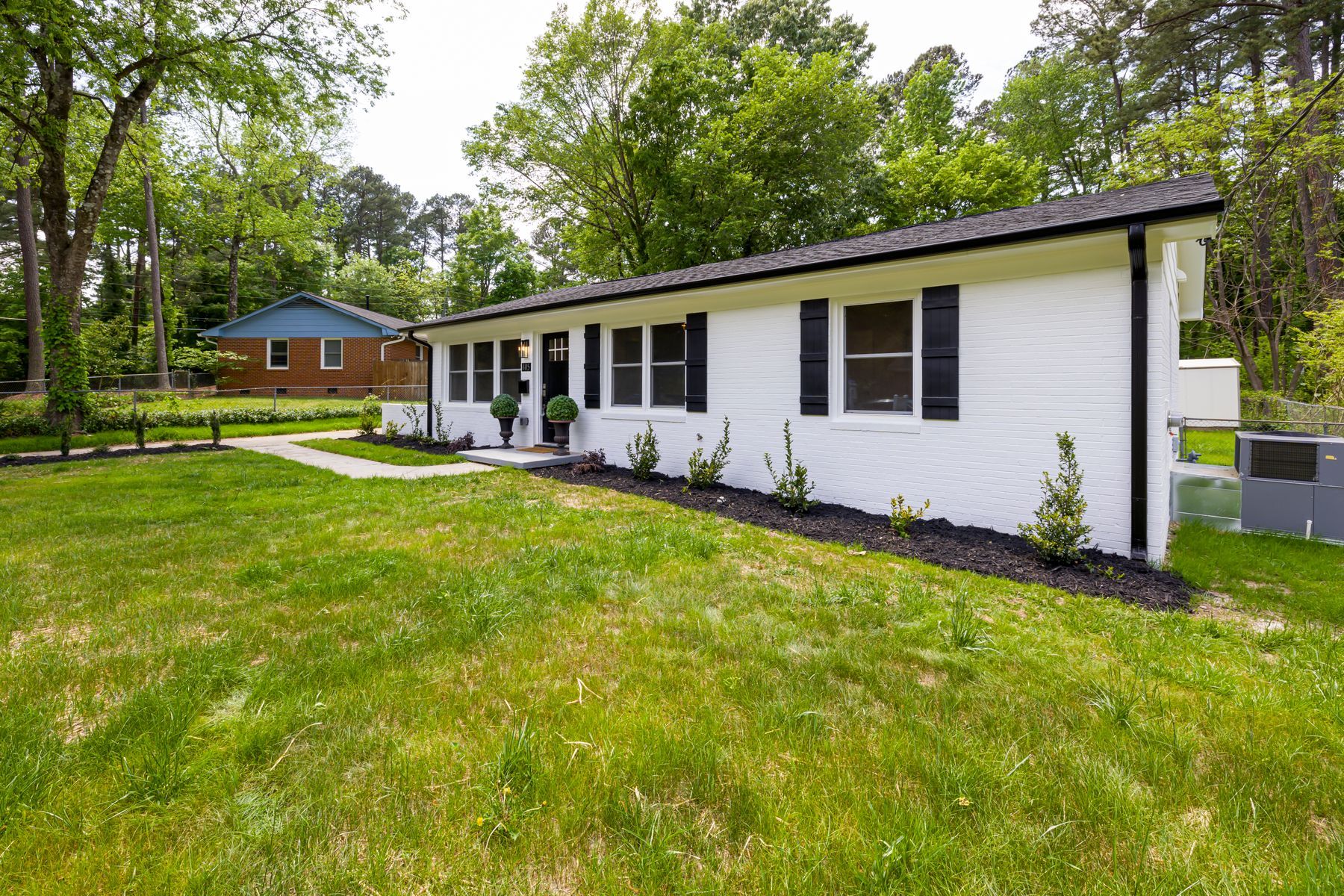
When somebody tells me they want to downsize, I still know almost nothing. It sounds like a decision, but it is really four different decisions wearing the same word, and in the current Calgary market they lead to completely different outcomes.
You can sell the detached house and buy a villa. You can buy a semi-detached. You can buy a row townhouse. Or you can buy an apartment. Four moves. Four price points, four levels of supply, four completely different negotiating positions. Most of the advice out there flattens all of that into “sell the big house, buy something smaller, pocket the difference,” and then argues about how much of the difference the costs eat.
That argument matters, but it skips the more important question. Which move are you making? Because the amount you free up swings by more than $280,000 depending on the answer, and so does whether the market is on your side when you go to buy.
I am writing this for the people I meet in Palliser, Oakridge, Braeside, Haysboro and Lakeview: original owners in a bungalow bought decades ago, kids long gone, wondering whether the equity in the house is worth the disruption of moving.
Downsizing is not one move, it is four
Here is the part that surprises people. Downsizers do not usually want a townhouse or an apartment. They want a villa: a single-level attached home, your own front door, no stairs, no lawn, no roof to replace. Agents sometimes call it an “adult-oriented bungalow.” Pillar9, the MLS system Alberta agents use, even carries a specific architectural style code for it.
And the villa sits in a completely different market than the apartment everyone is talking about.
So when someone says they are downsizing, the first thing I want to know is not their price range. It is whether they are picturing a villa or picturing a condo, because those two answers put them in two different markets with two different amounts of leverage.
What each move actually costs in SW Calgary
Let me put real numbers against it. What follows is every residential sale across 28 southwest and south Calgary communities over the 12 months to July 2026, which is 2,850 sales in total, pulled from Pillar9 sold records. This is not a citywide average or an illustrative round number. It is what actually changed hands in the communities this post is about.
| Type | Typical price range | Notes |
|---|---|---|
| Detached | $700,000 | 1,679 sales. Median 20 days on market, 98.3 per cent of list. |
| Detached bungalow | $710,000 | 559 sales. Median 20 days, 98.3 per cent of list. Median year built 1965. |
| Semi-detached | $555,000 | 237 sales. Median 24 days, 98.3 per cent of list. Median fee $551 a month. |
| Villa (attached bungalow) | $553,000 | 102 sales. Median 27 days, 98.0 per cent of list. Median fee $451 a month. |
| Row / townhouse | $395,000 | 489 sales. Median 28 days, 97.8 per cent of list. Median fee $439 a month. |
| Apartment | $270,000 | 437 sales. Median 31 days, 97.0 per cent of list. Median fee $600 a month. |
Now run the move that most of my downsizing clients have in mind. Sell the bungalow at $710,000, buy the villa at $553,000. That is a gross gap of $157,000, and that is before you pay a single selling cost.
Compare that to the number people usually have in their head. They look at the townhouse median of $395,000, subtract it from their bungalow, and get $315,000. Twice as much. But that comparison quietly swaps one home for another: it is measuring your single-level bungalow against a two or three-storey walk-up townhouse, which is not the home most people picture when they say they want something easier to live in.
The gap is real. It is just about half what the casual math suggests, and that changes whether the move is worth making at all.
Where your leverage is, and where it is not
You have likely read that Calgary is a buyer’s market right now. That is true of exactly one segment, and it is probably not the one you are buying.
Here is CREB’s August 2026 read on months of supply, which is the number I watch most closely because it tells you who has the leverage. As a rough rule, under three months favours sellers, three to four months is balanced, and above four months favours buyers. Citywide, across every type, Calgary sat at 3.92 months in August.
- Semi-detached: 3.30 months. Balanced, benchmark $690,500, up 1.0 per cent year over year and the only property type in the city that is up at all.
- Row / townhouse: 3.85 months. Balanced, at the loose end of it. Benchmark $415,200, down 5.4 per cent year over year.
- Apartment: 5.68 months. A genuine buyer’s market. Benchmark $295,400, down 8.2 per cent year over year and about 13 per cent below the August 2024 peak CREB puts at $341,300.
Detached, the side you are selling, sits at 3.39 months with a benchmark of $744,300, down 1.1 per cent from a year ago. That is balanced too. Detached inventory is down 2.7 per cent from a year ago, and apartment inventory is down 4.4 per cent. Homes are not piling up.
The supply numbers moved because sales fell much faster than inventory did, almost 12 per cent for detached and almost 26 per cent for apartments. On detached, CREB’s August release is blunt: “Gains in higher-priced sales were not enough to offset the pullbacks occurring for homes priced below $1,000,000.”
Read those together and the shape of the problem shows up. Detached and semi-detached are now within a tenth of a month of each other, both balanced. A villa is an attached home, so the semi-detached and row numbers above are the closest read on one. The apartment number does not apply. So if you are selling a detached house and buying a villa or a semi-detached, you are moving between two segments with about the same amount of give in them. You do not get a buyer’s-market discount on both ends of the same move. You only get it if you are willing to go all the way to an apartment.
If there is one thing I would want a downsizer to take from this year, it is that. The leverage everyone is talking about is real, and it lives in one specific type of home. If you want that leverage, you have to want the apartment.
The villa problem
Now the harder part, and the reason I flag villas separately instead of lumping them in with townhouses.
Across all 28 communities, over a full 12 months, there were 102 villa sales. Spread across 25 different communities. That works out to roughly eight or nine sales a month across the entire southwest, and in most of those communities you might see one or two in a year.
They sold in a median of 27 days at 98.0 per cent of list. That is not a distressed segment. Those are thin-supply, steady-demand numbers.
So here is what that means in practice: you cannot shop for a villa the way you shop for an apartment. There is no inventory to comparison-shop, no leverage to press, and no reason for a seller to take a low offer when the next buyer is a few weeks away. If you want a villa in a specific community, near specific people, you are waiting for one to come up and then moving quickly when it does.
I am not saying the villa is the wrong choice. For a lot of people it is exactly right, and the single-level living is worth real money to them. I am saying you should go in knowing you are entering the tightest part of the market, not the loosest.
The carrying-cost swap
Worth a quick look, because the monthly picture is not as simple as “condo fees are new money.”
Median fees in the sold data: $451 for a villa, $439 for a row townhouse, $600 for an apartment. Those are monthly, not annual.
Against that, a paid-off bungalow is not free to hold. There is property tax, insurance, utilities on a larger and usually less efficient building, and the lumpy things that arrive whether you budgeted for them or not: the roof, the furnace, the windows, the fence, the sewer line. A condo fee converts that lumpiness into a predictable monthly number, and for a lot of people on a fixed income that predictability is worth something on its own.
But it is a swap, not a saving. Run your own numbers rather than assuming the smaller place costs less to hold. And if you want the full picture of what leaves your pocket on the sale side, I worked through it in detail in how much it costs to sell a home in Calgary. The short version: on a sale in this range, the gap between sale price and net typically runs $35,000 to $45,000 once commission, legal fees and preparing the house are done. That is roughly a quarter of the $157,000, gone before you buy anything.
The option these articles leave out: not moving
I make money when people move, so weigh this accordingly. It still needs saying.
If the real gap is $157,000 rather than $315,000, and selling costs take a real bite out of that, then staying where you are is a legitimate financial answer. Not a sentimental one. A financial one. The move has to buy you something you want, whether that is the stairs, the yard work, the location, or being closer to family. If it is only buying you a number, check the number first.
If property tax specifically is the pressure point, Alberta runs a program that almost never comes up in these conversations. The Seniors Property Tax Deferral Program lets a homeowner 65 or older with at least 25 per cent equity defer all or part of their municipal property taxes, including the education portion, through a low-interest home equity loan from the province.
As of July 2026 the rate is 4.45 per cent simple interest, reviewed and possibly adjusted every six months in April and October. In plain language: interest is charged on the original amount only, it does not compound. The province registers a caveat on your title, there are no monthly repayments, and the balance comes due when the home is sold or on death. There is a loan estimator on the Alberta seniors site if you want to see the numbers for your own tax bill.
That is not right for everyone, and it does reduce what eventually passes to your estate. But it is a real option, and it deserves to be on the table beside “sell the house.”
One tax note while we are here. If the home was solely your principal residence for every year you owned it, you do not pay tax on the gain. You do still have to report the sale on Schedule 3 and Form T2091(IND) even when it is fully exempt, and only one home per family can be designated for any given year. If you ever rented out part of it or owned a second property at the same time, talk to an accountant before you list.
Sequencing, when one side moves fast and the other does not
The classic advice is to sell before you buy so you are not carrying two properties. In this market that advice is right, but for a different reason than usual.
Your detached home is the easy half. Median 20 days. The villa is the hard half, because of the supply problem above. So the risk is not really that your house will not sell. The risk is that it sells quickly and you have nowhere to go.
That points at a longer runway than most people plan for: watch the segment you want well before you list, then sell with a long possession date, or negotiate a leaseback from your buyer so you can stay in the house while you wait for the right purchase. I went deeper on the trade-offs in should you sell before you buy, or buy before you sell.
Mistakes I watch downsizers make
Pricing the new place from memory. The villa you looked at in 2021 is not the villa market of 2026, in either direction. Get current numbers on the thing you are buying before you make a decision about the thing you are selling.
Assuming smaller means cheaper to hold. Sometimes it does. Often, once you add the fee back, it is closer than expected. Run it.
Starting the search after the house is listed. In a segment with about a hundred sales a year, this is how people end up in a rental for eight months.
Treating the whole thing as one transaction. It is two, and they are in different markets moving at different speeds. The strategy that gets you the most on the sale is not the same strategy that gets you the right purchase.
Waiting for the condo correction to reach the villa market. It has not, and the supply numbers do not suggest it will. Different product, different pipeline.
Common questions
Is now a good time to downsize in Calgary?
It depends entirely on what you are downsizing into, which is the whole point of this post. The sell side is genuinely good: detached homes across southwest Calgary sold in a median of 20 days at 98.3 per cent of list over the 12 months to July 2026. The buy side depends on the product. If you are buying an apartment, you are walking into a buyer’s market with 5.68 months of supply. If you are buying a villa or a semi-detached, you are buying into balanced conditions much like the ones you are selling into, so do not expect to negotiate hard on both ends of the same move.
How much money does downsizing actually free up?
Less than the headline numbers suggest, and it depends which move you make. Over the 12 months to July 2026, the median detached bungalow across 28 southwest and south Calgary communities sold for $710,000 and the median attached bungalow villa sold for $553,000. That is a gross gap of about $157,000 before you pay a cent in selling costs. People often anchor to the townhouse median of $395,000 instead, which implies a $315,000 gap, but that compares your bungalow to a two-storey walk-up townhouse rather than to the single-level home most downsizers actually want.
Should I buy a villa or an apartment?
This is the real decision, and it is where the money is. The apartment is where the market gives you leverage: 5.68 months of supply, a citywide benchmark price down 8.2 per cent year over year, and a median southwest sale price of $270,000. The villa gives you single-level living, your own front door and no shared corridors, but you pay for that at $553,000 with almost no negotiating room. The honest framing is that you are not choosing between two prices, you are deciding how much roughly $283,000 of difference is worth against stairs, neighbours and a shared entrance.
Do I pay tax when I sell the family home?
If the home was solely your principal residence for every year you owned it, you do not pay tax on the gain. You do still have to report the sale on Schedule 3 and Form T2091(IND) even when the gain is fully exempt, and only one home per family can be designated as the principal residence for any given year. If you ever rented out part of the house, ran a business from it, or owned a second property at the same time, the calculation gets more complicated. Talk to an accountant before you list, not after you close.
Should I sell before I buy?
In this particular market, usually yes, but with a longer runway than you would expect. Your detached home is the easy half of the transaction and it sells in a median of 20 days. The villa or semi-detached you want is the hard half, because there are only about a hundred villa sales a year across all of southwest Calgary. If you buy first you risk carrying two properties. If you sell first without a plan you risk a rushed purchase or an interim rental. Selling first with a long possession, or a leaseback from your buyer, usually gives you the most room.
What if I do not want to move at all?
Then do not move. If the real gap is $157,000 rather than the $315,000 people assume, and a chunk of that goes to selling costs, staying put is a legitimate financial answer and not just a sentimental one. If property tax is the pressure point specifically, Alberta runs a Seniors Property Tax Deferral Program that lets homeowners 65 or older with at least 25 per cent equity defer their municipal property taxes through a low-interest home equity loan. The rate is 4.45 per cent simple interest as of July 2026, reviewed every six months in April and October, secured by a caveat on title, with no monthly repayments and the balance due on sale or death.
The honest summary
Downsizing in southwest Calgary right now works, but not automatically and not by as much as the round numbers suggest. The sell side is still the easier half, because detached homes still sell in a median of 20 days. The buy side depends entirely on which of the four moves you are making, and the most popular one is also the tightest.
All of it hangs on one number: what your house is worth today. If you want an honest read on yours, that is the conversation I am here to have.
Start with what your house is actually worth
Get a current read on your home's value, then we can talk about whether the move you are picturing is worth making.