Most Calgary homeowners assume their City assessment understates what their home will actually sell for. In some cases that is true. In others it is the opposite, and the second case is more interesting.
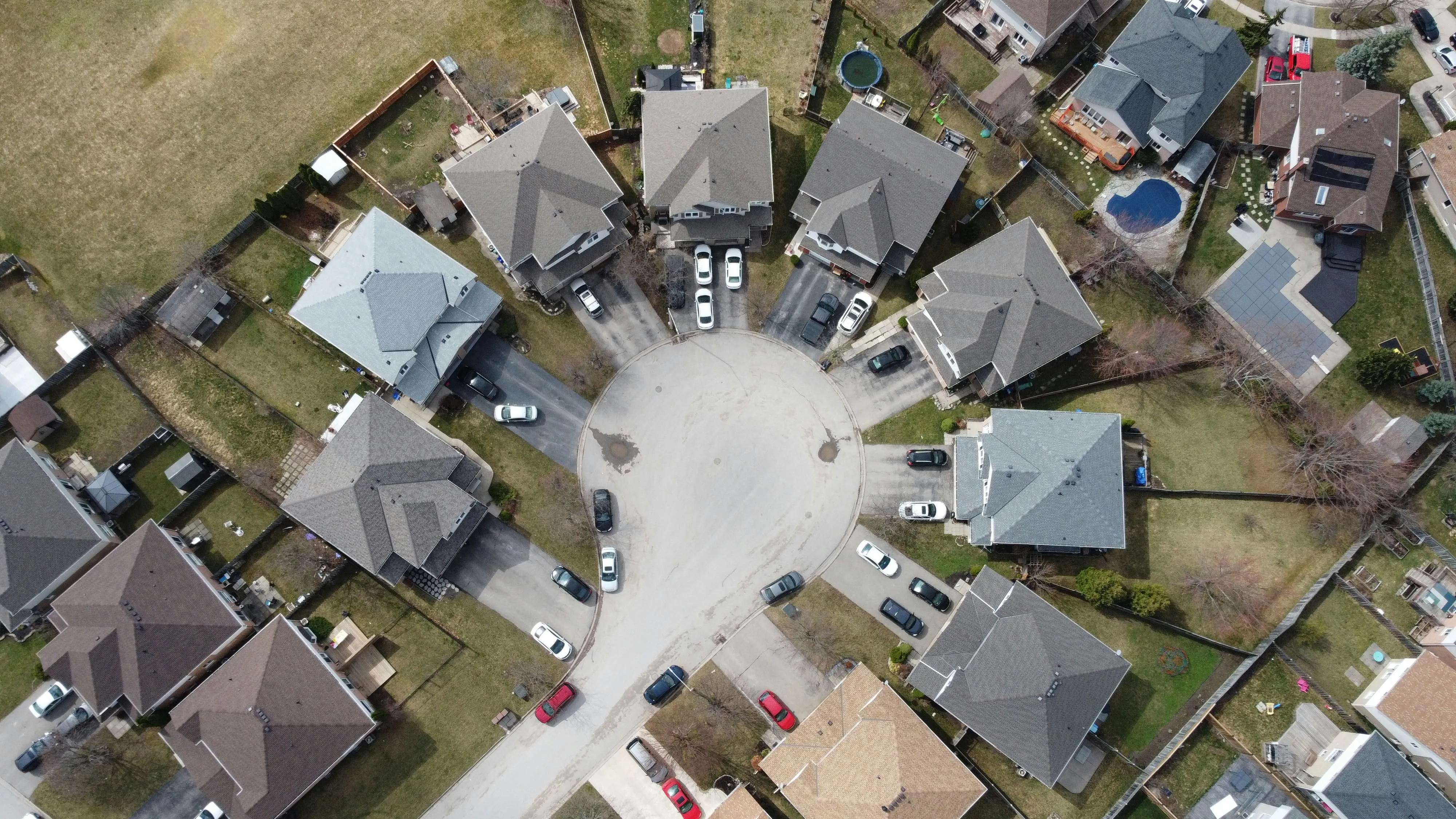
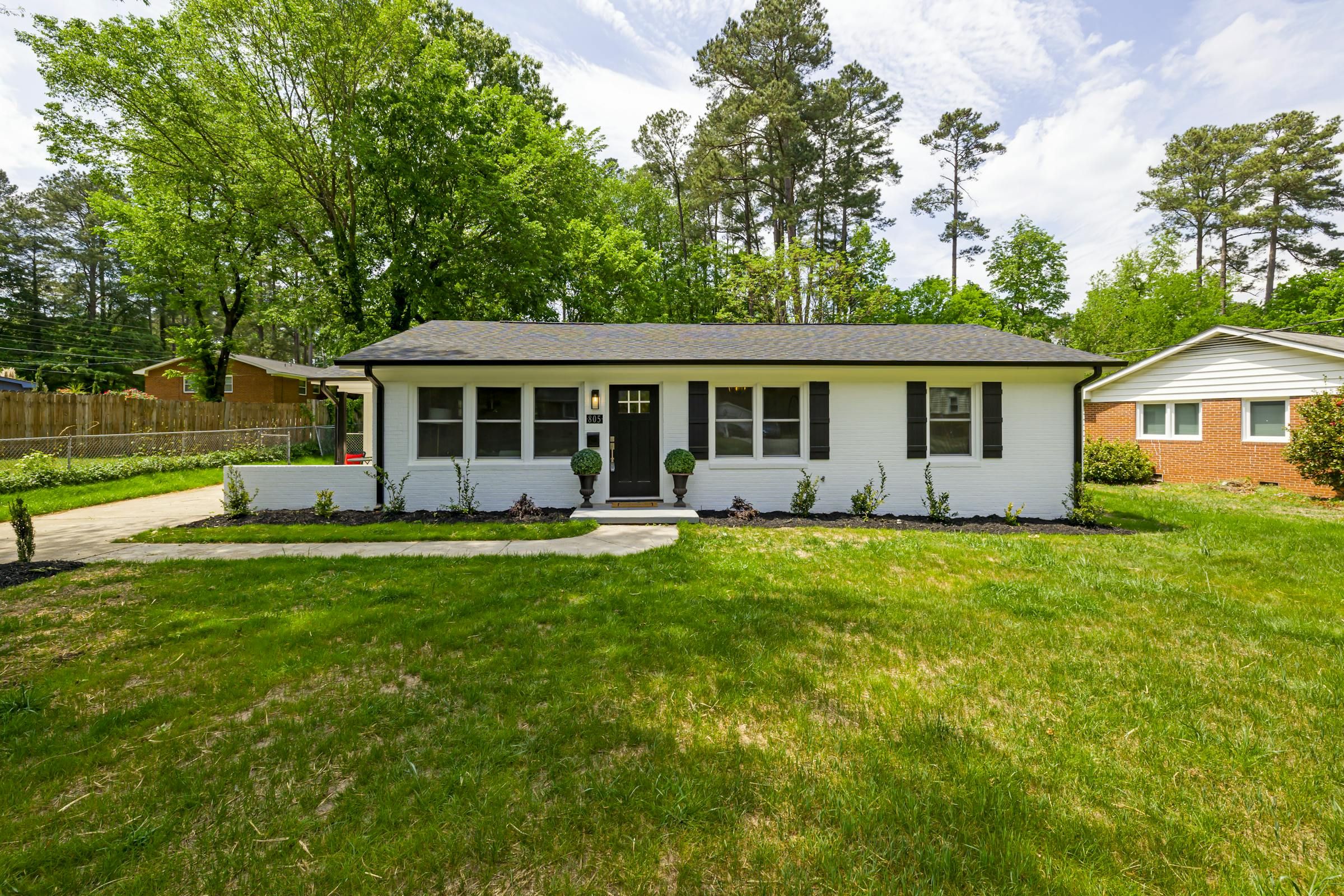
Two 1957 bungalows in Wildwood. Both detached, both on the same kind of street. The first had been fully renovated in 2021. The second still had its 1950s interior, with an updated exterior shell.
The model did see the renovation. What it could not see was how much the market was willing to pay for it. That gap, between what the City thinks a renovation is worth and what a buyer will actually pay, is what this post is about.
The City can see that you renovated. It cannot see how good the renovation is
This is the central reason the assessment and the sale price come out different on a renovated home. The City’s model has signal that something happened: a building permit was pulled, the square footage changed, the basement got developed, the property record was updated. What the model cannot see is how good the work was. It cannot see how the rooms flow now, or what current buyers in your community are willing to pay for that kind of renovation.
Mass appraisal sees a fairly specific set of inputs. Square footage. Lot size and frontage. Year built. Property type. Basement development status. Building permits on file. A broad finish category inferred from those inputs. Roughly that, plus how comparable properties in your community have transacted. A basement-development permit, for instance, is a yes/no flag in the property record, not a quality tier.
It does not see design quality. It does not see layout flow. It does not see fixture selection, how a kitchen actually feels to cook in, or whether the primary bedroom catches morning light. It does not see whether a renovation reads as cohesive or as a sequence of half-finished decisions a buyer will mentally subtract. A buyer registers all of this in the first thirty seconds of a walkthrough. No data model captures it.
The dollars behind those gaps are not small. Using SW Calgary CMA defaults from my own adjustment data: two full bathroom renovations run roughly $16,000 each in buyer-paid value, so $32,000. A 600-square-foot basement development at $150 per square foot is another $90,000. That alone is $122,000 of buyer-visible value sitting inside a home, and the assessment data barely sees it.
The City does pick some of it up through permits. The catch is that the magnitude calibration is rough, and the premium the model assigns lags the actual market by 12 to 24 months. In a hot market, that means assessments understate renovated homes. In a softening market, the model can carry last year’s renovation premium forward and overstate the renovated home.
The mechanics of how the City builds its model are covered in more depth in the companion post on Calgary valuation tools. For the purposes of this article, the point is narrower: the assessment can register that you renovated, but it cannot price the renovation against the buyers currently in your community. If you are trying to figure out what your renovation is actually worth to a buyer right now, the selling guide covers where a valuation fits into the listing decision.
School boundaries don’t show up on the assessment
Two near-identical homes a block apart can sell at materially different prices because one of them sits inside a catchment families compete for and the other does not. The City’s assessment model does not see school boundaries. Buyers do.
In SW Calgary, a few catchments move price reliably enough that I can tell from the address where the bidding will get competitive.
Western Canada High School is the obvious one. Its catchment includes Mission, Cliff Bungalow, Upper and Lower Mount Royal, Elbow Park, Britannia, Bankview, Sunalta and most of South Calgary. The school also runs IB and French Immersion. IB is a separate transfer request that CBE places by area, so a catchment address does not come with an IB seat. Homes inside that catchment sell for more, and the gap shows up in paired sales. The premium is sharpest for buyers with kids approaching grade 10 who do not want to gamble on an out-of-catchment placement.
West Springs versus Cougar Ridge is the catchment story that surprises buyers. The two communities sit next to each other in the deep SW, share the same K-9 feeders (West Springs School and West Ridge), and look interchangeable on a satellite map. They split at high school. West Springs feeds Ernest Manning, which is in the deep SW. Cougar Ridge feeds Bowness High School, on the Bowness pathway alongside Tuscany, Patterson, and Coach Hill. A family choosing between a West Springs home and a Cougar Ridge home is making a high-school decision, often without realising it.
Oakridge, Palliser, Bayview, and Pump Hill all share Nellie McClung at the K-6 level. A K-6 cluster does not carry the same premium as a high-school catchment, but it does move where young families search.
None of this is captured by the assessment data. If you want more on how catchments shape value across the southwest, the schools resource and the SW neighbourhoods guide go community by community.
View, lot, and exposure premiums
The City treats lots as a set of standardised inputs. Square footage, frontage, dimensions. Two lots of the same size get categorised the same way, even when one of them backs onto a ravine and the other faces an arterial road. Buyers do not see them as the same.
In the SW Calgary work I do, the view and lot premiums I apply in a comparative market analysis are roughly:
- Ravine backing: +6%
- Mountain view: +7%
- Downtown view: +4%
- River frontage or view: +8%
- Corner lot or exposure adjustment: plus or minus 3% depending on traffic and layout
Worked example. A $1M home in Discovery Ridge on a ravine lot carries a 6% ravine premium against an identical home one street over without the view. That is $60,000 of real market value sitting in the lot itself. It does not appear in the assessment data. The City sees two lots of similar size and prices them accordingly.
Ravine premiums in Discovery Ridge are clean to illustrate because the community has literal ravine lots. The same logic applies wherever the lot does something the data feed cannot read: a high-side Aspen Woods lot with a downtown view, a corner Palliser lot with a usable yard, a riverbank lot in Lakeview where the reservoir does the work. Same pattern every time. A lot characteristic the assessment cannot see, doing real work on the sale price.
For the SW communities where lot characteristics move price the most, start with the neighbourhoods index.
Recent sales the City hasn’t seen yet
The City’s model is calibrated on sales that closed before its valuation date. For the 2026 assessment, that date was July 1, 2025. Anything that has closed in your community since then is invisible to the model. Call it the last ten months.
This is not the same thing as saying the market drifted. It is about the freshness of the comparable set. A handful of over-list sales in an infill pocket can reshape what a home is worth before the City’s model catches up. By the time the next assessment notice arrives in January 2027, those sales will be folded in, but for the entire stretch between today and then, they are not.
April 2026 shows the freshness problem plainly. CREB’s monthly statistics package puts the city-wide detached benchmark at $745,400, down under 3% year-over-year, with the pace of decline easing into April. That looks like a quiet city-wide story. The district spread tells a different one. The North East detached benchmark is down 8% year-over-year. The West district detached benchmark is up 2%. The city-wide number hides eight points of district-level dispersion.
A West-district home in spring 2026 sits in a different micro-market than the same home did in mid-2025, when the City’s data closed. A North East home sits in another one again. The assessment notice you received in January is calibrated on a moment that has already moved.
The mechanics of the July 1 valuation date are walked through in the companion post. The point for this article is narrower: what your home is worth today and what the City’s model thinks your home was worth ten months ago are different questions.
The assessment is built for taxes, not for selling
The assessment is a fair, scalable proxy for property tax. It is built to be defensible across 500,000 properties and equitable in how it distributes the tax burden. That is a legitimately useful thing. It is not, and was never built to be, a tool for figuring out what a buyer will pay for your specific home.
If you think the City has it wrong, the Customer Review Period runs from mid-January to late March each year. For 2026 it ran from January 14 to March 23. You can dispute the assessment through that process, and it is worth doing on its own merits. But if the question you are actually asking is “what would this home sell for if I listed it this year,” the appeal is not the tool. A proper valuation is. And once you have that number, the cost-of-selling guide works through what a $750K Calgary sale actually nets after commissions, legal fees, and the rest of the closing costs.
If your assessment just landed and you are trying to make sense of it, book a call and I will talk through what your home is actually worth right now.
If you want that in writing, the home valuation request takes about two minutes and I follow up with a proper number.