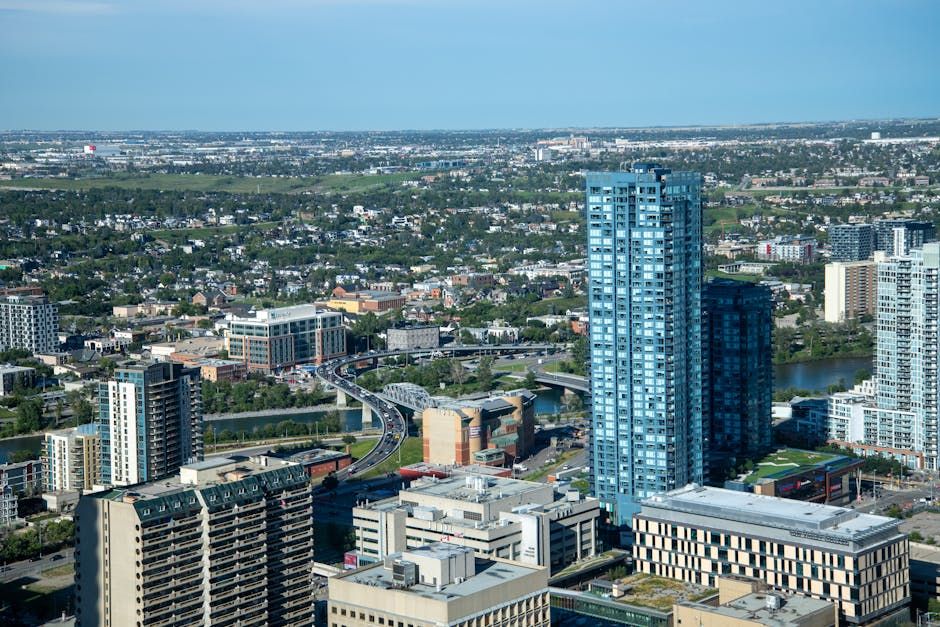
One of the first questions I get from families relocating to Calgary is some version of: “Which part of the city should we be looking in?” It’s a reasonable question, and the honest answer is that it depends on a few things you probably already know about yourself: how you commute, what kind of housing you want, and whether you’re prioritising character or square footage.
Calgary is organised into four quadrants divided by Centre Street (east-west) and the Bow and Elbow Rivers (roughly north-south). Each quadrant has its own personality, and within each one there are inner communities close to downtown and outer communities further out on the ring road. Here’s how I’d break it down for a family trying to make this decision.
Northwest Calgary: Nature, Maturity, and University Proximity
The NW is established, green, and genuinely beautiful in parts. The inner communities along the Bow River (Bowness, Montgomery, Varsity) have mature trees, river access, and older bungalows that are being renovated or replaced with infills. Further out, communities like Tuscany, Royal Oak, and Arbour Lake offer newer detached homes and lake access at a more accessible price point.
What draws families to the NW is usually a combination of Nose Hill Park (one of North America’s largest urban parks), proximity to the University of Calgary and Foothills Hospital, and access to the Red Line LRT, which makes getting downtown straightforward.
Who the NW suits: Families where one person works at UCalgary, Foothills, or downtown. People who want to be close to nature without leaving the city. Buyers looking for an established community with some architectural variety.
Price range: Detached homes in the inner NW start around $650,000 for a renovated bungalow and go well over $1 million for a newer infill. In outer NW communities, you can find newer builds in the $600,000 to $850,000 range.
What to watch for: Some of the inner NW communities are going through significant infill development, which changes the character of certain streets quickly. If you want a quiet, established feel, be specific about which pockets you’re looking at.
Northeast Calgary: Value, Diversity, and Connectivity
The NE is the best value in the city, full stop. It gets overlooked by a lot of buyers who have heard certain things about it and haven’t actually spent time there. The communities built in the last 15 years (Skyview Ranch, Redstone, Cornerstone) are clean, modern, well-designed neighbourhoods with easy access to Stoney Trail and Deerfoot.
The NE is also the most culturally diverse part of Calgary, which matters to a lot of families. Amenities like the Genesis Centre, some of the best halal and South Asian grocers in the city, and strong community association programming make it a genuine option for families who know what they’re looking for.
Transit access via the Blue Line LRT to downtown is solid, and the proximity to the airport is a real advantage for families where one person travels regularly for work.
Who the NE suits: First-time buyers who need more space than their budget allows elsewhere. Families who prioritise newer construction and modern layouts. Buyers who commute to the airport or industrial northeast.
Price range: Detached homes in newer NE communities typically range from $500,000 to $700,000. Semi-detached and townhomes start lower. Established inner-NE communities like Martindale and Taradale offer similar value.
What to watch for: The NE is large and varied. Communities right on Stoney Trail trade noise for convenience. Communities further east of Deerfoot can feel isolated if you don’t have a car. Drive the specific area before committing.
Southwest Calgary: Established, Scenic, and Amenity-Rich
The SW is where I work and where I live, so I’ll give it the most attention.
The inner SW (Marda Loop, Killarney, Altadore, Lakeview, Garrison Green, Rutland Park, North Glenmore Park) is as good as Calgary gets for walkability, community feel, and access to green space. The Glenmore Reservoir and Weaselhead are right there. You can walk to independent restaurants, coffee shops, and the Marda Loop commercial strip. The schools are well-regarded, and the community associations are active.
What families are buying in the inner SW is usually a post-war bungalow (often renovated), an infill duplex, or a newer detached infill. Character homes here hold their value well because land is constrained and demand from move-up buyers is consistent.
The outer SW (Signal Hill, Wildwood, Glamorgan, Aspen Woods, West Springs, Discovery Ridge) offers newer construction, larger lots, and generally more square footage per dollar. These communities are further from downtown but well-connected via Glenmore Trail and Stoney Trail, and they sit near some of Calgary’s better school options.
Who the SW suits: Families who want an established community with real walkability. Move-up buyers who want to stay close to the inner city. Professionals who commute to Foothills Hospital or downtown and want to live nearby. Buyers who value school catchments and want to research specific boundaries carefully.
Price range: The inner SW is the most expensive residential market in the city outside of a few pockets in the inner NW. Detached infills in Marda Loop and Altadore run $900,000 to over $1.5 million. Established bungalows on standard lots are $700,000 to $1 million depending on size and condition. The outer SW communities offer more room: detached homes in Signal Hill and West Springs typically range from $600,000 to $950,000.
For a deeper look at specific SW communities, see the SW Calgary neighbourhood guides.
Southeast Calgary: Newer, Master-Planned, and Lake-Driven
The SE is the fastest-growing part of the city and has some of the most polished new development. Communities like Mahogany, Auburn Bay, and Cranston are lake communities with private beaches, recreation facilities, and tight community programming. Seton, now being built out near South Health Campus, has the urban amenity spine those communities used to lack.
The housing stock in the SE skews newer and larger than the inner SW, and the price-per-square-foot is generally more competitive. If you want a brand-new or near-new detached home with an attached garage, a finished basement, and a proper family floor plan, the SE delivers that at a price point that’s hard to match in the NW or SW.
Transit is less developed here than in other quadrants, which matters if you’re commuting downtown without a car. The Green Line LRT (in development) should change this eventually, but that’s still years away.
Who the SE suits: Families who want newer construction, modern layouts, and lake amenity access. Buyers moving from other cities who are used to master-planned suburban communities. Families where both parents drive to work and transit access is less of a factor.
Price range: Detached homes in SE lake communities typically range from $600,000 to $950,000. Newer non-lake communities offer good value starting around $550,000.
What to watch for: HOA-style fees for lake access vary significantly between communities and are worth understanding before you commit. Some of the newer communities further south also have longer commute times than they appear on a map during peak hours.
How to choose your quadrant
If you’re not sure which direction fits you, I’d run through these four questions:
Where do you commute? Map the drive from each quadrant to your workplace during actual peak hours, not Google Maps at 2am. Commute tolerance is personal but it’s a decision you’ll live with every day.
What type of housing do you want? If character matters to you, the inner NW and inner SW are your markets. If you want newer construction and modern layouts, the SE and outer SW and NW deliver that better.
What’s your real budget, not your optimistic budget? The inner SW and inner NW are genuinely more expensive. If your budget is at the edge of what those markets offer, you’ll get more house in the NE or SE without sacrificing quality of life.
How important are specific school catchments? Calgary’s school boundaries are precise and affect which public, Catholic, and French immersion options your kids can access. If a specific school is on your list, that decision may make the quadrant decision for you.
A 30-minute conversation about your priorities will narrow the quadrant faster than any map. If you’d like to talk through where your family fits, book a call here.