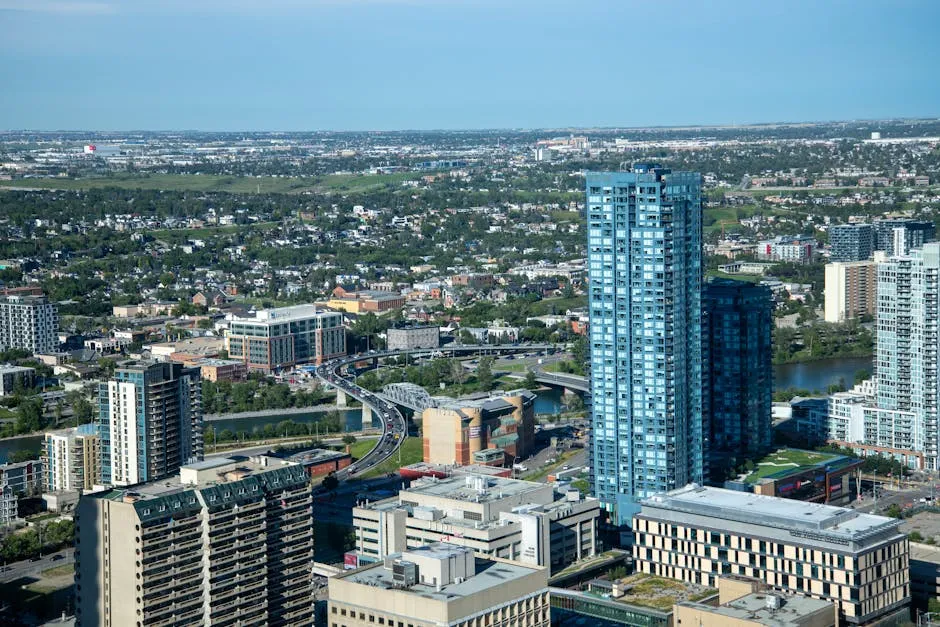
I take some version of the same call every week. A couple in their mid-thirties, two kids, currently in a Toronto condo or a semi they have outgrown. The schools conversation has been going in circles. The yard question is on the table every spring. The housing numbers have been running in the background for two years. Calgary is on the shortlist. Sometimes they frame it as a question. Sometimes they have already decided and they are calling because they need someone in Calgary who actually knows the market.
The math is the easy part. A detached in SW Calgary costs roughly what a downtown Toronto condo costs, and that gap is real. But the math is not where families get tripped up. What trips families up is the lifestyle shift, the schools question, the weather reality, and the sequencing of the actual move. Those four things are what this post is about, in that order, followed by a FAQ for the questions I hear on almost every call.
If you are reading this from Toronto and you are genuinely considering the move, this is the version of the conversation I would have with you.
The headline comparison
A detached single-family home in Calgary costs about what a downtown Toronto condo costs. That is the headline, and it is accurate. In practice it means a family that has been priced out of a detached in Toronto can often buy a three or four-bedroom home with a yard, a garage, and a basement in SW Calgary for the same number. Before factoring in the school catchment certainty, the commute reality, or the mountain proximity, the square-footage-per-dollar gap alone is what gets families on the phone with me.
The obvious caveat: this is a benchmark comparison, not a price for any specific home. The inner SW communities (Marda Loop, Killarney, Lakeview, Garrison Green) sit at the top end of the Calgary range. A renovated infill in Marda Loop is not cheap by Calgary standards. But even at the top of the Calgary range, the comparison to Toronto is striking.
| April 2026 benchmark (single-family detached) | Price |
|---|---|
| TRREB (all Toronto areas) | $1,236,000 |
| CREB (Calgary city) | $745,400 |
Refresh annually each spring when new Q1 figures are out. Sources: TRREB MLS HPI Public Tables, April 2026; CREB April 2026 stats release.
What your dollar actually buys
The benchmark comparison tells you the gap exists. What it does not tell you is the actual trade you are making: what kind of property, in what kind of neighbourhood, with what attached to it. That is where the decision gets real.
Around $1.1M
In Leslieville, $1.1M buys a two-storey semi-detached, two or three bedrooms, on a narrow lot, with a parking pad and a small backyard if you are lucky. Walkable to the Danforth, transit-rich, genuinely liveable. The product is good. The lot is not.
In Marda Loop, the same money buys a modern infill duplex or townhome of around 1,800-2,000 sq ft, three bedrooms above grade plus a developed basement, a single garage, and a designated school for your kids without a lottery. You can walk to the Marda Loop commercial strip. The Glenmore Reservoir pathway is a few minutes by bike. Downtown is a 12-15 minute drive on a normal morning.
Around $1.4M
In Riverdale, $1.4M buys an older detached, three or four bedrooms, likely mid-renovated, on a better lot than Leslieville. It is mature post-war housing east of the Don, brick semis and detacheds, walkable to Riverdale Park East and Withrow Park. Broadview and Pape carry the transit load. The home probably needs something, and it will still sell over asking.
In Killarney, the same money buys a renovated character home on a mature lot, three bedrooms plus a developed lower level, a garage, and a block or two of walkability to the same Marda Loop amenities. The streets are quiet and tree-lined. The Calgary version of the inner-city neighbourhood feel is real here, without the semi-detached footprint.
Around $1.7M
In Lawrence Park or Leaside, $1.7M buys a proper detached family home on a tree-lined street north of Eglinton, post-war brick character, large lot by Toronto standards, four bedrooms. The school-zone premium is built into that price: Lawrence Park CI and John Wanless are part of what you are buying. This is the market a lot of Toronto families are priced out of but still working towards.
In Aspen Woods, the same money buys an executive detached with four bedrooms above grade, a fully developed basement, a double attached garage, and a large backyard on a quiet crescent. Webber Academy, Calgary French and International School, and Rundle College are all nearby for families considering private. Ernest Manning High School is the public 10-12 pathway. The mountain views from some streets are not marketing language; they are just true.
The honest addendum: Toronto wins on centrality and transit density in a way Calgary does not try to match. If your life is built around not owning a car, or around walking to everything, the Calgary pockets that come close are Marda Loop, Kensington, the 17th Avenue corridor, and parts of Inglewood. Outside of those, you are in a car. Calgary’s win is square footage, a yard, a garage, and a designated school without a waitlist. Those are the actual terms of the trade.
The commute math
You will drive everywhere in Calgary. Put that plainly at the start because people move here expecting to sort out a transit strategy and there mostly is not one, outside of specific corridors.
The useful comparison is this: a 15-25 minute SW-to-downtown drive is a normal Calgary morning commute, not an exceptional one. Compare that to the DVP or Gardiner at 8am on a Tuesday. The Calgary version is a different category of experience. Traffic here gets real between 7:30 and 9am and again from 4:30 to 6pm on the Glenmore corridor, but “real” in Calgary terms is still less than a standard Toronto arterial.
Stoney Trail, the ring road, makes cross-city trips faster than people expect when they are still reading a map with Toronto eyes. Getting from Aspen Woods to the NE or SE without going near downtown is straightforward. The ring road was the infrastructure investment that changed how the outer communities function.
The Red Line and Blue Line LRT are viable options for downtown commuters who happen to live near a station. The Red Line runs roughly through the NW and SE. Some inner SW communities sit within reasonable walking distance of the 69th Street or Heritage stations. Most do not. If LRT-walkable access is a requirement, that narrows the SW community list considerably.
Two cars are not optional in the outer communities. If you are buying in Aspen Woods, West Springs, Discovery Ridge, or Cougar Ridge, and one person works downtown and the other has a school and activity schedule, single-car logistics become a problem quickly. Budget for two vehicles as part of the total cost of the move.
The mental shift that most people describe after a year or two here: you stop optimising your address around transit proximity and start optimising around where your family actually wants to be. Most people who made the move say they adjusted faster than they expected.
Schools: catchments actually work here
This is the section a lot of Toronto families skim first, and for good reason. The Calgary Board of Education (CBE) and the Calgary Catholic School District (CSSD) operate on a designated school model. Your child’s designated school is determined by your address. That is where they go. There is no lottery, no optional-attendance form refresh at 9pm, no waitlist based on how quickly you got the application in.
If you have spent time navigating the TDSB’s optional-attendance system, this is a quiet and significant upgrade. You buy the house, you get the school. It is that straightforward.
SW Calgary is well served across the public and Catholic streams. On the public side, the high school pathway by area breaks down like this:
- Western Canada High School (inner SW: most of Marda Loop): a strong academic school with an IB option in the heart of the inner city.
- Central Memorial High School (Garrison Green, Altadore, Lakeview, North Glenmore Park, Discovery Ridge, and part of Marda Loop): home to CBE’s Centre for Performing and Visual Arts.
- Henry Wise Wood High School (Haysboro, Kingsland, Kelvin Grove): a well-established school serving the established inner-south communities.
- Ernest Manning High School (outer SW: Signal Hill, Aspen Woods, West Springs, Strathcona Park). The primary public 10-12 pathway for most of the outer SW.
- Dr. E.P. Scarlett High School (Canyon Meadows): another strong option, serving the south-central part of the SW.
French immersion and Catholic school options are widely available across the SW, and they operate on the same school boundary logic. If a Catholic designated school or French immersion pathway is the priority, CBE and CSSD can confirm the specific school boundary for any address you are considering.
Private school is also part of the SW landscape. Webber Academy, Rundle College and Calgary French and International School are all in SW Calgary, and Strathcona-Tweedsmuir is south of the city in Foothills County. I mention them without endorsing any; families research this on their own and the options are real.
For out-of-province families, CBE and CSSD enrollment windows matter. Both boards open registration for the following September in the spring, and there are specific steps for families moving from another province. That sequencing gets covered properly in the logistics section below. See the SW Calgary schools directory for the full picture.
Winter and weather: the honest version
The cold is real. A stretch of minus 20 to minus 30°C is a normal January experience in Calgary, not an outlier. If you have only ever done Toronto winters, that range will feel sharper in the first season. Put that plainly at the start because families deserve to know before they move, not after.
What is genuinely different from Toronto is the dryness. Calgary winter is a dry cold. Toronto winter is a damp cold, and those are two meaningfully different physical experiences. Some Toronto transplants find the Calgary version more manageable, some do not. It is hard to know in advance which camp you will land in.
The thing that is impossible to fully convey in writing is the chinook. Multiple times each winter, a warm front rolls in off the Rockies and the temperature climbs 20 to 25°C in the span of a few hours. Snow that looked like it would last a month is gone by afternoon. There is no Toronto equivalent for this, and it changes the psychological experience of winter in a way that matters. A February day can start at minus 15 and end at plus 10.
Calgary averages over 2,300 sunshine hours a year, which puts it among the sunniest major cities in Canada. The November-to-February stretch in Toronto, with its persistent grey overcast, does not have a direct equivalent here. That sounds like marketing language but it is just the climate data.
Overall, winters in Calgary are shorter than Toronto winters. Spring breaks earlier, and false-springs are common: a warm week in March that makes you question whether you ever needed a parka. The tradeoff is that late snow is possible into April.
On the practical side: snow here is light and fluffy and easy to shovel. Black ice is real on shaded streets and should be taken seriously. Winter tires are non-negotiable. Budget for them and put them on by November.
The mountains
Canmore is 90 minutes from most SW Calgary addresses. Banff is about two hours. That is not a metaphor for proximity; it is the actual drive time on a Saturday morning.
What that means in practice is that weekends in Calgary are different in kind, not just degree. In summer it is hiking, cycling, climbing, and paddleboarding on lakes that would look implausible in a brochure. In winter it is skiing and snowshoeing at Nakiska, Lake Louise, or Sunshine Village, all within two hours of your driveway. Most Calgary families with school-age kids do something in the mountains at least once a month, often more. It is one of the genuine lifestyle differences that does not show up in the cost-of-living comparison but shows up constantly in daily life.
The reader from Toronto has already pictured this. The point is simply to confirm it: the access is real, the drive is easy, and it becomes a normal part of how you live here, not a special occasion.
What you will miss from Toronto
Every honest guide to this move has to include this section. Calgary is genuinely good for a lot of families. It is not Toronto, and pretending otherwise would waste your time.
Food scene depth. Calgary’s restaurant scene has improved significantly in the past decade. There are some genuinely excellent independent restaurants here, including spots that would hold their own in any Canadian city. But Toronto’s restaurant scene operates at a different scale of volume, range, and late-night density. The honest framing: you will eat well in Calgary. You will eat differently. If that distinction matters to you, it is worth naming before you move.
Density and walkable Saturdays. The Toronto version of “walk to the coffee shop, walk to the market, walk to the bookstore, walk to lunch” is real in only a few Calgary pockets: Marda Loop, Inglewood, Kensington, and parts of 17th Ave. Most SW family neighbourhoods are car-first by design. If a walkable Saturday is part of your quality-of-life baseline, and it is for a lot of Toronto families, the only inner-SW communities that come close are in the Marda Loop and Altadore area. It is one of the honest trade-offs of the outer SW communities that otherwise deliver the most house for the money.
Cultural and arts scale. TIFF, the AGO, Scotiabank Arena, the Toronto theatre scene. Calgary has Glenbow, Arts Commons, the Stampede (genuinely world-class, genuinely once a year), and a live music and theatre scene that is active for the city’s size. It is not the same scale. If major-venue programming is a regular part of your life in Toronto, expect to travel for some of it.
Diversity of food retail. Toronto’s South Asian, East Asian, Caribbean, and Middle Eastern grocery and restaurant scenes are deeper than Calgary’s. Calgary’s NE has caught up substantially in some categories, and there are excellent options if you know where to look. But the range is not comparable, and it is worth knowing that up front.
Direct international flights. YYC has solid direct service to major Canadian and US cities, and the connection options have improved. It is not Pearson. If you travel internationally for work or family on a regular basis, budget for the extra connection on some routes.
The actual move: logistics and sequencing
Knowing you want to move and knowing how to execute the move are two different things. Most families who call me have the first part figured out. The second part is where things go sideways. Here is the sequencing, in the order it actually matters.
Sell first, or keep and rent the Toronto property? Most families sell. Keeping the Toronto property and renting it only makes sense in two situations: the property cashflows positive after mortgage payments, property tax, and property management costs, which is genuinely rare for a primary residence bought at Toronto prices; or the family is hedging because they genuinely think they might move back within 3-5 years. If neither of those applies, the equity sitting in a Toronto property is almost always better deployed into the Calgary purchase. Talk to your accountant about the principal-residence designation and deemed-disposition timing before you list. And read through the sell-before-you-buy decision walkthrough if you are still weighing the sequence.
Mortgage portability. Some lenders will port your existing Toronto mortgage to the Calgary property within a set window, typically 30 to 120 days. If your current rate is meaningfully lower than the market, the savings versus breaking the mortgage early and paying the penalty can be real. Get portability confirmed in writing with your lender before you list, not after. The rules vary by lender and the window is tighter than most people expect.
The buy trip. Go twice. Video-only purchases happen. They are not the recommendation. Make two trips. Trip one is a scouting trip: 3-4 days, drive every quadrant you are considering, see 8-10 properties to calibrate your price expectations against what is actually on the market, walk Marda Loop and 17th Ave, drive through a couple of the outer SW communities. You are not here to buy yet. You are here to stop seeing Calgary through Toronto eyes. Trip two is the offer trip: 2-3 days, focused on the 3-4 properties that match the brief after your calibration. That is the trip where you make an offer.
School enrollment timing. CBE and CSSD open enrollment for new families typically in the spring for the following September. Out-of-province families can register once they have a Calgary address. If your kids are moving mid-year, transfers are possible but harder to time. Do not assume the September window stays open indefinitely.
Alberta Health Care. There is a three-month waiting period after you establish Alberta residency before provincial health coverage kicks in. Maintain your Ontario coverage during that gap. Do not let it lapse on the day you cross the provincial border.
Driver’s licence, vehicle registration, and plates. Convert within 90 days of establishing Alberta residency. The licence swap is straightforward. Auto insurance is not. Alberta auto insurance is meaningfully higher than Ontario for most drivers. This is not a rounding error; it is a real line item in your monthly budget. Get quotes before you finalize your numbers.
No provincial sales tax. Once you are here, most purchases are 5% GST only. No 13% HST. Small win on every transaction, but it adds up over a year.
Choosing a neighbourhood before you know the city
Most families default to SW Calgary and they are right to. That is where the family niche lives: established schools, direct ring-road access to the mountains, strong community infrastructure, and a price range that spans from inner-city walkable to outer-suburb spacious. But the SW is not one thing, and choosing between its two halves before you arrive is one of the most useful calls you can make.
The other quadrants are real options depending on what you are optimising for. The NW has its own established family communities and its own pull for families who want more proximity to the Trans-Canada. The NE is the value play and the most diverse part of the city by far. The SE is the newer-build family belt for buyers who want a large home on a tight timeline. If your priorities do not centre on SW Calgary specifically, read the quadrants guide first.
For families landing in the SW, the practical question is inner or outer.
Inner SW is Marda Loop, Killarney, Altadore, Lakeview, Garrison Green, North Glenmore Park, and Rutland Park. These communities give you walkability, character homes on mature tree-lined streets, and established schools in a configuration Toronto families recognise. The tradeoff is real: you get less square footage, an older home that may need something, and a smaller lot. If your weekend defaults to walking the dog to a coffee shop, this is your half of the SW.
Outer SW is Signal Hill, Aspen Woods, West Springs, Cougar Ridge, Discovery Ridge, and Strathcona Park. These communities give you more square footage, newer builds, purpose-built family infrastructure (wider streets, cul-de-sacs, large parks), and fast ring-road access. The tradeoff is also real: you will drive everywhere, the streets are quieter in a suburban sense, and the amenity strip is a few minutes away by car rather than on foot. If your weekend defaults to driving to a soccer field, this is your half.
Neither is the wrong choice. The right one depends on which trade your family can live with. The SW Calgary neighbourhoods overview is the deeper next read if you want the full community-by-community picture.
This also works for you if…
Frequently asked questions
Is it cheaper to live in Calgary than Toronto?
Yes, but the gap is widest on housing and narrowest on day-to-day costs. Calgary’s housing benchmark sits well below Toronto’s, and Alberta has no provincial sales tax, so you keep more on big-ticket purchases. Day-to-day groceries, gas, and utilities are broadly comparable; auto insurance runs higher in Alberta for most drivers.
How long does it take to drive from Calgary to Banff?
About 90 minutes to Canmore and roughly two hours to the Banff townsite, depending on traffic and which part of Calgary you are leaving from. SW Calgary has the shortest drive of the four quadrants.
Do I need a car in Calgary?
For most family routines, yes, and many families end up with two. Calgary has functional LRT corridors (Red and Blue Lines) that work well for downtown commuters who happen to live near a station, but school pickups, grocery runs, and weekend trips assume a vehicle. The mental shift from Toronto is real.
Will my Toronto mortgage transfer to a Calgary property?
Possibly, through what your lender calls mortgage portability. Most major Canadian lenders offer it within a 30-120 day window, but the rules vary by lender and product. Get the conditions in writing before you list your Toronto property, not after.
When should I list my Toronto house if I am moving to Calgary?
Most families sell first, which gives you certainty about your equity going into the Calgary purchase. The trade-off is timing pressure on the buy side. Sequencing depends on your finances, your risk tolerance, and how competitive your Calgary target neighbourhoods are. The sell-before-you-buy walkthrough covers the decision in more detail.
Are Calgary schools good?
Yes, with caveats that apply anywhere. The Calgary Board of Education and the Calgary Catholic School District both operate strong schools across SW Calgary, and a designated-school catchment system means you can choose your home by the school you want your child in. Independent schools (Webber Academy, Rundle College, Calgary French) are also part of the SW landscape.
How cold does Calgary actually get in winter?
January routinely sits between minus 10 and minus 25°C, with cold snaps deeper than that. The dry climate makes the cold feel different from Toronto’s damp cold, and Chinook winds bring multiple 10-25°C single-day warm-ups each winter. Calgary also has more sunshine hours than most Canadian cities. Winter tires are not optional.
Is May 2026 a good time to buy in Calgary?
Calgary is in a balanced-to-tight market right now, depending on price band and quadrant. Inner-SW family inventory is the tightest segment. The honest answer for any relocator is: time the move to your family and your job, not to a market timing call. Trying to time a market across two cities you do not live in is a losing game.
Ready to start looking
This move is genuinely good for a lot of Toronto families. The math holds up, the lifestyle trade-offs are real but manageable, and SW Calgary delivers the school certainty, yard, and garage that most Toronto families have been working towards for years. The families who land well, and who feel settled quickly rather than second-guessing the decision for a year, are the ones who got three things right before they listed: the sequencing of the Toronto sale, the neighbourhood call within SW Calgary, and the school enrollment timing. Those are the decisions where having someone on the ground in Calgary makes the difference. The most useful next step is a 20-minute call to walk through where you are in the process and where you are trying to land.
Thinking about Calgary? Let's talk for 20 minutes.
If you are seriously weighing the move, the most useful next step is a short call. Walk me through your timeline, your budget, and your school requirements, and I will give you a real read on which SW Calgary communities map to your situation.