Most Calgary sellers know roughly what their home will sell for. What almost nobody sits down and calculates in advance is what the closing cheque will actually say. That number is meaningfully smaller, and the gap tends to land in a place that surprises people when the lawyer’s statement of adjustments arrives the week before possession.
On a sale in the $750,000 range, you can expect $35,000 to $45,000 in selling costs before you factor in what is left on your mortgage. That is not a one-line fee. It is commission, the GST on commission, a potential mortgage payout penalty, legal costs, a Real Property Report, preparation costs, and a property tax adjustment that can go either direction. Each one works differently and lands in a different place.
This post walks through every one of those costs in the order a seller actually thinks about them, then pulls them into a single net-proceeds number at the end. I will use a real Calgary scenario throughout rather than a generic formula, because the scenario is what makes the math land. If you are already weighing whether to sell at all, the sell-before-buy decision is worth reading alongside this one.
The example we’ll work with
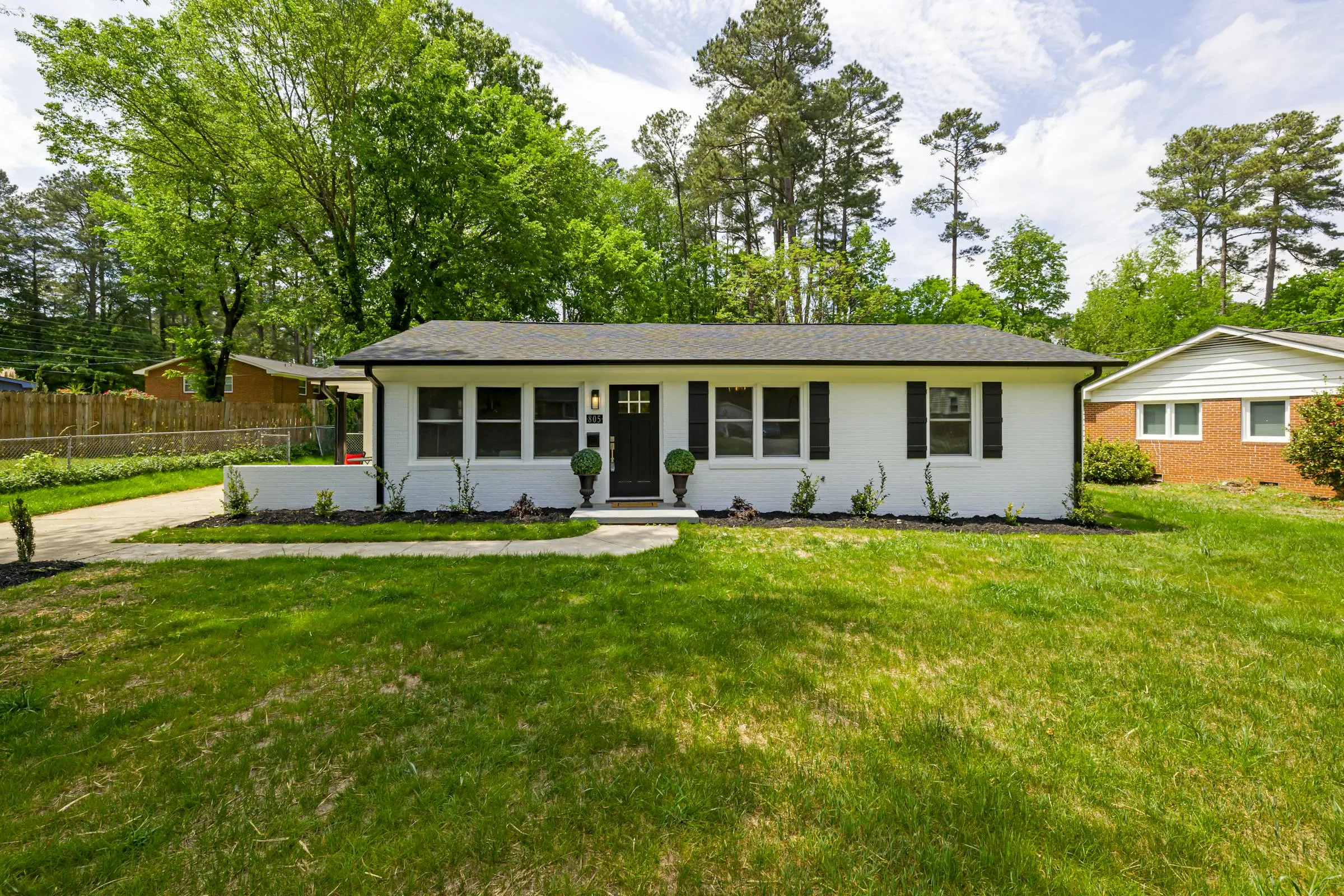
The scenario I will use throughout: a detached home in SW Calgary selling for $750,000 in 2026. That sits at the realistic end of the range for a well-maintained family home in communities like Killarney or Oakridge, depending on the property. The sellers are treating it as a principal residence, so there is no capital gains tax in the picture.
They have a $500,000 remaining balance on a 5-year fixed mortgage and are breaking it with two years left on the term. Closing falls mid-year, which is relevant because the property tax adjustment depends on where in the calendar year possession happens relative to when the City’s annual tax bill is paid.
Your numbers will vary, but the structure of the costs is the same. The interest rate differential penalty and the property tax adjustment will swing most between sellers. The rest are reasonably predictable.
REALTOR® commission and GST
In Calgary, the standard commission formula is 7% on the first $100,000 of sale price, then 3% on the remainder. On the $750,000 example, that works out to $7,000 + ($650,000 × 3%) = $7,000 + $19,500 = $26,500 total. That is the number written on the listing agreement, and it is the number a seller thinks of as “their” commission cost.
Historically, that $26,500 flowed to the listing brokerage, which then split a portion automatically with whichever brokerage represented the buyer. The seller agreed to one number and never saw the internal split itemised anywhere. The buyer’s representation was effectively subsidised by the seller without the transaction making it explicit.
The Buyer Brokerage Agreement requirement, effective March 2024, changed that. Buyer-agent compensation is now a negotiated term in every transaction rather than an assumed automatic split. In Calgary practice through early 2026, the most common outcome is still that the buyer-rep portion is drawn from the same commission pool the seller agrees to on the listing side. It now appears as an explicit line on the offer, however, rather than being embedded invisibly in how the listing brokerage divides what it collects. On some transactions, buyers negotiate to pay their own representation fee directly, which can reduce the seller’s total outlay. How often that happens, and by how much, is settling out as a contract-by-contract negotiation point rather than a new industry-wide standard.
GST applies to commission because it is a service fee. On $26,500, that is an additional $1,325. It is worth naming explicitly because it tends to get folded into a single “commission” line in everyday conversation, which makes the real cost slightly harder to see. The GST does not apply to the sale price of a principal residence. If you are selling a new build or a property that was rented out, the GST treatment becomes more complicated; that is flagged separately in the special situations section later in this post.
Discount and limited-service models exist in Calgary, and the honest trade-off is that a lower fee typically comes with a narrower scope of service. The gap shows up at points in the transaction where experience and availability matter most. That is worth knowing before deciding, not after.
If you want to model this on your own home’s price point, the home valuation request takes about two minutes and gives you the price-point input these calculations need.
The mortgage payout penalty
If you are selling before your mortgage term ends, you will owe the lender a prepayment penalty. For most sellers, this is the cost line they understood the least going in and felt the most at closing.
There are two types of penalty, and which one you pay depends on your mortgage type. Variable-rate borrowers typically pay three months’ interest. On a $500,000 balance at a 5% rate, that is roughly $6,250. In practice, most variable-rate breaks land somewhere in the low thousands, and some lenders calculate it on a discounted rate, which brings the number down further. It is a real cost, but it is bounded and relatively predictable.
Interest-rate differential (IRD) is what fixed-rate borrowers pay, and the range is wider. The lender compares your contract rate against a comparison rate (usually a posted rate for a term close to what remains on yours, and this is where lender differences bite most), then charges you the present value of that spread over the remaining term. Every lender calculates it slightly differently, and that detail matters.
The 2023-2024 period was the worst time to break a fixed mortgage in recent memory. Sellers who were locked into 2021-vintage 5-year fixed terms at rates in the 1.5% to 2.5% range found themselves paying IRDs calculated against posted rates that had climbed well above their contract rate. On a $500,000 balance, breaks at the rate peak could land at $15,000+. I watched clients do the math and decide to delay the sale entirely.
The 2026 picture is different. Rates have pulled back from their peak through 2025 and into 2026, and the spreads used in IRD calculations have narrowed with them. For a 2024-vintage 5-year fixed break with two years remaining on the term (which is the scenario this post uses), the IRD on a $500,000 balance has come down to roughly $3,000 to $6,000, depending on your lender and your specific rate. The mid-range estimate I am using in the example below is ~$4,000.
If you broke a fixed term during the 2023-2024 rate peak, do not use the 2026 range as a reference. Same $500,000 balance, peak-era conditions: you could have been looking at $15,000+. Your mortgage vintage and the rate environment when you break it are what move this number most.
One more item that shows up in mortgage payouts: a discharge fee, usually around $300, which the lender charges to remove the mortgage from title. In almost every Calgary transaction, this appears as a line item in your lawyer’s statement of adjustments rather than a bill the lender sends you directly before closing. It is worth flagging here because the reveal table later in this post treats it as a legal-side cost, not a mortgage-side cost, to avoid counting it twice.
The only way to know your actual penalty is to call your lender and ask for a payout statement. Not the prepayment calculator on the lender’s website, which produces an estimate based on inputs that may not match your exact contract terms. The actual payout statement, which is a formal document the lender is obligated to provide. Ask for it before you sign the listing agreement, not the week before possession. The number occasionally changes the decision entirely.
Legal fees and the Real Property Report
Your lawyer’s bill at closing typically runs $1,200 to $1,800 on a straightforward residential sale. That range covers the title transfer and registration at Alberta Land Titles, the statement of adjustments, the disbursements, and the handling of your mortgage discharge. The $300 discharge fee flagged in the mortgage section is not a separate line on top of this range: it flows through the lawyer’s file and is already built into it.
The other closing-side cost in this section is the Real Property Report (RPR): a surveyor’s document showing where your structures sit on the lot relative to property lines and easements. Alberta resale contracts include an RPR condition as a standard term, and the seller is the one who supplies the document with a current municipal compliance stamp. The Real Property Report guide covers when it is required, what it shows, and what happens when a property does not comply.
The total cost for a new RPR with a City of Calgary compliance stamp runs $700 to $1,200, typically made up of a surveyor’s report ($500 to $900) and a City of Calgary compliance review ($100 to $300, depending on lot complexity and whether there are any discretionary structures like garages close to property lines).
Title insurance is sometimes accepted in place of an updated RPR, at a cost of $400 to $700. When the buyer’s lawyer agrees to it, the seller saves the survey and compliance cost entirely. The critical framing here: this is the buyer’s lawyer’s call, not the seller’s. Some accept title insurance routinely; others require an RPR regardless. If your existing RPR is recent and the property has not changed materially since it was issued, there is a reasonable chance the buyer accepts title insurance. If the report is old or the lot has structures added since the last survey, a new report is more likely to be required.
For the $750,000 example: a new RPR with compliance at $950 and legal fees at $1,500, both mid-range.
The property tax adjustment
Calgary’s annual property tax bill is due June 30, and whoever owns the home on that date pays the full year. That creates a timing difference at closing that the statement of adjustments resolves through a credit between seller and buyer.
If you close before June 30, the buyer will be the one paying the full tax bill on June 30. Since they have only owned the property for part of the year, the seller owes them a credit for the seller’s share of the year up to closing day. The seller arrives at the table owing the buyer money.
If you close after June 30, the seller has already paid the full year’s bill. The buyer then owes the seller a reimbursement for the post-closing portion of the year they did not own the home.
The direction flips depending on which side of June 30 possession falls. The dollar amount depends on the City’s assessed tax bill and the closing month. On a typical SW Calgary home, the swing runs $1,500 to $4,000. For the worked example, the mid-range estimate used in the net-proceeds table below is $2,000, owed by the seller to the buyer. That assumes closing before June 30; reverse the direction for a post-June-30 possession.
Those are the closing-side costs. The next category, pre-listing preparation, is the one where sellers have the most direct control over the number.
Pre-listing prep
Pre-listing prep is the one cost bucket on this list where the seller sets the number. Almost every seller should budget $500 to $2,000 for the essentials: a deep clean ($200 to $400), declutter and short-term storage rental ($100 to $300 per month for one or two months), and paint touch-ups on the scuffed trim and tired feature walls that photographs pick up immediately ($300 to $600). This is the baseline that keeps a home from reading as neglected in the first 30 seconds of an online listing.
Optional upgrades run $2,000 to $8,000 depending on what the property needs. Professional staging of the key rooms (living, primary bedroom, kitchen) typically costs $1,500 to $4,000. A full main-floor repaint, when the house has been in one colour family for a decade, runs $1,500 to $3,000. Small deferred-maintenance items, a broken fixture, deck stain, a section of fence, sit in the $500 to $3,000 range depending on scope. None of those are required, but each one is a line item a buyer will otherwise use to justify a lower offer.
One thing sellers sometimes budget for separately: professional photography. On a full-service listing in Calgary, photography is included in the brokerage’s service and does not appear on your prep invoice. Confirm the scope with your REALTOR® when you sign the listing agreement, but you are not paying for it twice.
Prep spending pays back when the home shows poorly in its current state in ways photos and showings will surface: dated paint, deferred maintenance, cluttered rooms where a buyer cannot read the space. It does not pay back when the goal is to mask a structural issue, an awkward layout, or a functional obsolescence that buyers will find anyway. And in a fast-moving market where days-on-market is not the binding constraint, heavy discretionary prep may not add enough to the final price to justify the outlay.
For the $750,000 example, I am using $1,500 as the prep estimate: baseline essentials plus a moderate touch of optional upgrades. That figure feeds into the net-proceeds reveal further down. Before we get there, a few special situations change the math meaningfully: condo sellers, rental property sales, new-build resales, and non-resident sellers each pick up costs the standard scenario does not.
Special situations
Most sellers fall inside the example above. A few situations change the math meaningfully.
Condo sellers need to supply a condo document package to any buyer: bylaws, financial statements, reserve fund study, and status certificate. The management company charges roughly $200 to $500 to prepare and release that package, and the cost falls to the seller. Allow one to two weeks for delivery so a late package does not push your conditions deadline.
If you are selling a rental property, capital gains tax applies to the appreciation since the purchase date. Half the capital gain is included in your taxable income and taxed at your marginal rate. On a property that has appreciated meaningfully, that number can be larger than every other cost on this page combined. The math is specific to your purchase price, your holding period, and your income in the year of sale, so this post does not model it. Talk to an accountant before you list, not after you accept an offer.
If you bought new from a builder within roughly the last year and you are now reselling, the CRA may classify you as a “builder” under the GST rules. That classification means GST could apply to the sale price itself, not just to the commission you pay. On a $750,000 sale, that is a material number. If this describes your situation, speak with an accountant before you sign the listing agreement.
What you actually net
Stack every line we have walked through against the $750,000 sale price. Here is what the cheque looks like.
| Line | Amount |
|---|---|
| Sale price | $750,000 |
| Total commission (7%/3%, per listing agreement) | -$26,500 |
| GST on commission | -$1,325 |
| Mortgage payout penalty (IRD, 2026 estimate) | -$4,000 |
| Legal, discharge, RPR, and compliance | -$2,450 |
| Pre-listing prep | -$1,500 |
| Property tax adjustment (mid-year closing) | -$2,000 |
| Remaining mortgage principal | -$500,000 |
| Net proceeds to seller | ~$212,225 |
Three of those lines tend to catch sellers off-guard, even when they have been through a sale before. The mortgage payout penalty is the obvious one: until you call the lender and ask for a formal payout statement, the number is an abstraction. But the GST on commission and the property tax adjustment are the two that reliably surface as surprises in the lawyer’s statement of adjustments. Neither shows up in everyday conversations about selling costs, and both are real money.
The mortgage payout is also the most variable line on the table. If you are not breaking a term, it is zero. If you are, your lender’s payout statement is the only number that matters, and it can range from a few hundred dollars on a soon-to-mature term to $15,000 or more on a peak-era fixed mortgage broken at the wrong point in the rate cycle.
The line most sellers under-budget is pre-listing prep. The ceiling rises fast once sellers start staging rooms they did not plan to stage, or discover deferred maintenance that photographs are unforgiving about. Spend to what the price tier rewards, not to what staging catalogues suggest.
That $212,225 net is the number to anchor on for what comes next: how the friction range sets your listing-price target and shapes the timing of your sale.
What this means for your sale
The gap between sale price and net is typically $35,000 to $45,000 on a sale in the $750,000 range, before your remaining mortgage. On larger sales, the percentage-based costs (commission and GST) scale proportionally, so the friction range scales with the price. Understanding that gap changes three things.
First, your listing price target should be worked backward from the net you actually need, not from a number that would feel good on the listing agreement. If you need to clear $200,000 to make a move work, the math runs from that figure upward, not downward from a hopeful price.
Second, timing moves the net meaningfully. Getting your lender’s formal payout statement before you sign the listing agreement tells you what the IRD will actually cost. Choosing your closing month with the property tax adjustment in mind can shift the net by a few thousand dollars in either direction. Both decisions are easier to act on before you are under contract.
Third, if the math does not get you where you need to be, that is a conversation worth having before you sign the listing agreement. Whether to sell at all, and whether a different timeline changes the answer, is something the sell-before-buy decision explores in more depth. Getting a real number on your specific home is the next concrete step.
If you want to start with your home’s price point, the home valuation request takes about two minutes. I follow up with a proper number, not a range generated by an algorithm.
If you want to model your specific net, including the actual mortgage payout your lender confirms, book a call and I will walk through it with you in person.