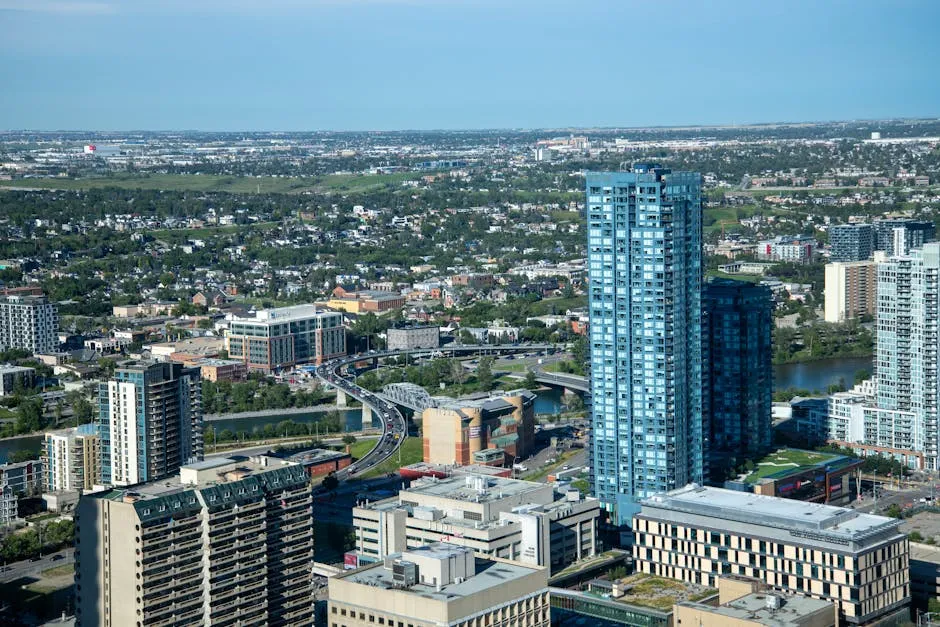
Here is a call I never want to get, and I have taken a version of it more than once. Someone bought a Calgary condo a year or two ago. The unit was great, the price was fair, the building looked well kept from the curb. Then a letter shows up from the condo board: a special assessment, several thousand dollars per unit, due in ninety days, to pay for a roof or a building envelope or a parkade membrane that the reserve fund could not cover. They had no idea it was coming.
And almost every time, when we go back and look, the warning was sitting in the documents they were handed before they bought. The reserve fund study flagged it. The board minutes had been circling it for two meetings. Nobody read the pile closely, or nobody knew what they were looking at.
That is the whole reason this post exists. When you buy a condo or a titled townhouse in Calgary, you are not just buying a unit. You are buying a share of a corporation, its building, its bank account, and its problems. The condo documents are the single best protection you have, and they are the part of the deal most buyers skim. This is the version of the document walkthrough I give my own clients, written so you know what I read first and what the red flags actually look like.
One thing up front: I am a REALTOR®, not a lawyer. For the legal read on a specific document, your real estate lawyer or a Calgary condo-document-review service is who you want, and I will tell you exactly where to bring them in. But you should understand what is in the stack before it ever reaches a lawyer’s desk, because the first filter is yours.
What “condo documents” are, and what you’re entitled to
When people say “the condo docs,” they mean a specific bundle the corporation keeps: the bylaws, the budget and financial statements, the board and annual meeting minutes, the reserve fund study and plan, the insurance certificate, the management agreement, and the estoppel certificate for the specific unit. In Alberta you do not have to take the seller’s word for what is in them. Under the Condominium Property Act, a prospective purchaser can request the documents in writing, and the corporation has to respond within ten days.
There are fee caps, too, so nobody can stonewall you with a giant bill. Most individual documents are capped at a small per-document fee, the estoppel certificate has its own cap (more on that below), and the financial statements, budget, and the annual report on the reserve fund are supposed to reach owners for free with the annual meeting package in the first place.
In practice, here is how it works on a live deal. You write an offer that is conditional on your review of the condo documents, usually for a window of about seven to ten business days, though the exact length varies by contract. The seller’s side orders the documents (often through a service like CondoDocs or a property manager). You get a digital stack that can run anywhere from 100 to 600 pages. Then the clock starts, and the job is to read the right things in the right order before your condition deadline.
You do not read all 600 pages cover to cover. You read the four or five documents that tell you whether this building is financially healthy and honestly run. Start here.
The reserve fund study: the most important document in the stack
If you only deeply read one thing, read the reserve fund study. The reserve fund is the building’s long-term savings account for major repairs and replacements: the roof, the building envelope, the elevators, the parkade, the boilers, the windows. The reserve fund study is the professional assessment of what all of that will cost and when, and whether the corporation is saving enough to pay for it.
In Alberta this is not optional and it is not a formality. A reserve fund study has to be done by a qualified provider at least every five years, and it has to look ahead a minimum of thirty years, estimating the timing and cost of every major repair. Out of that study come two things you want to see: the provider’s report (their findings and recommendations), and the board’s reserve fund plan (how the board intends to actually fund those repairs, through contributions and, sometimes, borrowing). The study is the diagnosis. The plan is the treatment. You want both, and you want them to agree with each other.
Here is what I am actually looking for when I open one:
- How old is it? If the study is pushing five years old, a fresh one is due, and the numbers in the old one are stale.
- Does the plan fully fund the report? The single biggest red flag is a board plan that contributes less than the study says the building needs. That gap does not disappear. It turns into a special assessment later.
- What’s coming, and when? Scan the thirty-year schedule for big-ticket items in the next five to ten years: roof, envelope, elevators, parkade. A major project landing soon, against a thin reserve balance, is how surprise assessments are born.
- Is the balance healthy relative to the building’s age and components? An older building with a low reserve balance and a long list of near-term repairs is telling you something. So is a brand-new building that has barely started saving.
The estoppel certificate: the unit’s financial snapshot
The reserve fund study tells you about the building. The estoppel certificate tells you about the specific unit you are buying. In Alberta it is a formal document the corporation issues under the Condominium Property Act, and it certifies the current state of that unit’s account: the condo contributions (the fees), the payment schedule, whether any fees are unpaid, and any interest owing on arrears. As of the 2026 changes to Alberta’s condo law, it also has to disclose any proposed chargebacks against the unit.
Two things make this document matter more than it looks like it should.
First, unpaid fees run with the unit, not with the seller. If the current owner is behind on their contributions, that debt can become your problem once you take title. The estoppel is how you catch it. If it shows arrears, you have your lawyer arrange for those amounts to come off the sale proceeds at closing, so the seller clears their own debt and you do not inherit it.
Second, the certificate is treated as conclusive proof of the figures it states. That is real protection: the corporation cannot later claim you owed something the estoppel did not disclose. It is one of the cleaner safeguards in the whole process, which is exactly why you want it ordered and reviewed before you remove conditions.
The cost is capped. A corporation can charge up to $200 for an estoppel certificate, or up to $300 if you need it on a rush basis (within three days), and it has to be provided within ten days of the request. That is a small line item for a document that can flag a problem worth thousands.
The minutes and the budget: where the real story lives
The reserve study and estoppel are the formal numbers. The board and annual general meeting minutes are where you find out what the building is actually like to live in and how it is actually run. I read at least the last twelve to twenty-four months of minutes, and I am reading for patterns, not single lines.
What the minutes quietly reveal:
- Recurring problems. A water-ingress issue, a leaking parkade, an elevator that keeps failing, a roof that keeps getting patched. If the same complaint shows up meeting after meeting, that is a future capital project, not a nuisance.
- Looming projects and how they’ll be paid for. Boards often discuss a major repair for months before they fund it. If the minutes are talking about a $400,000 envelope project and the reserve has $150,000 in it, do the math on where the rest comes from.
- Litigation and disputes. Lawsuits, builder warranty claims, owner disputes, fights with a developer. These cost money and signal dysfunction.
- How the board behaves. Are meetings orderly and decisions documented, or is it chaos and turnover? You are buying into this group’s judgment.
Read the budget and the financial statements alongside the minutes. Is the corporation running a surplus or a deficit? Are condo fees keeping pace with rising costs (insurance and utilities in particular have climbed hard in Alberta), or is the board holding fees flat and falling behind? For context, condo fees in Calgary commonly run somewhere around $0.50 per square foot, which puts a typical apartment-style unit in the rough range of $350 to $500 a month, with the Alberta average sitting near that band. A fee that looks suspiciously low for the building’s size, age, and amenities is not a bargain to celebrate. It is a question to answer.
The $50,000 insurance gap people overlook
This one catches people who did everything else right, so it is worth a look even if the rest of the docs look clean.
Since January 1, 2020, Alberta condo corporations can charge their insurance deductible back to an individual unit owner when the damage originates in that owner’s unit, and the owner is liable on demand, without the corporation having to prove the owner did anything wrong. A burst hose on your dishwasher floods three units below you, and you can be on the hook for the corporation’s deductible.
The number that matters: that liability is capped at $50,000. Before 2020 it was uncapped, so this rule actually protects owners more than it exposes them. But $50,000 is still a serious number to face unexpectedly, and corporations have responded by setting their deductibles right up at that ceiling.
Here is the practical takeaway, and it is the part most buyers miss. You cover that exposure on your own personal condo insurance policy, through what insurers call “loss assessment” or deductible coverage. When you buy a condo, confirm your personal policy carries enough loss-assessment coverage to absorb the corporation’s deductible, ideally the full $50,000. It is inexpensive, and it is the difference between a stressful afternoon and a five-figure surprise. While you are in the documents, check the corporation’s insurance certificate for the current deductible amounts so you know exactly what you are insuring against.
What changed under Alberta’s new condo law in 2026
If you are buying in 2026, you are buying under updated rules, and most of the changes are in your favour as a buyer. Alberta’s condo legislation was overhauled this year, with the main provisions and regulations coming into force in February 2026. A few pieces are worth knowing:
- There is finally a tribunal for disputes. The new Condominium Dispute Resolution Tribunal began operating on April 1, 2026. It is a cheaper, faster alternative to court for condo disputes, and critically for buyers and owners, it handles disputes about access to documents. If a corporation stonewalls a legitimate document request, owners now have a real, affordable remedy instead of a lawsuit.
- Chargebacks are now formalised and disclosed. When a corporation charges costs back to an owner, it has to follow a defined process (written notice, a window to respond, a board resolution) and the charge is capped. And proposed chargebacks now show up on the estoppel certificate, so a buyer can see them before closing.
- New buildings get an independent condition check. Condo buildings first occupied after February 26, 2026 (other than small ones of twelve units or fewer) must get an independent engineering or architectural technical analysis of the structure and building envelope within four years of first occupancy. If you are buying in a brand-new building, an independent condition report will exist, which is a meaningful upgrade over taking the developer’s word for it.
The headline for a buyer: documents are more transparent than they used to be, and you have more recourse if a corporation tries to hide the ball. Use it.
How to read all this without a law degree
You do not need to become a condo expert in a seven-day condition window. You need a process and the right people. Here is the one I use with clients.
- Order everything early. The day your offer is accepted, get the document order in. The condition window is short, and you do not want to lose three of those days waiting on the package.
- Read in priority order. Reserve fund study and funding plan first. Then the estoppel certificate. Then the last year or two of minutes. Then the budget and financials. Then insurance. If something is going to kill the deal, it is almost always in those first three.
- Bring in a pro for the legal and financial read. This is where your real estate lawyer earns their fee, and where a dedicated condo-document-review service can be worth every dollar. They read these stacks for a living and will catch language and liabilities a buyer would skim past. For a few hundred dollars, you get a written summary of the risks. On a purchase this size, that is cheap insurance.
- Match the documents against your own life. A building with a busy short-term-rental population, a pet restriction, an age restriction, or a special-use bylaw might be perfect for one buyer and wrong for another. The “red flag” is sometimes just a mismatch with how you want to live.
- Keep your condition real. Your condo-document condition exists so you can walk away if the documents reveal something you cannot live with, with your deposit intact. Do not waive it to look like a stronger buyer unless you genuinely understand what you are giving up.
None of this is meant to scare you off condos. A well-run Calgary condo or townhouse, with a funded reserve and a competent board, can be the smartest purchase on the board: less maintenance, a lockable front door for travel, and an entry point into communities like Marda Loop or Killarney where a detached home would cost far more. The documents are not there to talk you out of it. They are there to make sure the building you are buying is as good as the unit you fell for.
Frequently asked questions
How long do I have to review condo documents in Alberta?
It depends on your purchase contract, but the condition window for reviewing condo documents is typically seven to ten business days from acceptance of the offer. Separately, when you formally request documents, an Alberta condo corporation has to provide them within ten days. Order the documents the day your offer is accepted so you are not burning condition days waiting on the package.
How much does an estoppel certificate cost in Alberta?
A condo corporation can charge up to $200 for an estoppel certificate, or up to $300 if you need it on a rush basis (within three days). It must be provided within ten days of the request. For a document that confirms the unit’s fees and flags any unpaid arrears, it is a small and worthwhile cost.
What is a healthy condo reserve fund?
Alberta law requires the corporation to keep enough in the reserve to pay for its planned major repairs, and to base that on a study done at least every five years that looks thirty years ahead. Rather than chasing a single percentage, the practical test is whether the board’s funding plan fully covers what the reserve fund study projects, and whether the balance is reasonable given the building’s age and the repairs coming in the next five to ten years. A funding plan that falls short of the study is the warning sign.
Can I back out of buying a condo if the documents are bad?
Yes, as long as your offer included a condition for reviewing the condo documents and the condition has not yet been satisfied or waived. If the documents reveal something you cannot accept (an underfunded reserve, a pending special assessment, ongoing litigation), you can walk away within the condition window and recover your deposit. That is exactly what the condition is for, which is why you should not waive it casually.
What is a special assessment, and how do I avoid a surprise one?
A special assessment is an extra charge levied on owners, on top of regular condo fees, usually to cover a major repair the reserve fund cannot pay for. They can run from a few thousand dollars to tens of thousands per unit. You reduce the risk of a surprise by reading the reserve fund study and the recent board minutes before you buy: an underfunded reserve plus a looming major project is the classic setup for an assessment landing on whoever owns the unit when the bill comes due.
Are condo fees in Calgary worth it?
Condo fees cover real costs: building and common-area maintenance, snow removal, landscaping, shared utilities, the building’s insurance, professional management, and contributions to the reserve fund. A fair fee in a well-run building is buying you a maintained building and a funded savings account for big repairs. Be more wary of an unusually low fee than a slightly higher one, since a low fee sometimes means the reserve is being underfunded, which catches up with owners eventually.
Before you remove conditions, talk it through
A condo or townhouse can be the right move for a first-time buyer, a downsizer, or anyone who wants less maintenance and more lock-and-leave freedom. The unit matters, but the corporation behind it matters just as much, and the documents are how you tell a well-run building from one that is about to hand you a bill. If you are weighing a specific Calgary condo and want a second set of eyes on what the documents are really saying, that is exactly the kind of call I am happy to take.
Looking at a condo? Let's read the documents together.
Send me the building and where you are in the process, and I will walk you through what to look for in the reserve fund study, the estoppel certificate, and the minutes before your condition deadline. A short call now can save you a five-figure surprise later.
Refresh annually, and after any change to Alberta condo legislation. Alberta-specific figures and rules are drawn from Government of Alberta condominium fact sheets and the Centre for Public Legal Education Alberta. Sources: Government of Alberta, Reserve Fund Study fact sheet; CPLEA, Estoppel Certificate; Government of Alberta, Supporting Alberta’s condominium communities (2026 changes). This article is general information for Calgary buyers and is not legal advice; consult your real estate lawyer on a specific purchase.